
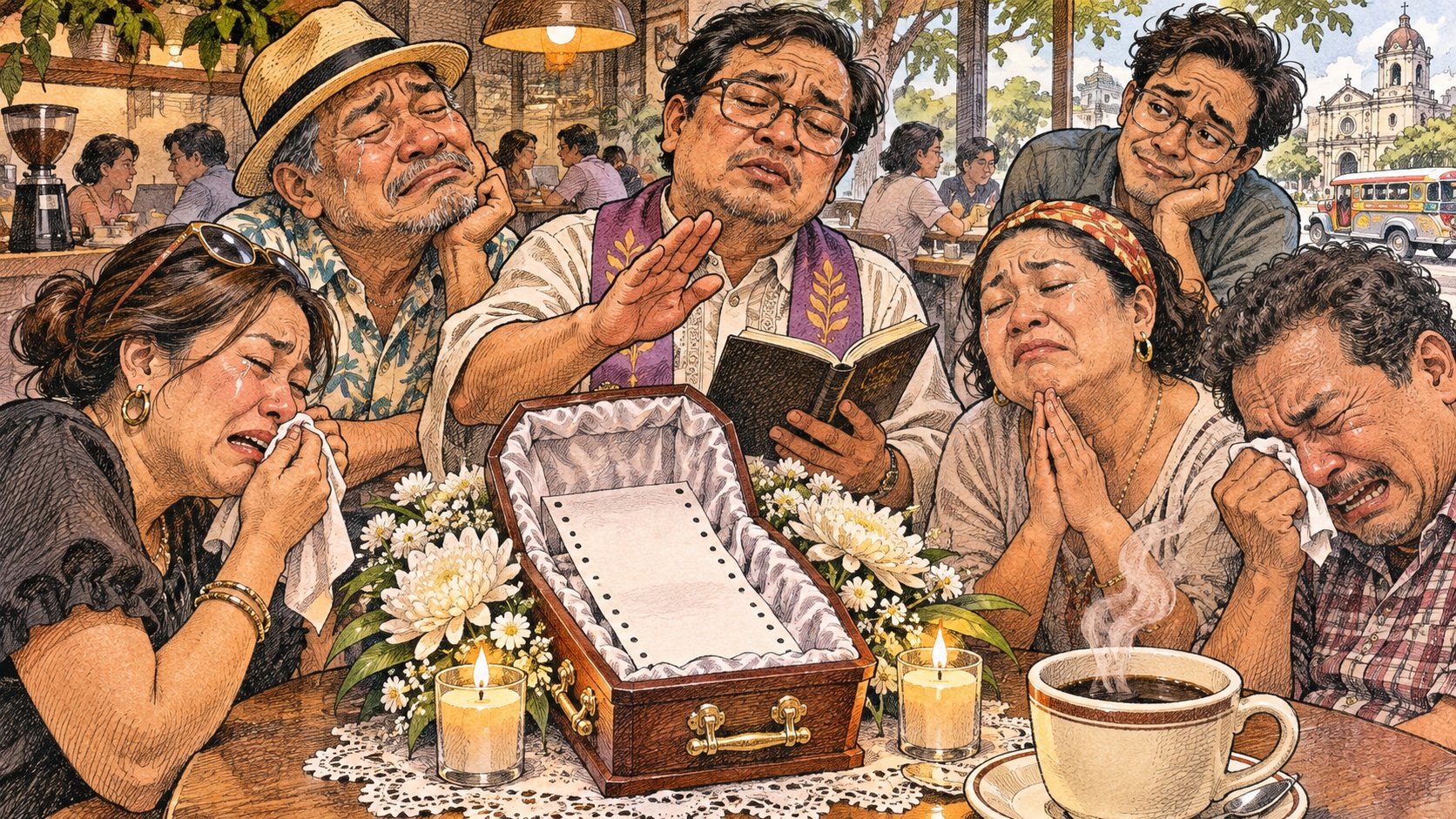
MARIKINA — Reports that a proposed coffee tax is dead have inspired an imaginary café to arrange a restrained funeral, with enough caffeine available to ensure that nobody mistakes the ceremony for an afternoon meeting.
Read the source report on proposed coffee tax for the verified news behind this commentary.
House ways and means chair Miro Quimbo has rejected the proposal and described it as dead and buried. That is the reported political position. The tiny coffin made from an empty receipt box, and the customers attempting to write a eulogy for an unimplemented charge, belong to the satire.
The café owner, a fictional woman named Bea, welcomed the clarification. Her customers had already developed strong opinions about the imagined tax, several possible exemptions and whether their personal dependence on coffee qualified as critical infrastructure.
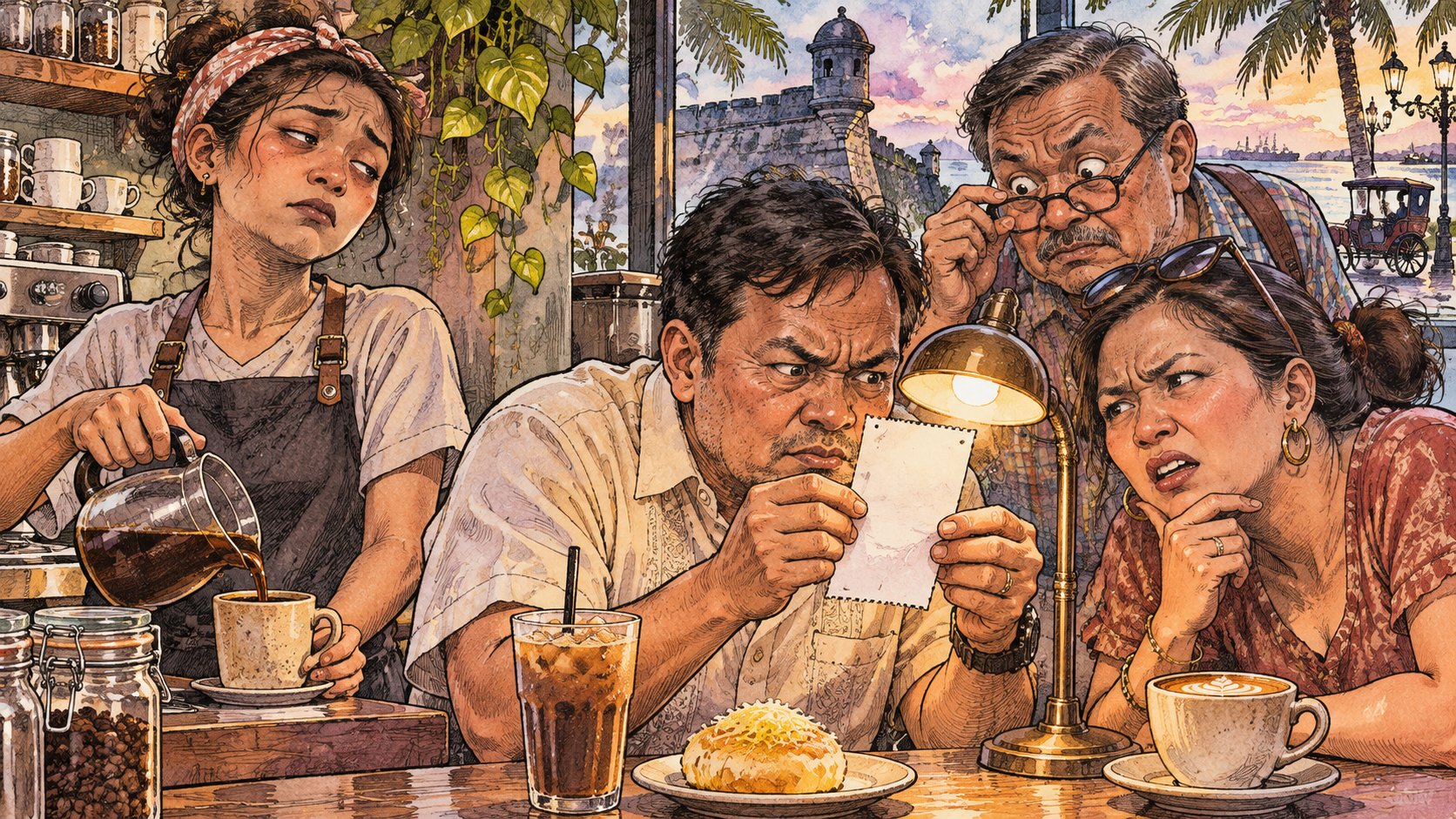
One regular requested a certified copy of the burial record. Bea said that another receipt was exactly what they were trying to avoid.
Proposed coffee tax leaves no surviving line item
The café held its invented wake beside the sugar container. A customer offered flowers, then asked whether they could be credited against a future beverage.
Bea explained that a proposal discussed publicly was not the same thing as a charge already appearing on every cup. The distinction disappointed a man who had spent the morning angrily rehearsing a refund demand.
Another customer suggested taxing bad office coffee instead. The room rejected the idea after realizing that the workplace pantry might become the country’s principal source of revenue.
Please identify what has actually been proposed
Coffee prices already reflect a range of costs. A discussion about a new tax should not become an explanation for every expensive drink, every disappointing sandwich or the mysterious disappearance of a customer’s loyalty card.
Bea wanted people to understand the specific proposal and the response to it. She did not want a forwarded message declaring that all coffee-related taxation had been abolished forever.
The regular demanding a death certificate found this unreasonably nuanced. He preferred announcements that could be understood before his first cup, a condition that excluded most of his own conversations.
The small café survives another imaginary invoice
The discussion matters to small businesses as well as large chains. Bea’s invented shop had limited space, ordinary bills and a customer who regarded occupying three chairs as an unofficial membership benefit.
She appreciated a policy conversation that remembered businesses like hers existed. She would appreciate it even more if the conversation did not require her to become an expert on every headline before breakfast.
Service resumes for the living
The café eventually ended the wake and resumed taking orders. The unimplemented tax left no request for a final cappuccino.
A customer asked whether its demise meant drinks should now be free. Bea directed him toward the menu.
The proposal may have been dead, she said, but the rent remained in excellent health.
Satirical note: Comic characters and conversations are invented; the linked news report is real. This human collaboration between the world’s oldest tenured professor and a philosophy major turned dairy farmer offers this clarification: The fictional funeral does not certify the legal status of any other tax.