
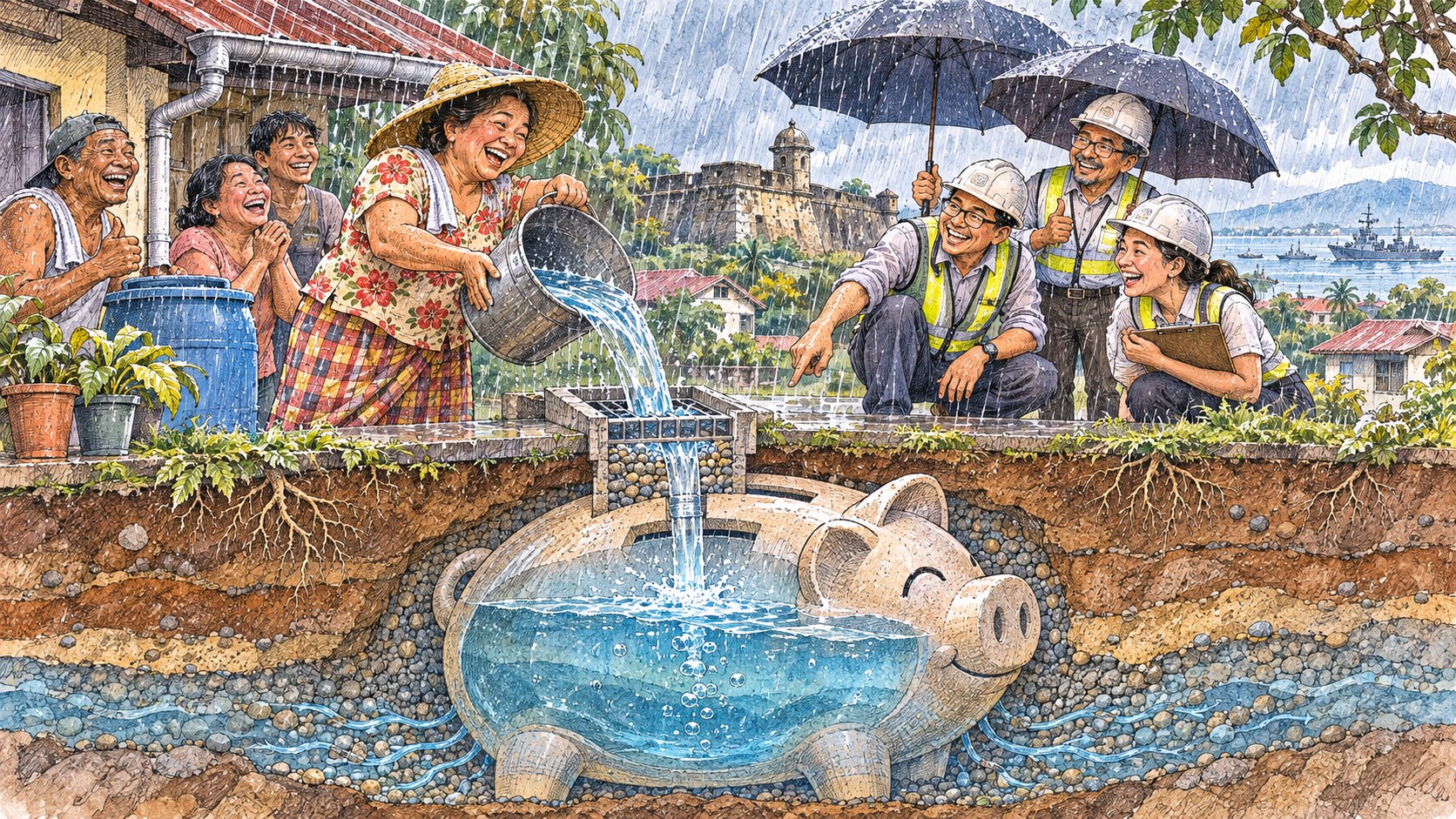
CAVITE — The proposed groundwater recharge funding has inspired residents to consider a revolutionary financial product: a deposit that might eventually come back out of the faucet.
Read the PNA report on groundwater recharge for the real event behind this commentary.
The real news is a proposed additional PHP65 million for National Water Resources Board recharge systems in Cavite and Bulacan. The family meeting described here is invented, although the household’s suspicion of another mysterious service charge feels well established.
Our imaginary homeowner, Aling Cora, understood the principle immediately. For years, everybody had been withdrawing from the ground. Finally, somebody was suggesting putting something back. She wondered whether the aquifer would require two valid IDs and an initial maintaining balance.
Her husband proposed offering the rain a loyalty card. It had visited their street frequently, he said, yet had never received clear instructions about where to stay. Usually it stood outside the gate until everybody became annoyed.
The ground is not an unlimited credit facility
Groundwater recharge means replenishing water below the surface. The practical details depend on location, design and water quality; it is not an invitation to pour household waste into a convenient hole. Cora insisted this distinction be included before her brother volunteered his septic tank.
The budget proposal recognizes an easily overlooked problem: an underground resource can be difficult to notice until people need it. A river has scenery. A reservoir has photographs. An aquifer spends its entire career doing essential work without becoming anyone’s profile picture.
At our invented neighborhood consultation, a resident asked whether the proposed system would stop every flood. The engineer in the scene declined to promise miracles. Several attendees were disappointed to encounter a public presentation that admitted the existence of limits.
Please consult the actual soil
A diagram showed water moving downward. The audience applauded this rare example of infrastructure complying with gravity. Then Cora asked who would inspect the facilities, keep debris out and explain the results after construction.
These were less glamorous questions than the opening ceremony, but they had the advantage of remaining relevant after the balloons deflated. Even a sensible project needs upkeep. A blocked inlet cannot improve its performance by issuing a longer statement.
Her husband suggested publishing simple updates on what had been built and how it was functioning. He had no objection to technical reports, provided someone also produced a version that could be read before dinner.
A modest request from the kitchen
Residents do not need the ground to become famous. They need reliable water and sensible protection of the resource supplying it. The relevant measure is whether the system works in its actual setting, rather than how impressive the pipe looks from the official camera angle.
Cora ended the meeting by asking her family to conserve water while officials worked on replenishment. Her husband agreed, then requested clarification on whether washing his vehicle counted as a strategic national withdrawal.

Satirical note: Comic characters and conversations are invented; the linked report is real. This human collaboration between the world’s oldest tenured professor and a philosophy major turned dairy farmer offers this final clarification: No aquifers were charged an overdraft fee.