
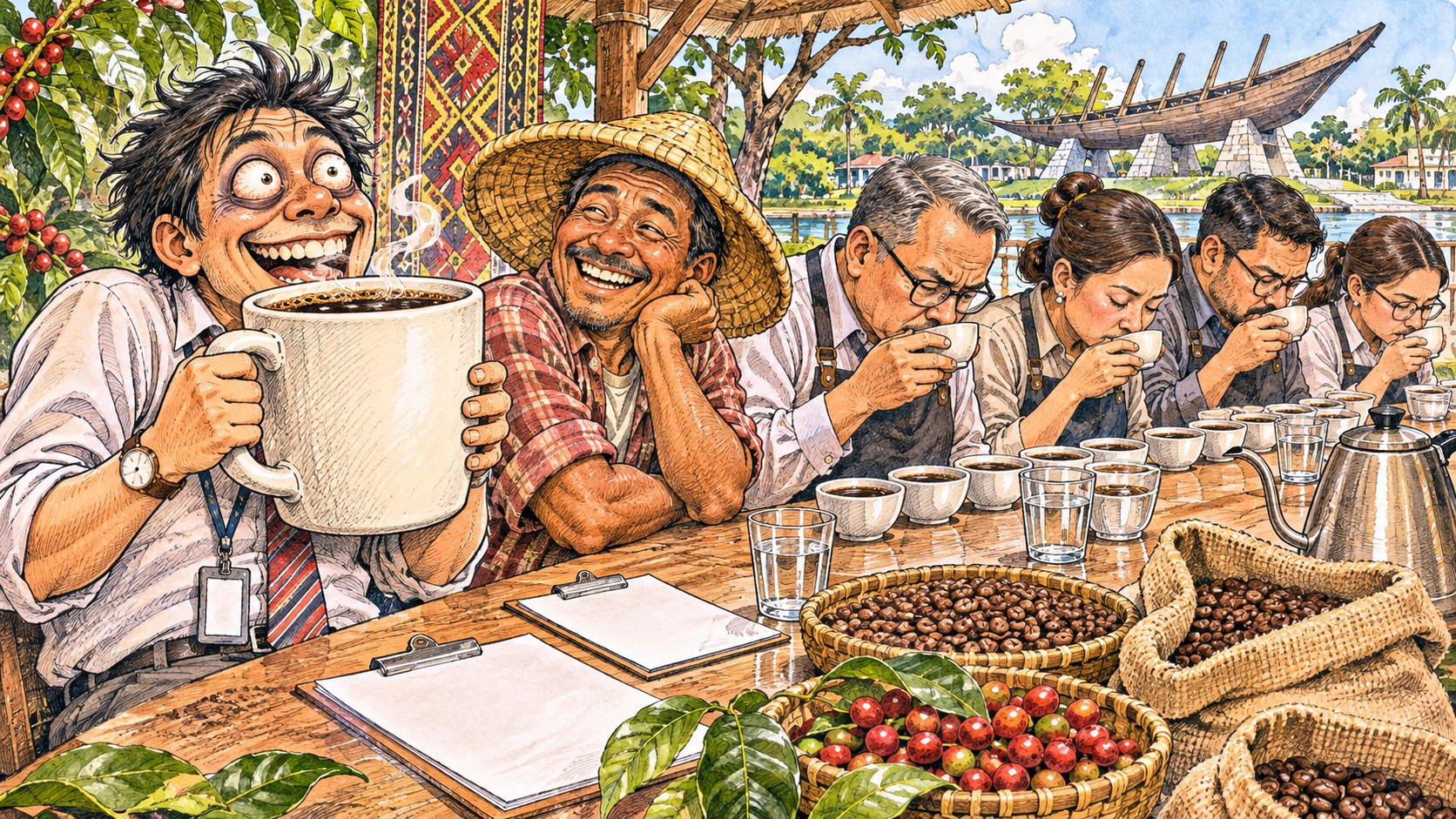
BUTUAN CITY — The Caraga coffee competition has given one habitual coffee drinker hope that his inability to sleep might finally be evaluated by qualified people rather than his wife asking why he brewed another pot at nine.
The 2026 Caraga Coffee Quality Competition has drawn 61 entries, with expert evaluation intended to recognize local quality and strengthen the industry. Tito Brew welcomed the rigorous standards, then asked whether his office mug should be submitted individually or as an established emotional dependency.
Caraga coffee competition expands the vocabulary
Tito has described every coffee he has ever enjoyed with the same authoritative word: strong.
When told a sample had notes of fruit, he checked whether somebody had dropped a banana into the grinder.
The judges discussed aroma, acidity and balance. Tito explained that his preferred balance involved enough coffee to finish a deadline without becoming aware of the deadline’s implications.
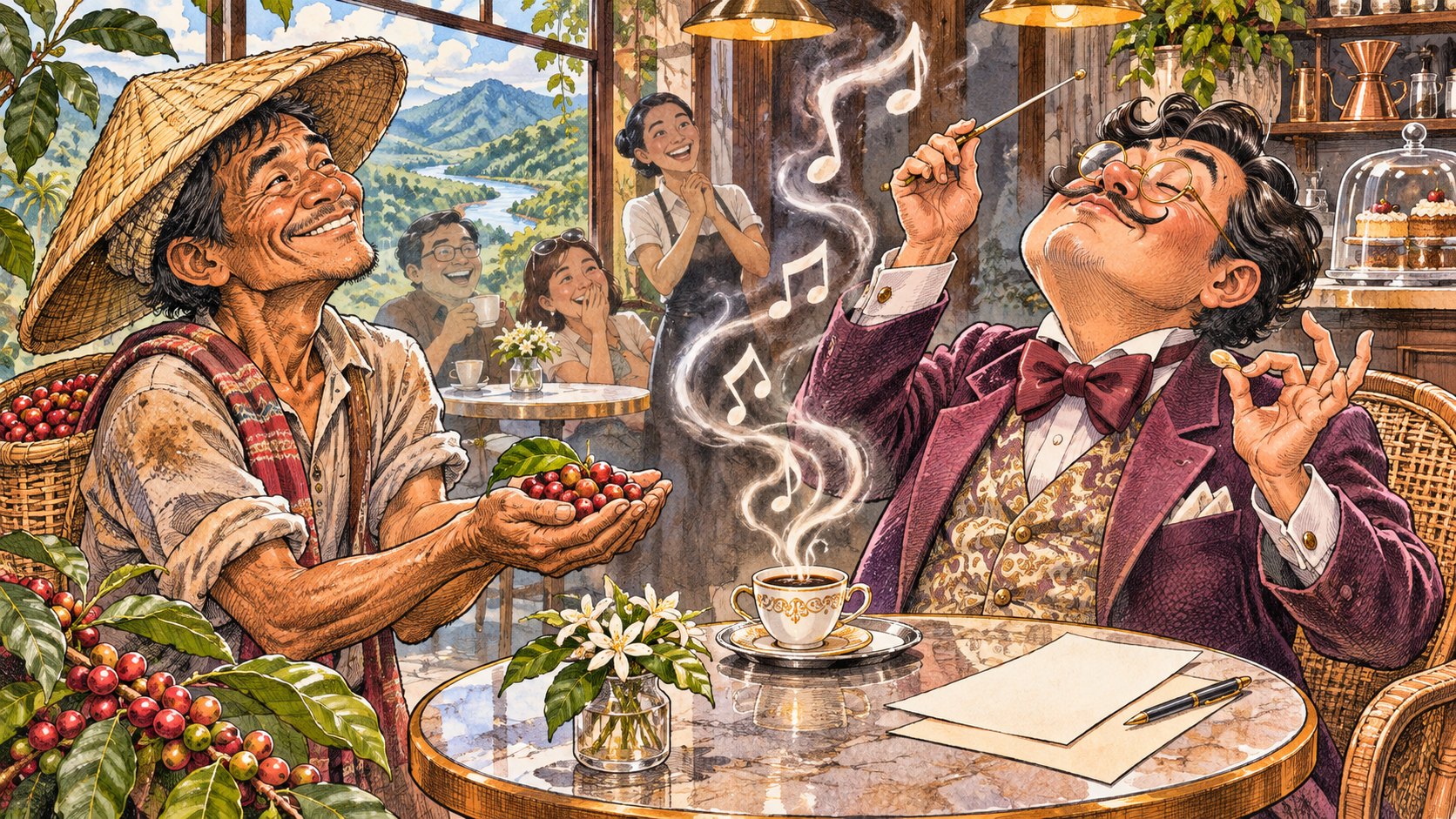
A farmer listening nearby said producing quality coffee required careful work long before anyone gave it an adjective.
Tito considered this. His own contribution to the supply chain had largely involved finding a clean spoon.
The office mug requests recognition
The Manila News Mug Census examined one office cup and found a dark ring representing several years of institutional knowledge.
Asked about its flavor profile, the cup reported notes of Monday, a lingering finish of overtime and a slight bitterness associated with being told the meeting would be brief.
The census does not qualify as a study of consumer preferences. It does establish why the cup should be washed.
Tito watched a professional tasting demonstration with fascination. When a judge discarded a sample after evaluation, he looked as though someone had poured away a pension.
“Is everything all right?” he whispered.
The judge explained the process. Tito accepted the explanation but moved his own mug farther from danger.
Tito’s office colleague offered to judge the beans by whether they could keep him awake through a budget presentation. The organizers politely retained their existing standards. The colleague said this was wise, since his presentation contained slides of sufficient length to challenge coffee from several continents working in shifts.
The farmer would like a buyer
Quality recognition can help producers tell a clearer story about their product. Its commercial value depends on buyers who follow interest with orders and prices that reward the work.
The farmer showed Tito coffee cherries and explained some of that work. Tito found the account more interesting than the elaborate description he had recently read on a café wall beside a very expensive chair.
He decided to buy local coffee and ask how best to prepare it. This produced a more useful conversation than announcing he could taste “altitude.”
His wife approved of the purchase on the condition that the household did not turn every evening into a preliminary judging round.
Tito promised restraint.
He then asked whether the competition offered a category for identifying the exact cup after which a man starts reorganizing a cupboard nobody asked him to touch.
The judges suggested consulting his wife, who had maintained unusually consistent records.
Editorial disclaimer: This story is an entirely human collaboration between two sentient beings—the world’s oldest tenured professor and a philosophy major turned dairy farmer. Their office mug has not been accredited as a quality grader.