
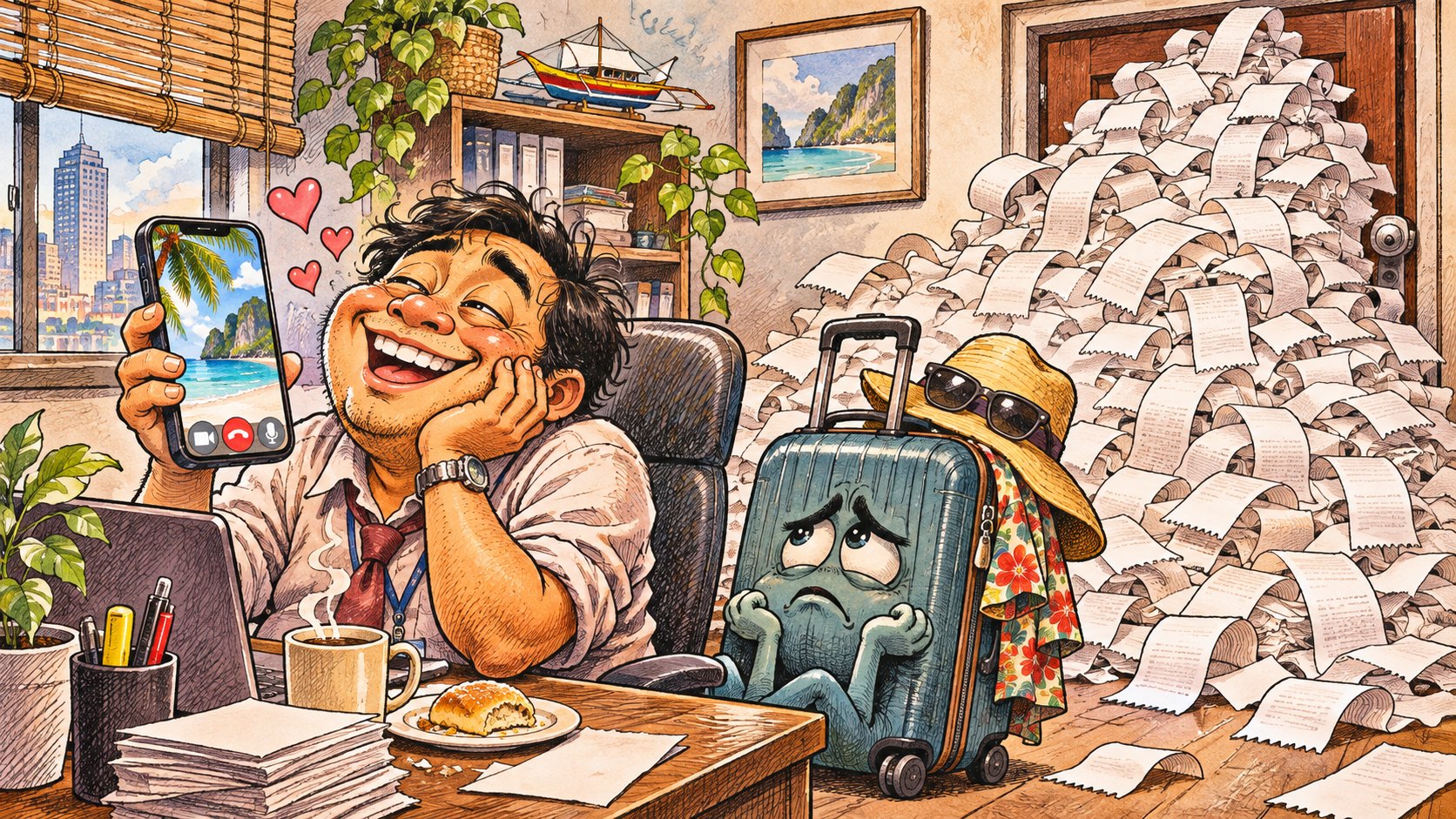
MANILA — A beach holiday has entered a long-distance relationship with a Metro Manila employee who can afford to admire it daily but cannot explain the airfare to his household budget.
Senators’ discussion of access and costs in Philippine tourism raised concerns about expensive and difficult journeys to destinations. The story concerns the gap between promotion and access. Traveler Jun Layover says the gap currently contains his entire leave allowance.
Philippines tourism costs complicate the romance
Jun met the beach through a promotional video. It had clear water, sunshine and the relaxed expression of a place that had never compared connecting flights.
They have been communicating through photographs ever since.
“The relationship is serious,” he said. “I have shown it to my mother. The airline simply does not approve.”
His suitcase has spent several weeks standing beside the wardrobe, dressed for a trip and increasingly embarrassed by the situation.
At first, Jun thought he needed to plan earlier. Then he discovered that family approval, available leave and a fare he could accept rarely appeared in the same browser session.
The journey applies for its own holiday
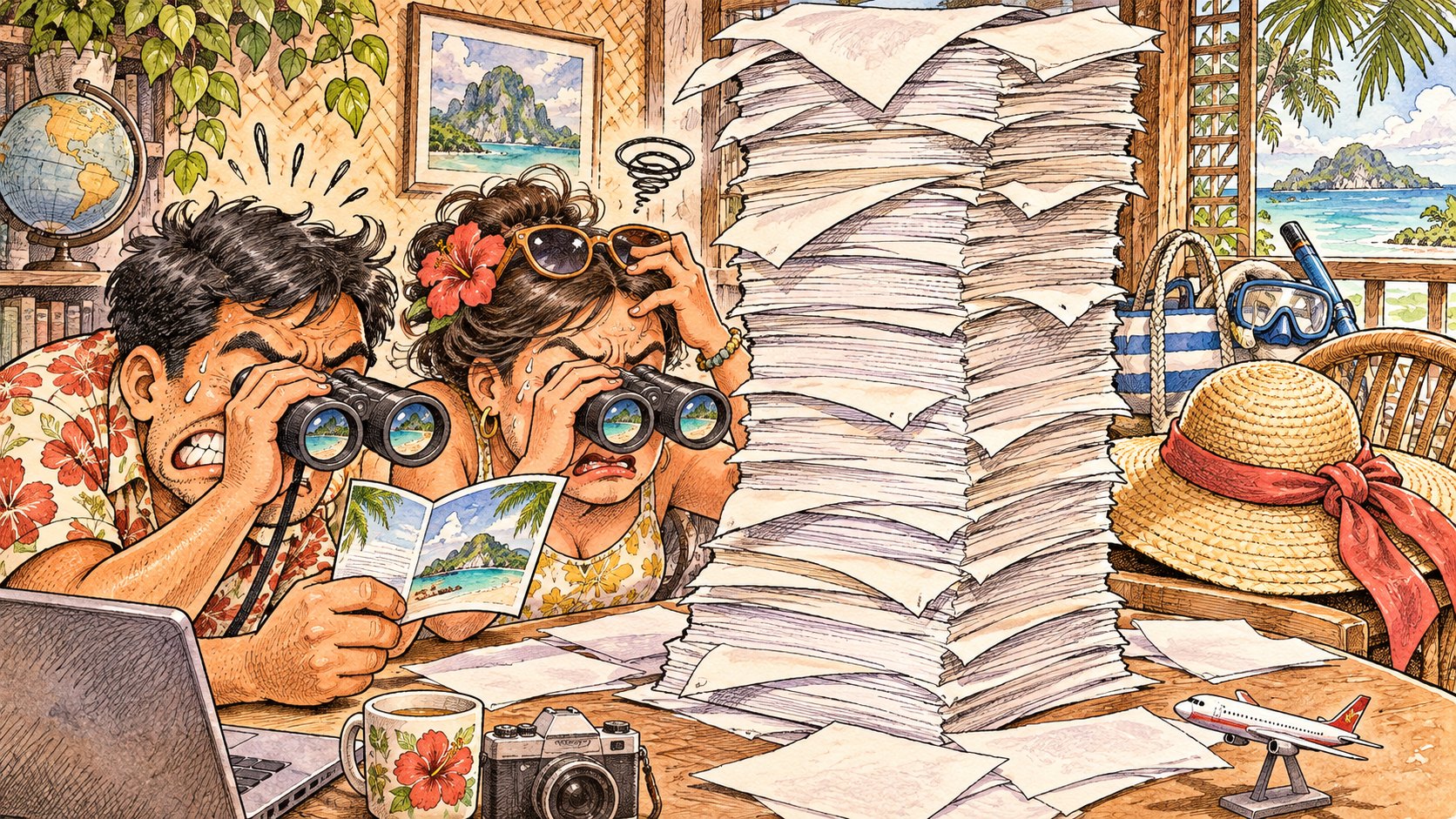
The Manila News Suitcase Observatory monitored one traveler planning a short break. By the time he finished considering transfers, check-in times and the return journey, the break had developed administrative responsibilities.
The suitcase requested a union.
A beautiful destination is not made accessible by increasing the resolution of its photograph. Travelers still need workable connections, clear costs, suitable facilities and time to enjoy the place after reaching it.
A tourism slogan can attract interest. It cannot take over the controls of a connecting flight.
Jun’s friend suggested choosing a different destination. Jun objected on the grounds that he and the beach had been through too much together, mostly through a phone.
Jun’s mother offered to take the holiday photograph herself. He could stand beside a blue towel, hold a coconut and avoid the transfer entirely. Jun objected that the experience would lack authenticity. His mother pointed to the electric fan and offered to arrange a convincing coastal breeze at no extra charge.
The brochure arrives without the tourist
Tourism supports jobs and enterprises that need actual visitors rather than people who have saved a video for emotional reasons.
That makes affordability and access practical industry concerns, not evidence that travelers lack sufficient national enthusiasm.
Jun remains interested in a local trip. He checks the full cost rather than the first attractive number, compares feasible dates and refuses to count a complicated transfer as a complimentary cultural experience.
His boss asked when he planned to take leave.
“Emotionally, I have been at the beach for weeks,” Jun said. “Physically, we are awaiting a fare.”
The beach sent another photograph of a sunset.
Jun replied with a photograph of his calculator.
His suitcase watched the exchange in silence, then slowly leaned back toward the wardrobe.
For now, the couple remains committed. They have simply agreed that absence makes the heart grow fonder while the booking page makes the wallet considerably less involved.
Editorial disclaimer: This story is an entirely human collaboration between two sentient beings—the world’s oldest tenured professor and a philosophy major turned dairy farmer. Neither has approved the suitcase’s application for emotional damages.