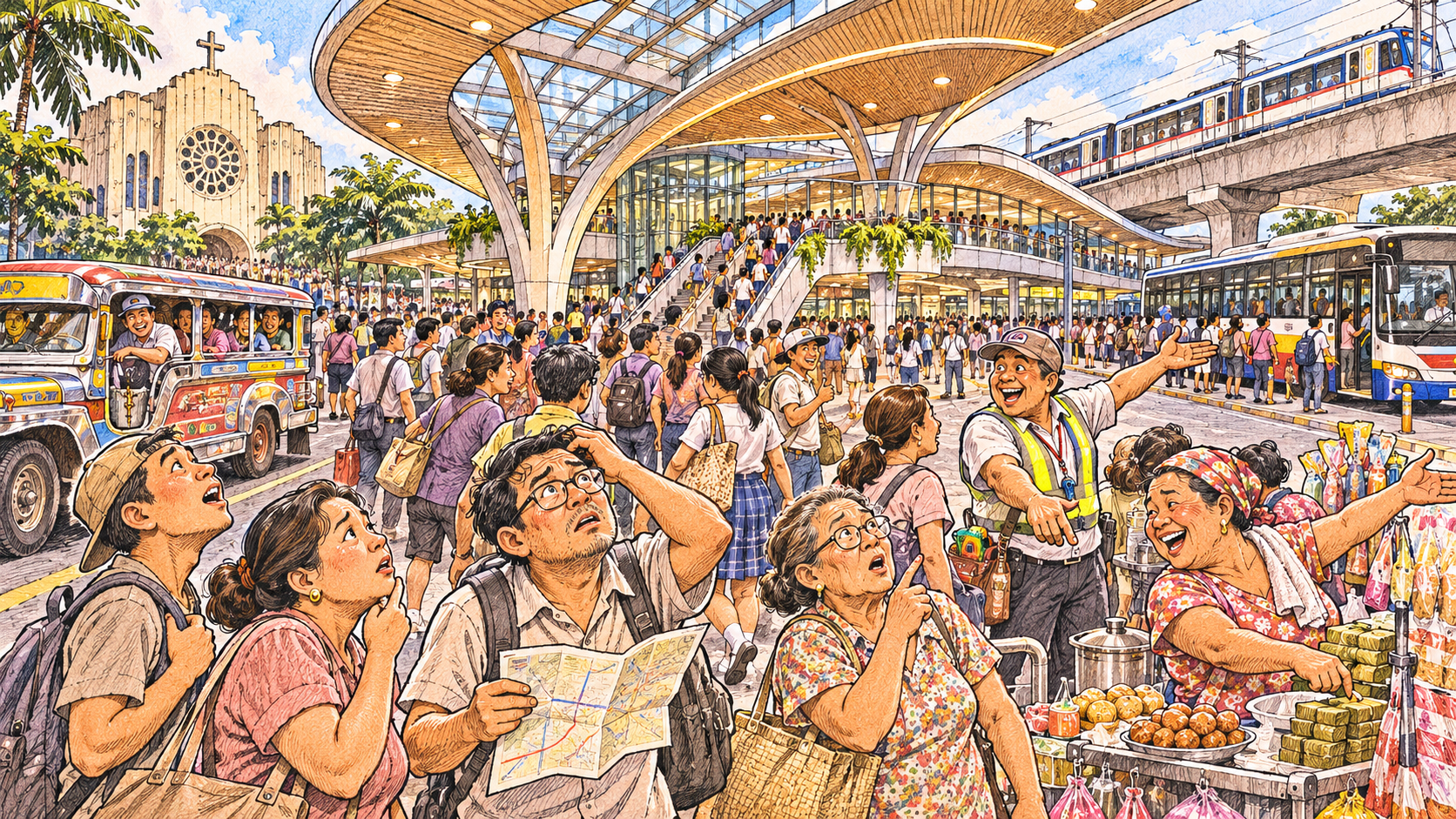
BACLARAN — A proposed multimodal transport hub has raised the thrilling possibility that a passenger might change vehicles without first changing personality, blood pressure and religion.
The Philippine News Agency report on the Baclaran transport and vendor hub describes a planned development intended to improve connections and provide organized space for more than 2,000 displaced vendors. Those are the reported plans. The commuter below is an invented character; his exhaustion requires considerably less imagination.
Baclaran multimodal hub offers connections with fewer negotiations
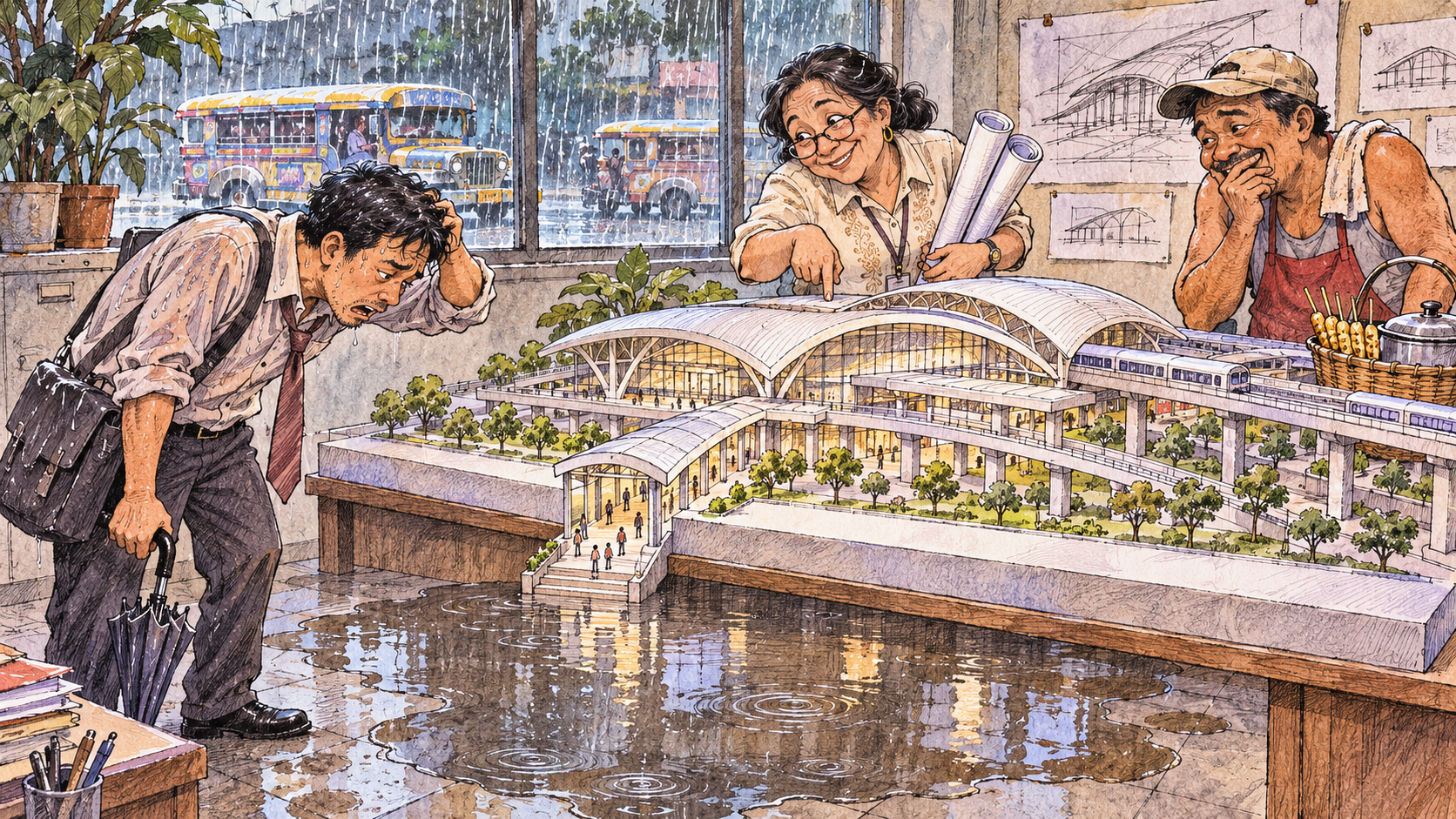
Our fictional passenger, Mang Nestor, welcomed the proposal after completing what his fitness watch classified as mountain climbing between two ordinary stops. He had boarded a jeepney, crossed a road, retraced his steps and purchased socks he had not previously needed.
“I thought multimodal meant jeep, bus and train,” he said in this imagined scene. “My present modes are walking, guessing and apologizing to a motorcycle.”
A transport interchange connects different services in one place. In commuter language, it is where a passenger hopes the next vehicle has heard of the previous vehicle. A good transfer requires more than proximity: someone must be able to reach it without carrying a suitcase across the territorial waters of a puddle.
The last fifty meters have appointed their own government
The promised vendor space matters because the sidewalk also functions as a shopping street, meeting place and emergency umbrella dealership. Treating vendors as an inconvenience misses how many passengers buy breakfast, phone cables and dinner ingredients during the same transfer.
In our comic planning workshop, an architect drew a straight pedestrian route. Nestor stared at it suspiciously. He had seen straight lines before, principally in documents explaining why a bus could not stop where he was standing.
A vendor in the scene proposed a useful test: ask a customer carrying groceries to follow the design. If the customer arrived at the correct platform without becoming a case study, the design could proceed.
Accessibility is a journey somebody actually finishes
Ramps, clear directions, shade and workable loading areas are practical questions, not decorative accessories for a rendering. A ramp ending at a parked vehicle is a very short philosophy lecture about disappointment.
The same applies to maintenance. An escalator that works only during the opening ceremony is technically a staircase with an expensive origin story. Passengers will judge the development by ordinary afternoons, including the wet ones when everybody suddenly owns the same black umbrella.
One uncomplicated trip would be an excellent launch event
The sensible standard is straightforward: can commuters transfer safely, can vendors earn a living, and can people with limited mobility use the place? Completion dates, access arrangements and vendor allocation rules deserve clear public explanations as the proposal develops.
Nestor offered to attend the eventual opening on one condition: organizers must arrive using public transport. He felt this would significantly improve both the speeches and the location of the entrance.
Satirical note: Nestor and the workshop are invented; the linked development report is real. This human collaboration between the world’s oldest tenured professor and a philosophy major turned dairy farmer has missed enough connections to qualify as transport research.