
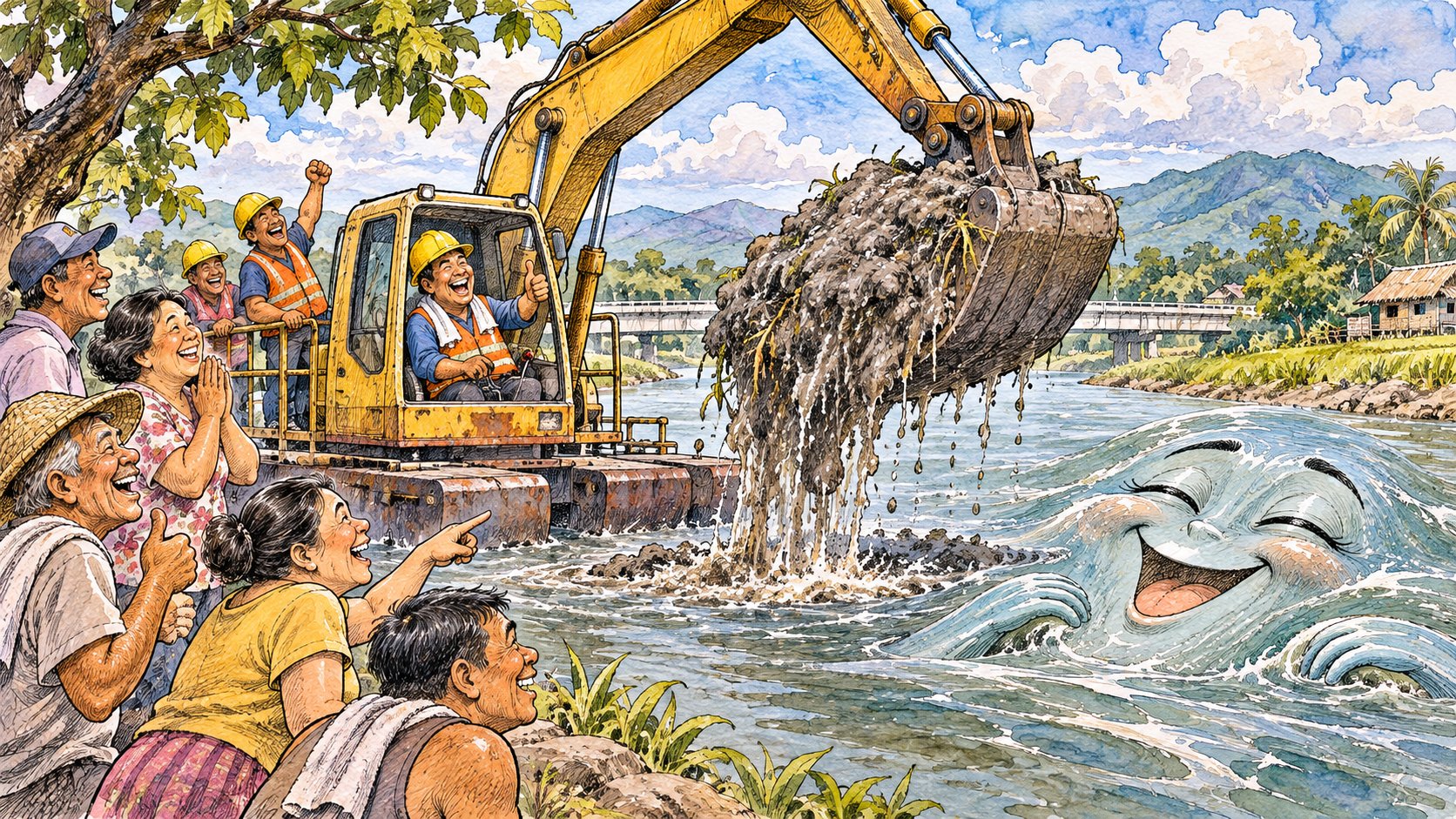
PANGASINAN — Dredging work that removed 26,826 cubic meters of silt and waste from two waterways has inspired an imaginary river to submit its first formal complaint about unsolicited deliveries.
Read the PNA report on Pangasinan dredging for the real event behind this commentary.
The real report concerns work in Samat-Magtaquing Creek and the Sinucalan River. The river’s subsequent correspondence is invented. So is its proposal to begin returning every discarded object to the household that originally became tired of owning it.
Our fictional resident, Mang Rolly, watched the machinery with interest. He had always considered the waterway part of the neighborhood. He was less comfortable learning how much of the neighborhood had apparently become part of the waterway.
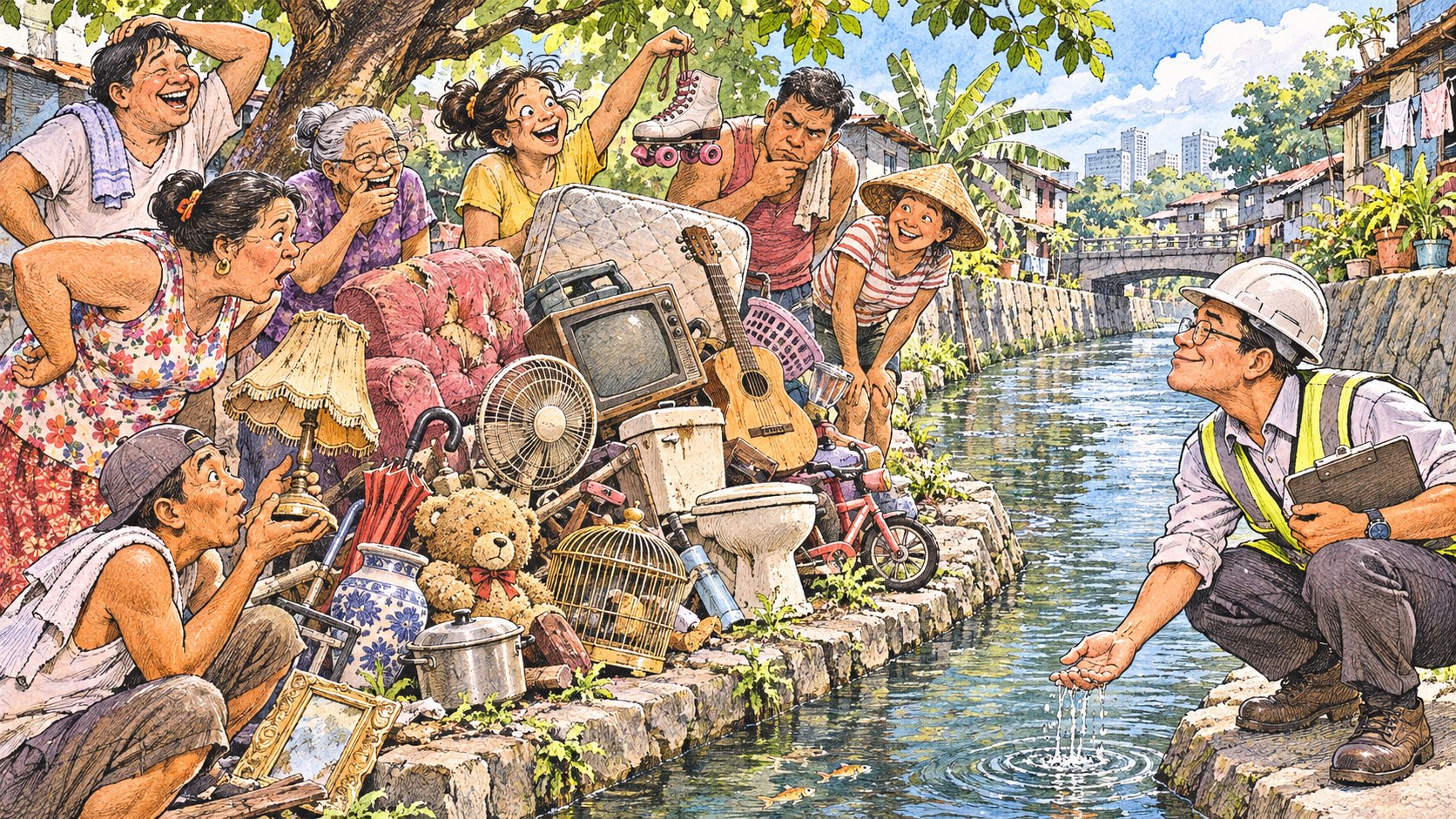
A neighbor described the removed material as considerable. Rolly agreed, although he preferred not to imagine the entire volume arranged in his living room. The room already contained furniture nobody admitted purchasing.
The channel cannot keep accepting everything
Dredging removes accumulated material from waterways. It is physical work with practical questions about location, handling and the surrounding system. A large volume in a report is not, by itself, a guarantee that every future flooding problem has disappeared.
In our comic bank-side discussion, an engineer explained that maintenance and prevention also mattered. Rolly approved. He had noticed a similar principle with his kitchen sink: clearing it became less effective when somebody immediately resumed feeding it unsuitable objects.
The river, speaking only in the satire, said it would like to receive rain in a more conventional form.
A clean channel is not a permanent disposal invitation
The imagined neighborhood agreed that removing waste was useful. It then confronted the less glamorous question of how to prevent more waste from arriving.
One resident proposed a large sign. Another observed that the existing sign had eventually required removal from the water too. The meeting decided that information should be accompanied by actual arrangements people could follow.
Rolly wanted clearer disposal practices and continued attention to the waterway. He did not think a creek should have to become visibly distressed before qualifying for a public conversation.
Maintenance is the sequel that matters
Residents benefit from understandable explanations of completed work, remaining tasks and the measures relevant to their own area. Good maintenance is not a dramatic promise that nature has been permanently instructed to behave.
The imagined river appreciated the dredging but declined to sign a lifetime no-flood agreement. It cited weather, upstream conditions and its reasonable objection to being held responsible for every object people abandoned.
Rolly considered this a fair position. He gathered his household’s waste for proper disposal and asked his neighbor to do the same.
For the first time in the comic meeting, the river offered no comment. Everyone interpreted the silence as a modest improvement in relations.
Satirical note: Comic characters and conversations are invented; the linked report is real. This human collaboration between the world’s oldest tenured professor and a philosophy major turned dairy farmer offers this final clarification: The river’s complaint has not acquired a tracking number.