

MANILA — A shortage of roll-on, roll-off vessels has prompted an imaginary port passenger to praise the terminal’s excellent ability to receive a boat, should a boat ever become involved.
Read the PNA report on Philippines RoRo vessel shortage for the real event behind this commentary.
The real discussion at Senate budget deliberations included the Philippine Ports Authority’s assessment that additional vessels are needed, alongside concerns raised about inadequate facilities in some provinces. Those positions are not identical. The comic passenger below would appreciate a transport system that addresses both.
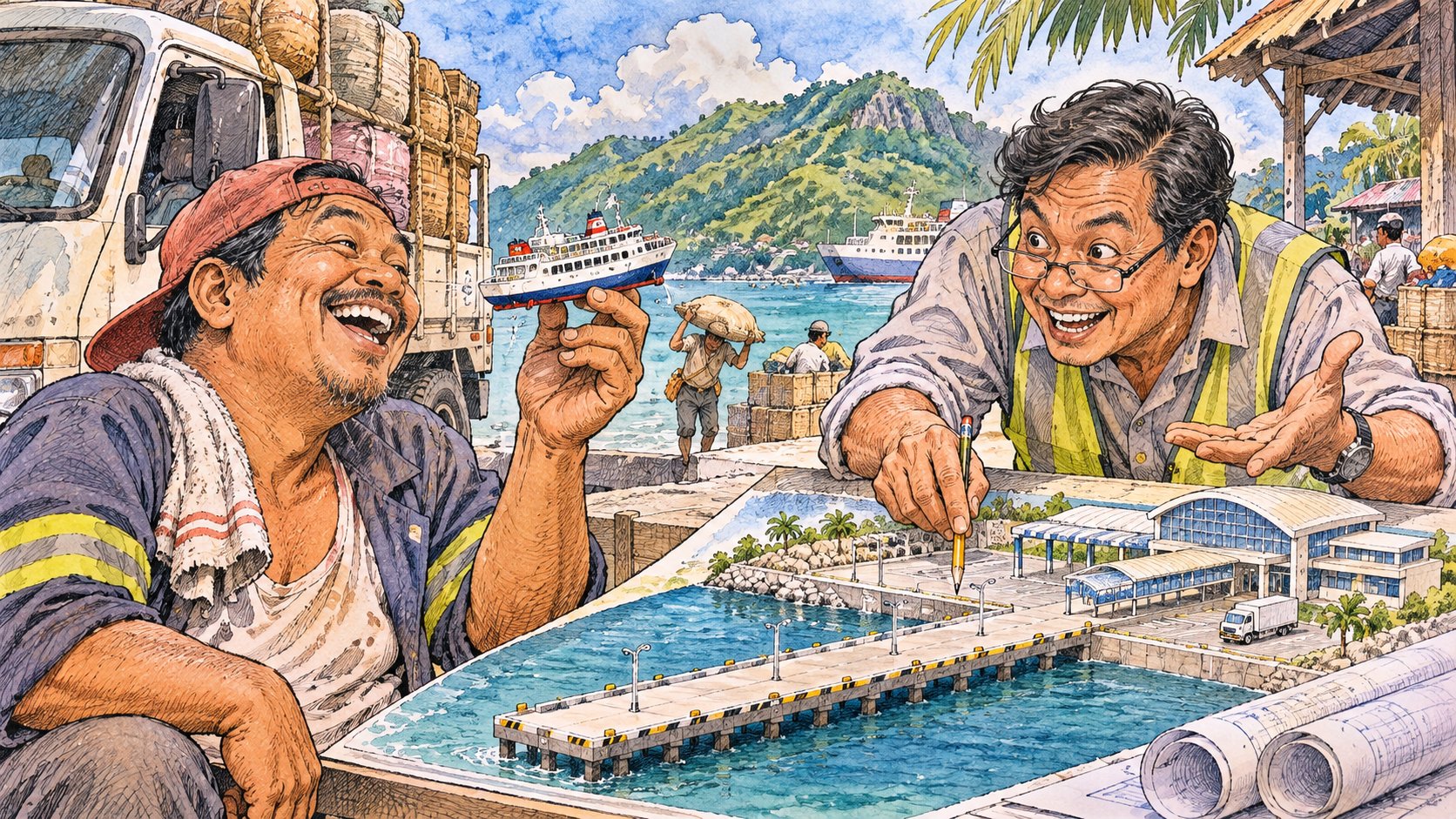
His name is Ernesto. He arrived with cargo, a ticket inquiry and the dangerous assumption that a maritime journey eventually included a vessel.
A fictional official proudly showed him an improved waiting area. Ernesto thanked him. He was genuinely in favor of waiting comfortably, but had hoped comfort would remain a supporting feature rather than the entire itinerary.
The ramp has completed its share of the journey
Roll-on, roll-off transport allows vehicles to move onto and off vessels. The concept depends on several elements working together. A capable port without sufficient service and a vessel without a suitable facility each present practical difficulties.
In our invented terminal, staff debated whether the shortage concerned boats or infrastructure. Ernesto suggested that his immediate concern was transport. He would happily let the relevant organizations divide the explanation after his cargo reached the other island.
His truck, represented in the satire by a driver with extraordinary patience, supported this proposal.
A connection requires something at both ends
Island communities depend on workable maritime links for passengers and goods. Timetables, capacity, facilities and safe operations all matter. An assessment that focuses on one element should not erase the experience of people encountering difficulties elsewhere.
The comic port planner produced a beautiful diagram connecting islands with arrows. Ernesto asked how many vehicles an arrow could carry. The planner conceded that the symbol primarily conveyed intent.
A colleague suggested thicker arrows to represent improved capacity. Ernesto requested an actual service update instead. His cargo remained surprisingly indifferent to graphic design.
Count the journey somebody can complete
Practical improvements should be judged through usable connections. Travelers need clear information about available services and arrangements, rather than assurances that every component would work splendidly if the missing components arrived.
The imaginary official eventually gave Ernesto the latest actual service information instead of another overview. Ernesto found this immediately useful, despite its disappointing lack of ceremonial language.
He revised his plans, checked the relevant arrangements and stopped treating the diagram as a promise. The truck driver did the same.
Before leaving the waiting area, Ernesto complimented the ramp again. It was doing an excellent job.
He hoped the rest of the journey would eventually receive the same opportunity.
Satirical note: Comic characters and conversations are invented; the linked report is real. This human collaboration between the world’s oldest tenured professor and a philosophy major turned dairy farmer offers this final clarification: Arrows on a map remain unable to transport trucks.