Manila’s media landscape is vast and interesting…
Manila’s media landscape paints a vibrant tableau of the Philippines’ commitment to free speech and diverse journalistic expression, a stark contrast to the more restrained media environments across much of Asia. Tracing its roots back to the Spanish colonial period when the first newspaper, Del Superior Govierno, was established in 1811, the press in Manila has evolved significantly, navigating through colonial transitions, nationalistic movements, and the modern digital revolution. The city’s media outlets have historically played critical roles in shaping public discourse and political sentiment, a tradition that persists today.

Within the bustling metropolis, an array of media outlets is at play: newspapers, television, radio, and increasingly, digital platforms. Manila’s newspapers, once the foremost medium for disseminating news, carry historical weight as vehicles of activism and reform. From the heady days of “La Solidaridad” to the contemporary broadsheets like the Philippine Daily Inquirer, Manila Bulletin, and The Philippine Star, these print publications continue to command substantial influence despite the challenges of a digital age.
Television in Manila presents an extensive reach, being the most accessible medium for many Filipino households. Major networks such as ABS-CBN, GMA Network, and TV5 have for decades been synonymous with Filipino entertainment and news broadcasting. Their influence is far-reaching, extending beyond Manila and urban centers to the far corners of the archipelago.
Radios remain a stalwart in the Manila media ecology, delivering news and entertainment to those areas where television and newspapers might not penetrate as deeply. As a medium, it has adapted well to the digital transition, with many radio stations now streaming online to reach wider audiences.
The dawn of the internet has, however, transformed media consumption habits. Manila’s netizens are now increasingly turning to online news portals, blogs, and social media for their news fix. Rappler, an online news site founded in 2012, exemplifies the new wave of digital journalism in the Philippines that merges traditional investigative reporting with social networking. Digital platforms not only serve as news disseminators but also as arenas for public debate and citizen journalism, further democratizing the flow of information.
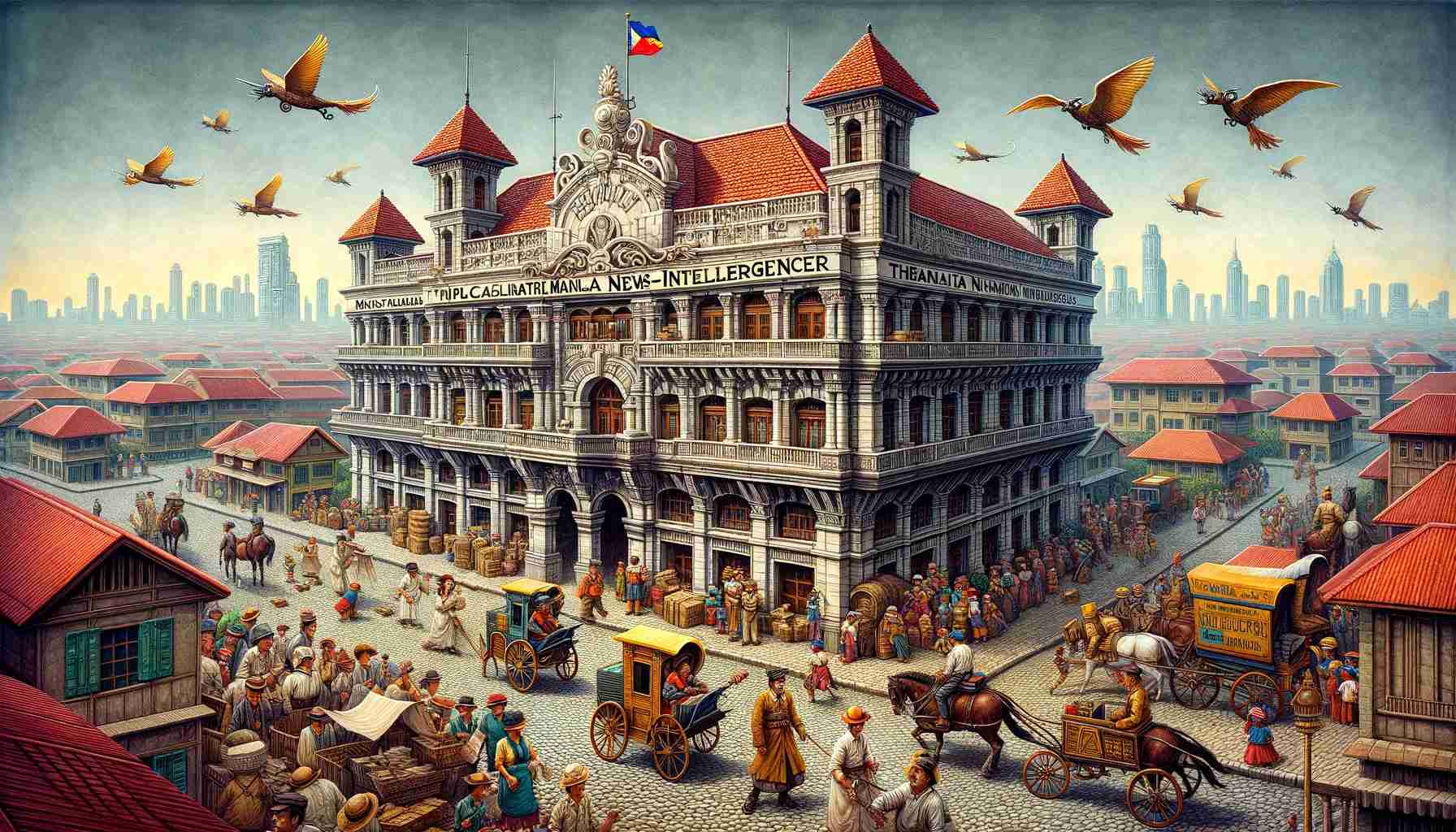
Each of these outlets caters to a different segment of Manila’s populace, but together, they form a media environment that is complex, competitive, and continually adapting to the needs and habits of its audience. As these media entities navigate a landscape marked by technological innovation and shifting consumer preferences, they uphold Manila’s reputation as a hub of vibrant and robust journalism.
The profession of journalism in Manila is colored by a complex array of challenges that intertwine with the political, economic, and social fabric of the city. While the Philippine constitution guarantees press freedom, the practical landscape is fraught with obstacles that test the resilience and integrity of journalists and media outlets.
Political Pressures
Political pressure is perhaps the most significant hurdle facing Manila’s journalists. In the Philippines, where politics is deeply embedded in the social structure, journalists often find themselves navigating a minefield of political sensitivities. Those who dare to challenge or criticize the ruling elite can find themselves targets of legal harassment, with libel and cyber libel laws weaponized to silence dissent. Media professionals, therefore, operate under the shadow of potential reprisals, which may include not just legal action but also online harassment campaigns and physical threats.
The political landscape has also seen instances of governmental interference in media operations. The most high-profile case in recent years has been the shutdown of ABS-CBN, one of the country’s largest broadcast networks, following a protracted battle over its franchise renewal. This action sent a chilling message across the media industry, reinforcing the dangers of incurring political displeasure. Editorial independence is further compromised when political figures or entities own or influence media outlets, shaping content to serve personal or party interests.
Economic Constraints
Economic challenges also pose a significant threat to the viability and integrity of journalism in Manila. The shift to digital media has disrupted traditional revenue streams, with advertising dollars migrating from print and broadcast to online platforms. Moreover, the global trend of media consolidation has led to an environment where a handful of conglomerates control a substantial share of the media market. This concentration of ownership has economic implications, potentially curbing the diversity of viewpoints and limiting competition.
The economic reality for many journalists is one of job insecurity, low pay, and the lack of resources to pursue in-depth, investigative reporting. Media outlets struggling with financial instability may succumb to ‘envelopmental journalism,’ a local term for the practice of accepting bribes in exchange for favorable coverage or for spiking a story. This erodes public trust and undermines the very essence of journalism as a pillar of democracy.
Safety Concerns
Journalists in Manila, as well as across the Philippines, frequently contend with safety concerns that range from intimidation to outright violence. The country has a grim record of journalist killings, with unresolved murders creating a culture of impunity. Local reporters, particularly those covering the drug war or exposing corruption in provincial areas, are at greater risk. Although Manila might be somewhat safer due to its urban setting and the presence of international scrutiny, threats and violence are not unheard of.
The psychological toll on journalists who face constant threats can be profound, leading to self-censorship to avoid becoming targets. This culture of fear stifles critical reporting and undermines the media’s role as a watchdog over those in power.
Social Barriers
Social barriers also impede the freedom and integrity of journalism. Issues of gender discrimination and harassment affect the media industry, with women journalists often facing additional layers of vulnerability. Despite a robust tradition of women in Philippine journalism, they can be subject to gender-based online trolling, sexual harassment in the workplace, and marginalization.
Moreover, the class divide in Manila can influence media coverage, with stories focusing on the interests and perspectives of the urban elite at the expense of underrepresented communities. This bias limits the scope of discourse and can perpetuate social inequality by not giving a voice to all segments of society.
The Impact on Journalistic Integrity and Freedom
The array of challenges confronting journalists in Manila has profound implications for journalistic integrity and freedom. Self-censorship out of fear, bias due to ownership and political pressure, and the lure of ‘envelopmental journalism’ all degrade the quality of reporting and the public’s right to know. When stories are killed, angles are skewed, or critical voices are muffled, the media’s ability to hold power to account is weakened.

Moreover, these challenges erode public trust in media institutions, thereby diminishing their influence and authority. In an environment where false information can spread rapidly, a weakened press is less able to serve as an effective counterweight, critically analyzing and debunking misinformation.
Despite these obstacles, many journalists in Manila persevere, upholding ethical standards and striving for responsible journalism. They navigate the political minefields and economic restraints, endeavoring to tell stories that matter to the community and to serve the public good. Their resilience in the face of adversity is a testament to the enduring spirit of free and fair journalism, a cornerstone of any vibrant democracy.
In Manila, the ascendancy of digital media has revolutionized news dissemination, catalyzing significant shifts in audience behavior and spawning new journalistic practices. This metamorphosis in the media landscape is emblematic of the global digital transformation, yet it possesses unique local characteristics shaped by Manila’s socio-political climate and technological penetration.
Audience Behavior and News Consumption
The proliferation of smartphones and widespread internet access has rendered digital media the predominant vehicle for news consumption in Manila. With online platforms offering immediacy and accessibility, there has been a perceptible pivot away from traditional media formats. Audiences, especially among the younger demographic, are increasingly drawn to social media, blogs, and news websites for real-time information, favoring the convenience of receiving news tailored to their preferences and schedules.

This shift has also altered the manner in which news is engaged with and disseminated. Social media’s interactive nature has transformed passive news consumers into active participants, who not only consume but also share, comment on, and often contribute to the news narrative. Moreover, the capacity for audiences to selectively consume content that aligns with their views has led to the concern of ‘echo chambers’ where diverse opinions are less likely to penetrate an individual’s newsfeed.
The mobile-first mentality in Manila has seen news organizations optimizing their content for mobile consumption, with many adopting a ‘digital-first’ strategy. Recognizing that their audiences are more likely to engage with content through handheld devices, media outlets are curating their reporting to be more bite-sized, visual, and shareable, catering to the on-the-go lifestyle and shortened attention spans fostered by digital media.
Emergence of New Journalistic Practices
The digital wave has not only changed audience behavior but also ushered in a new era of journalistic practices. In the face of changing consumer habits, journalists in Manila have adapted by developing new skill sets that marry traditional reporting with digital savvy. Multimedia storytelling has become the norm, with reporters now expected to produce content that spans text, video, audio, and interactive graphics. This multi-platform approach ensures that stories can resonate across various digital channels, thereby expanding their reach and impact.
In tandem with multimedia journalism, data journalism has gained traction in Manila. Leveraging the vast amounts of data now available, journalists are employing data analysis tools to unearth trends, patterns, and stories that might have otherwise remained concealed. This approach enhances the depth and breadth of reporting, often resulting in investigative pieces that can instigate public discourse and policy change.

Another significant shift has been the rise of citizen journalism, empowered by digital platforms. With the barrier to entry for news dissemination dramatically lowered, everyday individuals in Manila are now partaking in the news process by capturing live events, sharing personal narratives, and voicing opinions through social media and blogs. While this democratization of news provides a plurality of voices, it also presents challenges in terms of verifying the authenticity and accuracy of user-generated content.
Evolving Newsroom Dynamics
Digital media has precipitated an evolution of newsroom dynamics, as media outlets grapple with the need to stay relevant and financially viable in a digitized world. Speed has become a critical currency, with newsrooms often prioritizing the rapid delivery of news to outpace competitors. However, this race against the clock has sometimes come at the expense of detailed fact-checking, creating a tension between immediacy and accuracy.
Moreover, the economic model underpinning journalism has been disrupted. With print advertising revenues in decline, media organizations in Manila have been compelled to explore alternative revenue streams, such as online advertising, sponsored content, and subscription models. The challenge lies in balancing commercial imperatives with editorial independence, ensuring that the quest for profitability does not compromise the integrity of journalism.
As traditional and digital media ecosystems coalesce in Manila, cross-platform collaboration has also become more prevalent. Legacy media brands are forging partnerships with purely digital entities to amplify their content and extend their reach to new audiences. These collaborations often entail not only content sharing but also shared practices in analytics, audience engagement, and advertising strategies.
The Way Forward for Digital Media in Manila
The impact of digital media on news dissemination in Manila is profound and ongoing. The rapid evolution of technology continues to generate fresh paradigms for journalism and audience interaction. Media entities that navigate this landscape effectively are those that remain agile, adapting their editorial and business strategies to the digital currents that shape the public’s consumption of news.

As journalists and news organizations continue to contend with and harness the power of digital media, the future of journalism in Manila will be characterized by innovation, inclusivity, and the constant negotiation between speed and depth, profitability and principle. This is the new reality of news dissemination in a city that stands as a vibrant hub of information in the digital age.
In Manila, as in many places around the world, media plays a crucial role in shaping and reflecting public opinion. The symbiotic relationship between media narratives and societal beliefs cannot be overstated, as it is through media that many individuals in Manila gain access to information about local, national, and international events. It is through these narratives that public opinion can be swayed, reinforced, or sometimes confronted with differing viewpoints.
Influence of Media on Public Opinion
Media can significantly influence public opinion by selecting which stories to highlight and how to present them. Agenda-setting theory posits that while the media may not tell people what to think, it is astoundingly effective in telling its audience what to think about. In Manila, where political and social life is vibrant and varied, the media’s role in spotlighting certain issues can elevate them to matters of public concern and debate. This attention can alter the perception of their importance among the populace, thereby affecting how individuals prioritize and respond to various issues.
Framing, another key concept, refers to the way media presents information, influencing the interpretation and response of the audience. Through strategic framing, media outlets can shape public understanding and discussions around a topic. For example, framing a political protest in Manila as a legitimate expression of discontent versus an unlawful disturbance can lead to disparate public reactions and opinions about the protestor’s cause.
Media Narratives and Societal Values
Media narratives in Manila often intertwine with the deeply held societal values and cultural norms prevalent in Filipino society. Media content that resonates with the public’s core beliefs, such as family, religion, and national identity, tends to engage audiences more effectively and can therefore wield greater influence over public opinion. Television dramas and variety shows, which often portray familial struggles and successes, are prime examples of media content that strike a chord with many in Manila, reinforcing traditional values and societal norms.
However, media narratives can also challenge and reshape public opinion by exposing the audience to alternative perspectives and social issues. For instance, the representation of LGBTQ+ individuals in media has progressively become more prominent in Manila, which has contributed to an increasing dialogue and shift in public opinion regarding gender equality and rights for the LGBTQ+ community.
Media as a Platform for Public Discourse
In a city like Manila where engagement in public discourse is high, the media serves as a crucial platform for debate and opinion formation. Talk shows, editorials, and even social media pages become virtual town squares where citizens discuss and deliberate on issues. The ease of access to a wide range of content allows for diverse opinions to permeate the public sphere, potentially democratizing public discourse.
Public opinion is not only formed by media but also expressed and magnified through it. Citizen journalism and user-generated content have allowed the people of Manila to contribute to the media landscape actively, rather than remaining passive consumers. Opinions that resonate with the masses can quickly go viral, making social media a powerful barometer for public sentiment on various issues.
Social Media’s Amplification of Public Opinion
The role of social media in shaping public opinion in Manila is particularly noteworthy. Platforms like Facebook, Twitter, and YouTube are instrumental in both reflecting and influencing public sentiments. These platforms facilitate the rapid dissemination of information, but also provide a space for the expression of collective emotions and rapid mobilization around causes. Hashtags and online campaigns can take on a life of their own, epitomizing the power of social media to affect public opinion. The Philippine context, with a high social media penetration rate, makes this particularly potent.
Yet, it is important to acknowledge the double-edged nature of social media’s influence. The echo chamber effect, where individuals are exposed predominantly to viewpoints that align with their own, can entrench beliefs and polarize public opinion. Disinformation and “fake news” propagated through social media can also skew public perception and lead to misinformed opinions. This introduces a critical challenge for media literacy and the responsible consumption of information in Manila.
Media Influence During Elections
Election periods offer a clear example of the media’s impact on public opinion. In Manila, media coverage of candidates, their platforms, and political controversies can significantly influence voting behaviors. The narratives created around political figures can enhance or tarnish their public images, affecting their electability. Media scrutiny of political campaigns, manifestos, and debates also informs the electorate, shaping their opinions and choices at the ballot box.
In sum, the relationship between media and public opinion in Manila is complex and dynamic. Media narratives play a vital role in both reflecting and shaping societal beliefs and values. The media can amplify public discourse, challenge prevailing norms, and influence public sentiment on various matters. With the growing influence of social media, the feedback loop between media narratives and public opinion has become more immediate and potent, underscoring the importance of responsible media practices and media literacy among the public.
Government regulations play a pivotal role in shaping the media landscape in Manila, with the Philippines historically being known for having one of the most vibrant and freest presses in Asia. However, the press in Manila, and the broader Philippines, faces significant challenges that undermine its ability to operate freely and serve the public interest.
Press Freedom and Legal Protections
The Constitution of the Philippines enshrines freedom of speech and of the press as fundamental rights. Despite this constitutional guarantee, journalists in Manila operate in a complex and sometimes hostile environment. The Philippines has a tumultuous history of Martial Law under Ferdinand Marcos, which severely restricted press freedom. While the country has since moved away from those repressive days, remnants of the past occasionally surface, casting shadows on the current state of the press freedom.
Media Ownership Laws
The Philippines has laws that regulate media ownership, aimed at preventing concentration and fostering diversity. The Public Service Act limits foreign ownership of mass media to 40%, intending to ensure that media remains under Filipino control. Yet, the reality of media ownership in Manila is often criticized for being concentrated among a few powerful families and corporate interests. This concentration of media ownership can impact the diversity of views represented in the press and can lead to self-censorship if the interests of owners conflict with journalistic integrity.