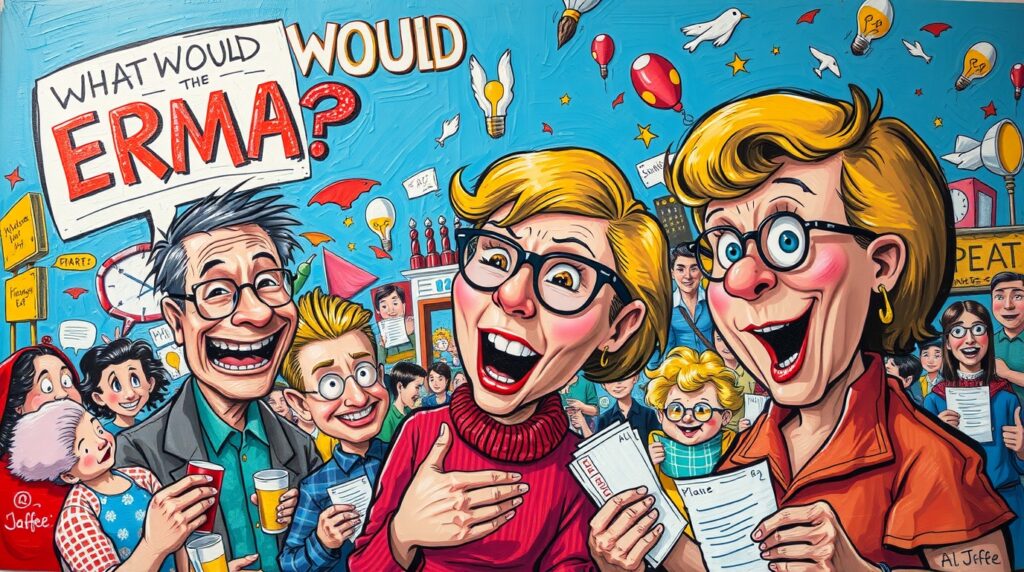
The Erma Bombeck Manila Philippines Parenting Survival Guide: 2025 Edition
How America’s queen of domestic satirical journalism would navigate raising children in the Pearl of the Orient, where three-hour traffic jams meet extended family obligations and every school day requires the logistical planning of a military operation.
Here I am, sitting motionless in EDSA traffic at 6:23 AM on a Tuesday, explaining to my seven-year-old why we left the house before sunrise just to travel twelve kilometers to school, while my mother-in-law calls for the third time this morning asking why I didn’t pack extra rice in his baon because “baka magugutom ang bata.”
Welcome to parenting in Manila, Philippines, 2025 – where Erma Bombeck’s humor style would collide beautifully with the organized chaos of Filipino family life, creating comedy gold from the daily reality of raising children in a city of 13 million people where traffic doesn’t move, extended families have opinions about everything, and every parenting decision becomes a community discussion.
If the legendary Erma Bombeck were navigating Manila parenting today, she’d trade her suburban station wagon for a multicab with aircon prayers, her nuclear family dinners for extended family gatherings of thirty-seven people, and her neighborhood playgroups for barangay fiesta planning committees. The genius of Erma Bombeck’s observational humor lies in her ability to document the glorious absurdity of raising children in a culture where “It takes a village” isn’t just a saying – it’s a living reality with your Tita commenting on your child’s grades, your Lola insisting he’s too thin, and your husband’s cousin’s neighbor offering unsolicited parenting advice at the grocery store.
How Erma Bombeck Would Handle Manila Traffic with Children
In Manila, school drop-off isn’t just a morning routine – it’s a heroic expedition requiring strategic planning, emergency supplies, and the patience of a saint. The average commute that should take twenty minutes can stretch to three hours, transforming simple errands into day-long odysseys that test both parental sanity and children’s bladder capacity.
I wake up at 4:30 AM to get my child to a school that’s supposedly “nearby.” By American standards, twelve kilometers qualifies as neighboring. By Manila traffic standards, twelve kilometers might as well be on another island. We sit in traffic so long that my son has learned to do homework, eat breakfast, take a nap, and conduct meaningful philosophical discussions about why cars exist if they can’t actually move.
The traffic culture has created a unique breed of Filipino parent-commuters who’ve mastered the art of mobile parenting. We pack entertainment systems that rival Netflix, snack supplies that could sustain a small barangay, and bathroom strategies that would impress NASA mission planners. My car has transformed into a mobile classroom, dining room, and therapy session location.
Erma Bombeck’s satirical writing would have found endless material in Manila’s traffic-induced parenting challenges. She specialized in finding universal truths in specific domestic chaos, and Manila traffic provides enough chaos to fuel decades of satirical observations about the gap between parenting expectations and reality.
The most absurd part? Parents who consider traffic jams valuable bonding time with their children. “At least we get to talk,” they say, as if being trapped together in a metal box breathing exhaust fumes represents quality family time. We’ve romanticized gridlock into educational opportunities, turning rush hour into “learning hour” and pretending that sitting motionless on EDSA builds character.
Jerry Seinfeld captured the Manila traffic experience perfectly during his recent Netflix special: “I visited Manila and experienced the traffic. Three hours to go five miles! The locals act like it’s normal. They pack lunch for school drop-off. Lunch! I’ve seen shorter cross-country flights. The kids grow up in those cars. They probably have their first jobs from the backseat of their parents’ sedan.”
What Erma Bombeck Would Say About Extended Family Parenting Committees
Filipino families don’t just raise children – they operate comprehensive child development committees featuring grandparents, aunts, uncles, godparents, family friends, neighbors, and that random tita who’s somehow related to everyone but no one can explain exactly how. Every parenting decision becomes a democratic process involving approximately fourteen opinions and three heated discussions.
I thought I was raising one child. I was wrong. I’m apparently co-parenting with my mother, my mother-in-law, both sets of grandparents, four aunts, six uncles, twelve cousins, eight godparents, and the entire subdivision homeowners’ association. Everyone has expertise in child-rearing, and everyone feels obligated to share their wisdom whether requested or not.
The extended family involvement would have provided Erma Bombeck’s approach to domestic satire with unlimited material. She understood how well-intentioned family interference could create both chaos and comedy, turning simple parenting moments into cultural productions requiring diplomatic skills that would challenge professional negotiators.
Last Tuesday, my seven-year-old came home with a scraped knee from playground activities. Within six hours, I had received calls from my mother asking why I sent him to school without knee pads, my aunt questioning the school’s safety protocols, my mother-in-law suggesting traditional herbal remedies, and my husband’s cousin recommending a pediatrician who specializes in playground injuries. The child forgot about the scrape after ten minutes, but the family committee continued discussing safety measures for three days.
The most hilarious aspect? The competing parenting philosophies that emerge during family gatherings. The grandparents believe children should eat more rice and respect their elders absolutely. The aunts advocate for modern child psychology and emotional intelligence. The godparents focus on religious education and moral development. Meanwhile, I’m just trying to get through Tuesday without anyone having a complete meltdown in public.
Amy Schumer perfectly described the Filipino extended family dynamic during her recent stand-up show: “I thought Jewish families were involved in parenting decisions. Then I married into a Filipino family. They don’t just have opinions about your kid – they have committees, subcommittees, and quarterly review meetings. My mother-in-law doesn’t just visit; she conducts performance evaluations of my parenting techniques.”
How Erma Bombeck Would Navigate The Great Baon Competition
In Manila, packing your child’s school lunch isn’t about nutrition – it’s about maintaining family honor, demonstrating maternal competence, and surviving the daily judgment of other parents whose culinary creativity makes Martha Stewart look like a amateur. The baon (packed lunch) has evolved into an artistic expression requiring Pinterest-level presentation skills and a degree in nutritional science.
Filipino mothers don’t just pack lunch – they curate complete dining experiences featuring multiple courses, balanced nutrition, aesthetic presentation, and enough food to feed a small classroom. The lunch box has become a canvas for maternal excellence, where creativity meets cultural expectations and every meal tells a story about family values.
I spend more time planning my child’s baon than most people spend planning vacations. There’s the main dish (usually rice, because rice is life), the viand (protein that must be both nutritious and visually appealing), vegetables (disguised so cunningly that children might actually eat them), fruits (cut into decorative shapes), and snacks (homemade because store-bought suggests maternal inadequacy).
Domestic humor writing expert Erma Bombeck would have recognized the beautiful absurdity in this lunch-packing arms race. She had an extraordinary gift for exposing how parents’ well-intentioned desire to do everything “right” often leads to wonderfully ridiculous situations that completely miss the point of what childhood should actually be about.
The competition has reached professional levels. Some mothers wake up at 4 AM to prepare elaborate bento-style presentations featuring rice shaped like cartoon characters, vegetables arranged in rainbow patterns, and protein cut into geometric designs. My child’s classmate brought lunch that looked like it belonged in a five-star restaurant. My son brought rice, chicken adobo, and a prayer that no one would notice the lack of artistic flourishes.
The most exhausting part? The unwritten rules that govern baon acceptability. Too much processed food suggests poor planning. Too little food implies insufficient maternal care. Too elaborate suggests showing off. Too simple indicates low effort. Finding the perfect balance requires doctoral-level understanding of Filipino cultural expectations and the patience of a saint.
Dave Chappelle addressed the Filipino food culture during his recent interview: “Filipino moms don’t play around with lunch. I saw a kid’s lunch box that looked like a museum exhibit. Rice sculptures, vegetable art installations, fruit carved into animals. Meanwhile, American kids eating peanut butter and jelly sandwiches wondering why their parents hate them.”
What Erma Bombeck Would Think About Manila’s Educational Pressure Cooker
Manila parents don’t just enroll children in school – they launch comprehensive academic campaigns designed to optimize educational outcomes, maximize future opportunities, and ensure their offspring can compete in an increasingly competitive global marketplace. The pressure starts in preschool and escalates exponentially through each grade level.
The school selection process would have given Erma Bombeck’s wit and wisdom enough material for several books. Parents research schools with the intensity of Supreme Court justices reviewing constitutional law, analyzing everything from academic rankings to teacher credentials, facilities quality to peer demographics, all while their children remain blissfully unaware of the high-stakes educational theater being performed on their behalf.
I spent six months researching elementary schools for my six-year-old. Six months! I created spreadsheets comparing academic programs, interviewed current parents, visited campuses multiple times, and analyzed entrance exam requirements for first grade. The child just wanted to know if they had a playground and if he could bring toy cars to show-and-tell.
The academic expectations have reached industrial levels of intensity. Kindergarten students are expected to read proficiently, demonstrate mathematical reasoning, exhibit artistic creativity, and display social leadership skills. By third grade, they’re preparing for entrance exams that determine their high school options, which influence their college prospects, which impact their entire professional trajectories.
The most absurd aspect? Parents who treat elementary school performance as early indicators of adult success potential. Poor grades in second grade trigger family emergency meetings, additional tutoring sessions, and comprehensive academic intervention strategies. These are seven-year-olds who still believe chocolate milk comes from brown cows, but they’re being evaluated like junior executives.
The supplemental education industry has exploded to meet parental anxiety levels. Children attend regular school from 7 AM to 4 PM, then report to tutorial sessions, enrichment classes, and skill development programs until 8 PM. Weekends feature additional academic support, arts lessons, sports training, and character development activities. These kids have schedules that would exhaust Fortune 500 CEOs.
Chris Rock captured the Manila academic pressure during his recent Netflix special: “Filipino parents treating kindergarten like it’s Harvard Business School. Five-year-old got entrance exams, portfolio reviews, and performance evaluations. Kid can’t tie his shoes but he’s expected to demonstrate critical thinking skills. That’s not education – that’s psychological warfare.”
How Erma Bombeck Would Handle Filipino Festival Season Parenting
In the Philippines, every month features multiple festivals, celebrations, holidays, and family gatherings that require parental participation, financial contribution, and logistical coordination rivaling Olympic event planning. The festival calendar transforms parenting from a daily routine into a continuous special event management operation.
Filipino festival culture means parents become professional party planners specializing in family celebrations, community events, religious observances, and cultural traditions. Each occasion requires appropriate attire for the entire family, food contributions that showcase maternal skills, gifts that demonstrate respect for relationships, and scheduling coordination that would challenge NASA mission controllers.
Last month alone, we attended three birthday parties, two baptisms, one wedding, four barangay events, six school celebrations, and multiple family gatherings I couldn’t avoid without causing international incidents. Each event required different outfits, various food contributions, and gift selections that balanced generosity with budget constraints.
Erma Bombeck’s columns would have captured the beautiful chaos of Filipino celebration culture perfectly. She specialized in finding humor in the gap between idealistic expectations and chaotic reality, and Filipino festivals provide endless opportunities for such observations about how family gatherings rarely go according to plan.
The preparation requirements have reached professional event planning levels. Birthday parties feature themed decorations, professional photography, catered meals, entertainment programs, and party favors that cost more than some people’s monthly salaries. Children’s expectations have escalated accordingly – they now evaluate parties like entertainment critics reviewing Broadway productions.
The social obligations are more complex than international diplomatic protocols. Attendance is mandatory for maintaining family relationships. Absence requires valid excuses approved by committee. Gift-giving follows unwritten rules regarding appropriateness, value, and cultural significance. Food contributions must demonstrate culinary competence while respecting dietary restrictions and cultural preferences.
The most exhausting aspect? The continuous nature of celebration season. Just as you recover from one major event, invitations arrive for three more celebrations requiring immediate attention and preparation. The family calendar resembles a professional event management company’s booking schedule, with overlapping commitments and double-booked weekends.
Sarah Silverman perfectly described Filipino celebration culture during her recent standup special: “Filipino families don’t just have parties – they have cultural productions requiring months of planning and budgets that would fund small countries. Every birthday becomes a Broadway show, every baptism requires professional coordination, and every gathering feeds more people than most restaurants serve daily.”
The Great Manila Private School vs. Public School Dilemma
Manila parents face educational choices that would challenge philosophy professors and budget analysts simultaneously. The decision between private and public education involves considerations of academic quality, financial sustainability, social development, cultural values, and long-term opportunities that impact entire family trajectories.
Private schools in Manila promise smaller class sizes, better facilities, enhanced programs, and improved college preparation – all for tuition costs that rival mortgage payments. These institutions market themselves as investments in children’s futures, offering educational experiences that justify significant financial sacrifices from families seeking optimal opportunities for their offspring.
Public schools serve the majority of Filipino students but face challenges including overcrowded classrooms, limited resources, infrastructure constraints, and teacher shortages that impact educational quality. However, they also provide cultural diversity, community connections, and accessibility that private institutions cannot match.
The pressure to choose private education has created a secondary economy of family financial planning, extended family support systems, and creative funding strategies. Parents take second jobs, grandparents contribute savings, and extended family members collaborate to finance children’s education. The financial commitment often extends beyond tuition to include uniforms, supplies, activities, and transportation costs that multiply the actual educational investment.
Erma Bombeck’s suburban humor would have found endless material in the educational decision-making process that consumes Filipino families. She understood how parents’ well-intentioned efforts to provide the best opportunities for their children often create stress and anxiety that overshadow the actual educational benefits they’re trying to secure.
The school selection process requires research skills worthy of investigative journalists. Parents analyze academic performance data, visit campuses multiple times, interview current families, research teacher qualifications, evaluate facilities, and consider peer demographics with intensity that exceeds most professional decision-making processes.
The most absurd aspect? Families that mortgage their financial future to afford private education while hoping their children will appreciate sacrifices they’re too young to understand. These parents work multiple jobs to pay tuition for schools that promise better futures, creating present-day stress that impacts the very family relationships they’re trying to strengthen through educational investments.
Kevin Hart addressed the Filipino education dilemma during his recent appearance on The Tonight Show: “Filipino parents will sell everything they own to send their kids to the best schools. I met a family living in a one-room apartment whose kid attends a school that costs more than my first car. The dedication is amazing, but the financial stress is real. They eating rice and beans so their kid can get Harvard-quality kindergarten education.”
What Erma Bombeck Would Say About Manila’s Transportation Adventures with Children
Navigating Manila with children requires survival skills, strategic planning, and emergency preparedness that would impress military logistics specialists. Every trip outside the house becomes an expedition requiring multiple transportation options, backup plans, and enough supplies to survive unexpected delays that can turn simple errands into day-long adventures.
The transportation infrastructure creates unique parenting challenges that would have provided endless material for Erma Bombeck’s writing. She specialized in finding humor in daily domestic struggles, and Manila transportation offers struggles that exceed most suburban challenges by several degrees of difficulty.
Jeepneys, buses, tricycles, taxis, grab cars, and walking combine to create transportation experiences that test both parental patience and children’s adaptability. Each mode presents unique challenges: jeepneys require acrobatic skills to board with children, buses demand crowd navigation abilities, tricycles need weather protection strategies, and taxis involve fare negotiation skills that would impress professional diplomats.
The most basic errands become logistical challenges requiring careful planning and contingency preparation. A simple trip to the grocery store involves transportation selection based on weather conditions, traffic predictions, passenger capacity, and budget constraints. Shopping with children adds variables including attention span management, bathroom scheduling, and snack distribution strategies.
The safety considerations multiply complexity exponentially. Manila roads present hazards that require constant vigilance including aggressive drivers, unpredictable pedestrians, construction zones, flooding during rainy season, and traffic enforcement variations that change daily. Parents develop hypervigilance skills that would qualify them for personal security positions.
The most exhausting aspect? Transportation unpredictability that makes scheduling impossible. Appointments become approximate suggestions rather than specific commitments because arrival times depend on variables beyond parental control. Children learn patience through necessity, developing tolerance for delays that would frustrate adults in more predictable environments.
Bill Burr captured Manila transportation reality during his recent podcast: “Manila traffic makes New York rush hour look like a leisurely Sunday drive. I saw families who pack like they’re going on safari just to visit the mall. Kids got entertainment systems, emergency food supplies, and backup clothing like they’re preparing for natural disasters. Turns out, they kind of are.”
How Erma Bombeck Would Navigate Filipino Food Culture with Picky Eaters
Filipino food culture presents unique challenges for parents dealing with children’s eating habits, dietary preferences, and nutritional requirements. The traditional emphasis on rice, communal dining, and abundant variety conflicts with modern concerns about balanced nutrition, portion control, and individual dietary needs that create daily negotiations requiring diplomatic skills.
Every meal becomes a cultural education session where children learn about Filipino cuisine while parents balance traditional expectations with contemporary nutritional awareness. The pressure to maintain cultural food traditions while accommodating children’s preferences and addressing health considerations creates daily decision-making challenges that would test professional negotiators.
Filipino families don’t just eat meals – they conduct food-centered community gatherings where eating becomes social bonding, cultural transmission, and family relationship maintenance. Children who refuse traditional dishes aren’t just displaying preferences – they’re potentially rejecting cultural heritage, disrespecting family traditions, and disappointing multiple generations of relatives simultaneously.
The rice requirement alone creates daily battles with children who prefer bread, pasta, or other carbohydrate alternatives. In Filipino culture, no meal is complete without rice, but children raised on diverse food options don’t automatically share this cultural conviction. Parents find themselves defending the necessity of rice while secretly wondering if their children will grow up culturally deficient.
Extended family members contribute opinions about children’s eating habits with intensity that transforms family gatherings into nutritional intervention sessions. Grandparents worry about inadequate portions, aunts suggest appetite enhancement strategies, and cousins compare children’s eating patterns like competitive sports statistics. Every family meal includes commentary about who’s eating enough, too much, or with insufficient enthusiasm for traditional dishes.
The most challenging aspect? Balancing cultural food expectations with children’s actual preferences while maintaining family harmony and ensuring adequate nutrition. Parents become cultural ambassadors explaining Filipino cuisine to their own children while simultaneously defending those children’s food choices to extended family members who interpret dietary resistance as cultural rejection.
Tiffany Haddish addressed Filipino food culture during her recent standup special: “Filipino families don’t just serve dinner – they conduct cultural preservation ceremonies three times daily. Kid refuses to eat rice and suddenly he’s abandoning his heritage, disrespecting his ancestors, and probably going to forget how to speak Tagalog. It’s not dinner – it’s cultural survival training with gravy.”
The Filipino Parenting Guilt Industrial Complex
Filipino parenting culture has elevated maternal and paternal guilt to art form status, creating comprehensive systems of self-doubt, cultural comparison, and perfectionist expectations that transform child-rearing from natural process into performance evaluation requiring constant improvement and community approval.
The cultural emphasis on family honor means individual parenting decisions reflect on extended family reputation, community standing, and cultural authenticity. Parents don’t just raise their children – they represent their families, honor their ancestors, and demonstrate cultural values to neighbors who monitor progress with interest and opinions.
Social media has amplified comparison culture exponentially, providing platforms where Filipino parents showcase their children’s achievements, family activities, and parenting techniques for community evaluation and validation. The pressure to document perfect family moments while maintaining cultural authenticity creates additional stress layers that previous generations never experienced.
The education pressure combines with cultural expectations to create parenting standards that would challenge professional child development specialists. Children must excel academically while maintaining respect for elders, demonstrate individual achievement while supporting family goals, and embrace Filipino culture while succeeding in global competitive environments.
Extended family involvement multiplies guilt potential by providing multiple sources of feedback, comparison, and suggestions that parents must navigate diplomatically while maintaining their own parenting confidence and authority. Every family gathering includes performance reviews of children’s progress, parent effectiveness, and cultural transmission success rates.
The most exhausting aspect? The impossibility of meeting all expectations simultaneously without creating stress that undermines the very family relationships parents are trying to strengthen. The effort to be perfect Filipino parents often creates anxiety that prevents families from enjoying the cultural connections they’re working so hard to preserve.
Gabriel Iglesias perfectly captured Filipino parenting pressure during his recent comedy show: “Filipino parents got more performance metrics than Fortune 500 companies. Kid’s grades, behavior, cultural knowledge, family respect, community reputation, ancestor honor – they’re managing more KPIs than corporate executives. The pressure is so intense, the kids need therapy before they hit puberty.”
The Bottom Line: What Would Erma Bombeck Really Say About Manila Parenting?
Erma Bombeck’s legacy would remind us that beneath all the traffic jams, extended family committees, educational pressure, and cultural expectations, Manila parents are doing exactly what parents everywhere have always done: loving their children fiercely while trying to navigate impossible expectations with insufficient resources and questionable confidence in their own abilities.
She’d probably start a support group called “Recovering Perfectionist Filipino Parents Anonymous” and serve regular coffee in regular cups while discussing the revolutionary concept that children can thrive despite traffic jams, extended family opinions, and educational pressure. The first step would be acknowledging that Instagram doesn’t represent real family life, and the second would be admitting that sometimes McDonald’s Happy Meals constitute acceptable dinner solutions.
Most importantly, she’d remind us that our children will remember feeling loved, supported, and valued – not whether they attended the most prestigious schools, achieved perfect grades, or satisfied every extended family member’s expectations. They’ll remember laughter during traffic jams, family stories shared during long commutes, and the security of being part of a culture that values family connections above individual achievement.
In the end, Erma Bombeck would tell Manila parents what she told suburban American parents: great parenting isn’t about having perfect systems, meeting impossible standards, or satisfying community expectations. It’s about being present during the chaos, maintaining perspective when everything feels overwhelming, and remembering that raising children should bring joy rather than serve as performance art designed to impress relatives.
Jim Gaffigan summarized the Manila parenting experience perfectly during his recent comedy special: “Manila parents manage more variables than air traffic controllers while maintaining cultural traditions that go back centuries. The complexity is staggering, but the love is obvious. Maybe the secret to raising good kids isn’t conquering the traffic, impressing the extended family, or optimizing the educational experience – maybe it’s just surviving the beautiful chaos with your sense of humor intact.”
After all, as Erma Bombeck herself once wrote, “The grass is always greener over the septic tank” – and in Manila, that grass is definitely watered by afternoon rain, fertilized by extended family opinions, and maintained by parents who love their children enough to sit in three-hour traffic jams just to get them to school on time.
For more satirical takes on parenting, visit The Erma Bombeck Writers’ Workshop for humor writing resources and Smart Parenting Philippines for actual Filipino parenting advice that won’t require three hours of traffic to implement.
IMAGE GALLERY
Manila Philippines Parenting Survival Guide