
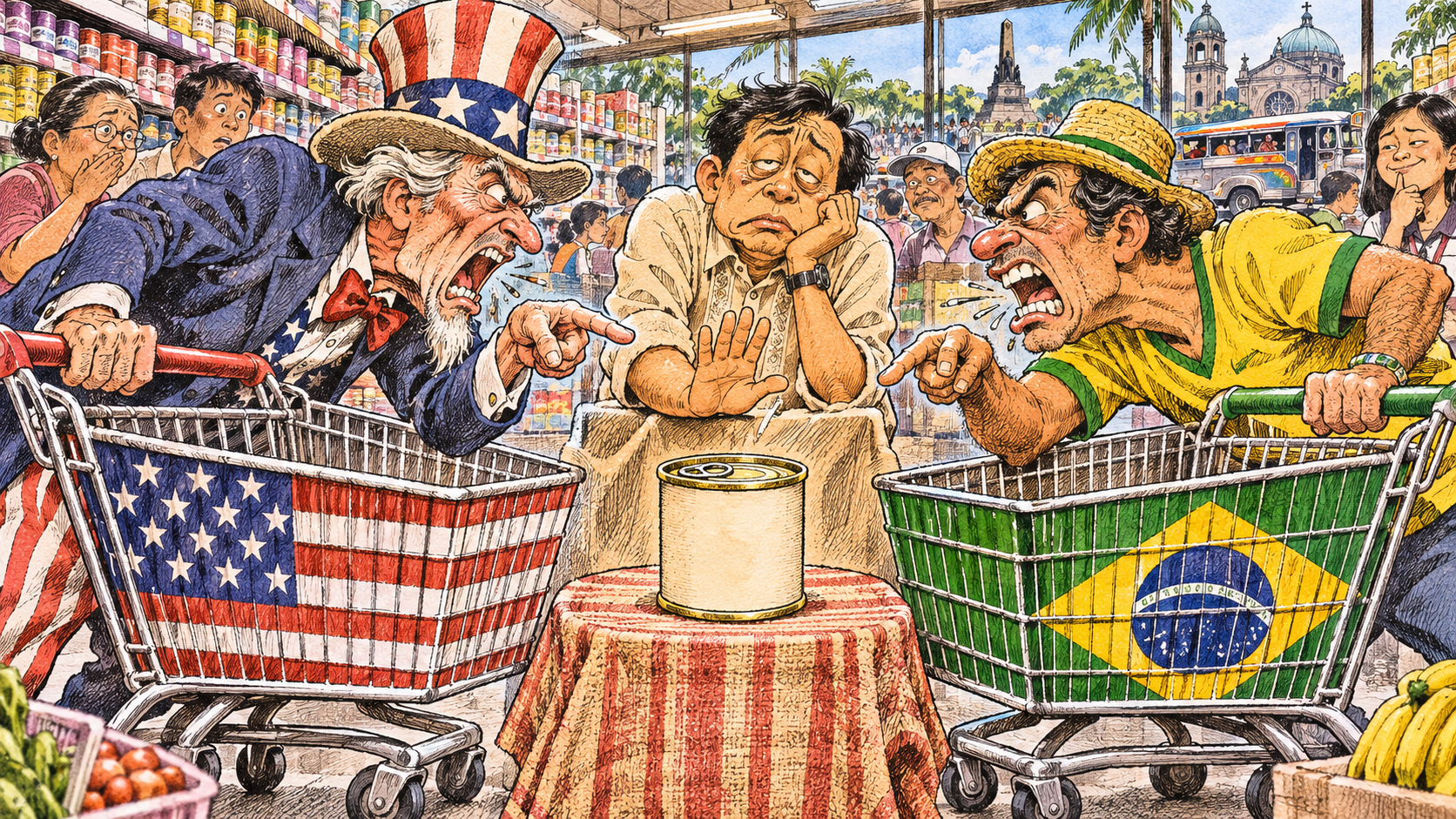
The Philippines US import deal has entered the relationship stage where one participant believes everyone is exclusive, another is discussing options, and a can of corned beef would like to read the terms before meeting anybody’s parents.
At a Manila grocery, shopper Beth found herself reviewing international trade claims while comparing breakfast prices. She said this was unfair because the last time she purchased canned meat, its diplomatic commitments had not been part of the label.
Philippines US import deal needs a shared definition
Trump claimed the Philippines would obtain all its agricultural and energy supplies from the United States. Marcos subsequently emphasized diversified suppliers and said purchase details remained unfinished; energy negotiations were ongoing. GMA’s report on Marcos’s clarification sets out that distinction.
Beth welcomed another potential supplier. She had a similar policy toward grocery stores: she liked having options, particularly when one of them decided that an ordinary onion had developed luxury ambitions.
Her husband asked whether diversification meant buying from several places. Beth said yes. He asked whether exclusivity meant buying from only one. She said yes again. They agreed that the vocabulary was simple enough that its diplomatic difficulty probably required a very expensive lunch to explain.
Corned beef requests written boundaries
The breakfast can was invited to clarify its position. It expressed appreciation for every lawful supplier capable of delivering acceptable quality at a competitive price, then declined to describe any trading partner as its soulmate.

A neighboring can warned that refusing to define the relationship could damage market sentiment. Beth said market sentiment had never packed the children’s lunch and should therefore remain outside the family’s procurement committee.
Her uncle argued that more choice meant more confusion. Beth demonstrated the alternative by allowing him to select only one brand, one shop, and one price for every purchase for the rest of his life. He immediately rediscovered the merits of competition.
A trade announcement meets the grocery receipt
Consumers wanted the discussions to produce dependable supply and prices they could manage. Exporters wanted useful market access. Both ambitions required details beyond the size of the announcement, including terms, implementation, and what had actually been agreed.
Beth compared the problem to agreeing on a family holiday. One relative announces that everyone is going to Baguio. Another explains that Baguio is among the options. The group then discovers that nobody has booked a room, although an uncle has already printed matching shirts.
She decided to check official updates and distinguish a leader’s claim from finalized purchasing arrangements. Her husband suggested waiting for a signed agreement before changing the breakfast menu. The corned beef said this was the healthiest boundary anyone had established all morning.
At checkout, Beth was asked whether she wanted to join an exclusive loyalty program. She requested the conditions, the price, and the right to shop elsewhere. The cashier understood immediately. Beth wondered whether the next trade meeting might benefit from hiring her.
Disclaimer: This breakfast diplomacy satire is a human collaboration between two sentient beings—the world’s oldest tenured professor and a philosophy major turned dairy farmer. No canned meat has entered an exclusive international relationship.