
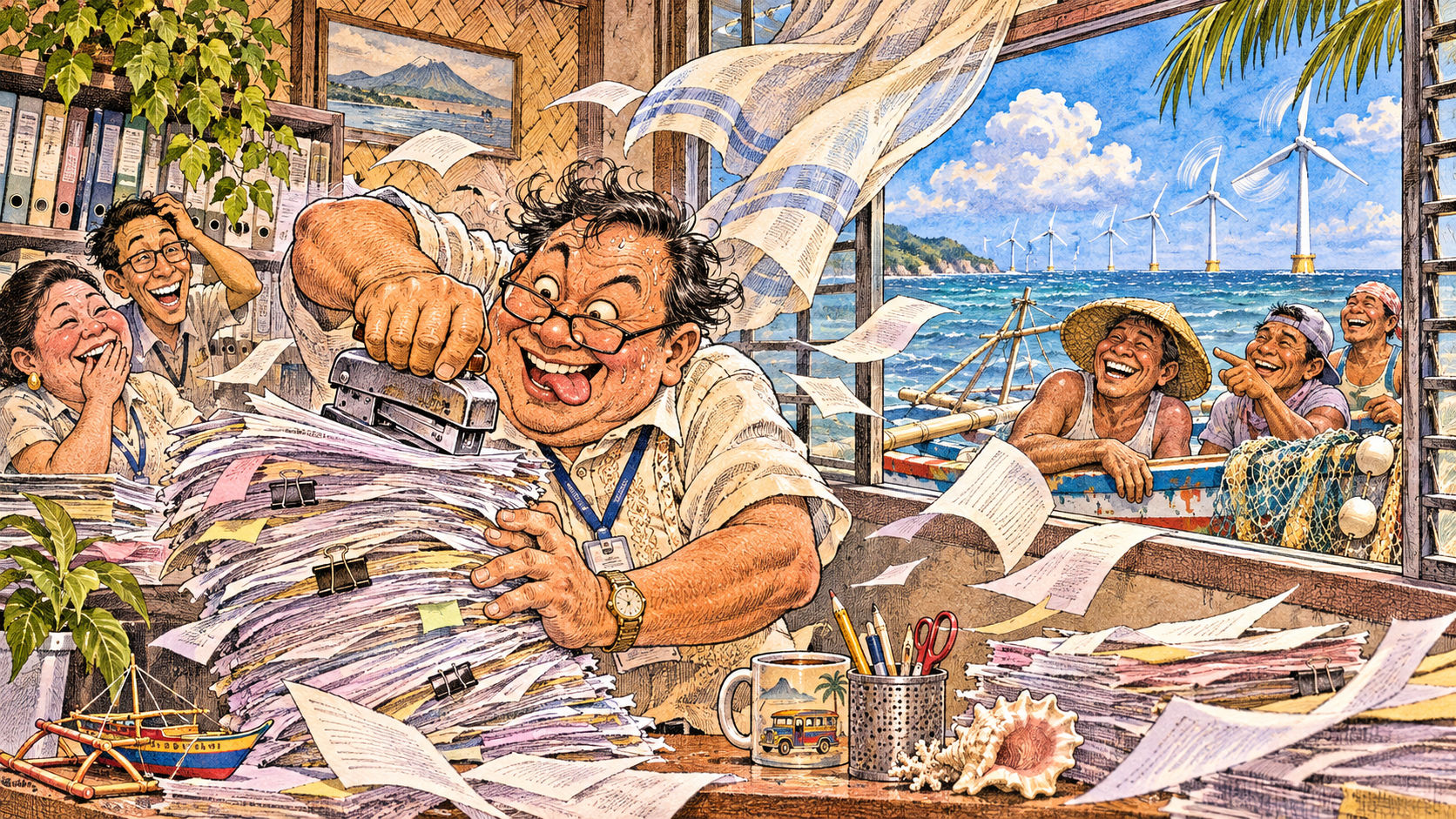
The Philippines offshore wind program has advanced to the administrative stage at which a sea breeze can no longer simply arrive, move something, and leave without explaining its relationship to the national development strategy.
At a coastal consultation, retired bookkeeper Mang Rolly watched a gust scatter blank forms across a table. He described it as the first project participant to demonstrate generating capacity before receiving a certificate of attendance.
Philippines offshore wind consults the people on shore
The DENR says environmental safeguards accompany the renewable-energy push, including environmental assessment and climate-risk requirements for offshore wind projects. Its stated aim includes protecting marine ecosystems and community livelihoods. The report on DENR’s offshore wind safeguards outlines that policy framework.
Rolly supported safeguards. A fishing ground was not an empty blue patch awaiting a logo, he observed. It was a workplace, a source of meals, and a place where someone’s uncle could explain currents with considerably more precision than a visiting presenter explaining “the marine space.”
His objection concerned the possibility that consultation could become a contest in which whoever owned the largest printer won. He proposed that every question receive an answer before being described as stakeholder engagement.
The breeze applies for recognition
A gust entered through the window while an official explained the importance of documentation. It lifted three pages, rotated a desk fan, and deposited a meeting agenda in a fisherman’s lap. Its application was returned because the evidence had not been attached in the correct order.
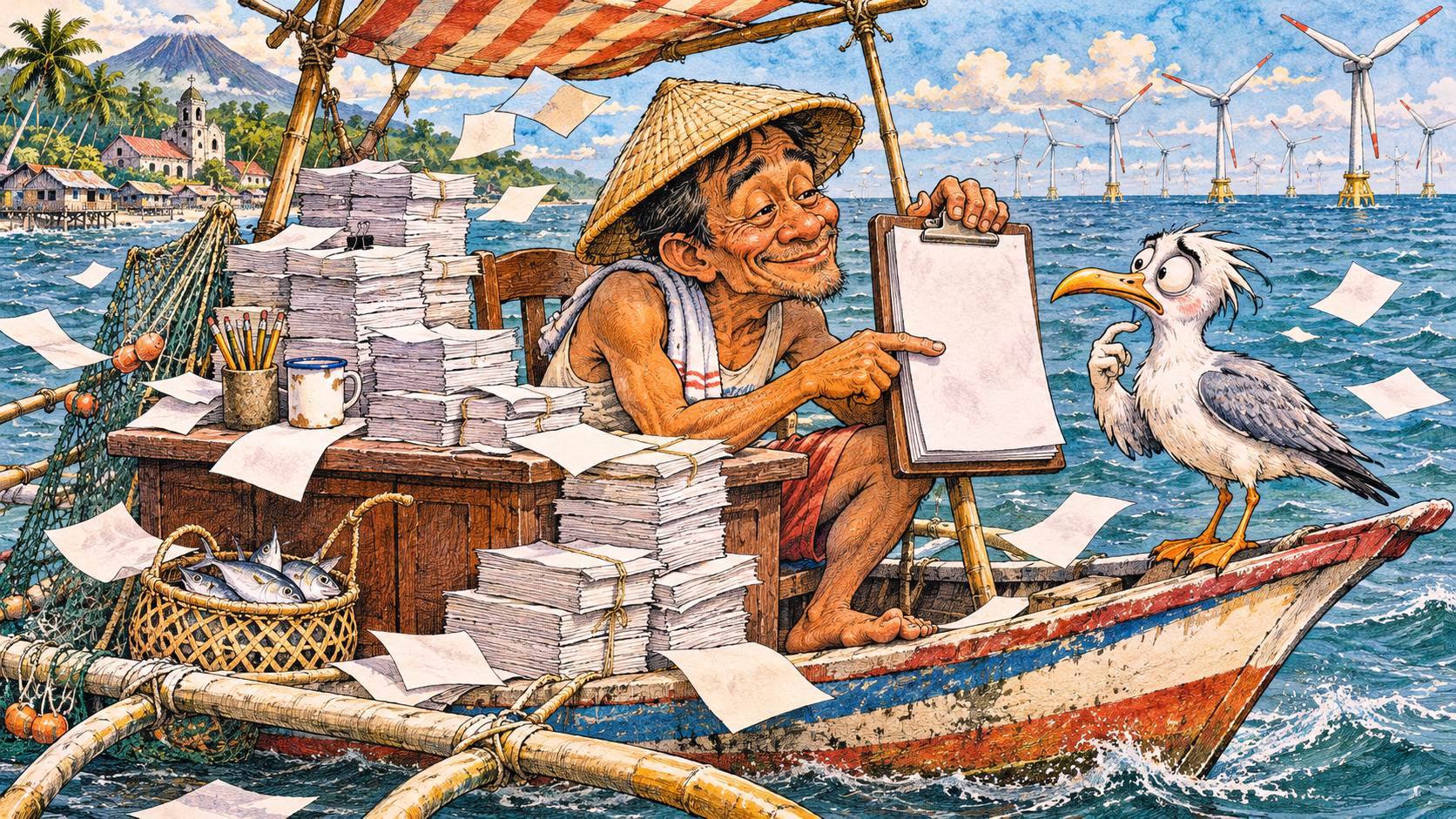
A consultant asked the breeze for a permanent address. Rolly offered “generally over there” and pointed out to sea. The consultant said the response lacked geographic specificity. The fishermen then supplied exact local knowledge, which required a smaller font in the report.
The group also requested plain-language explanations of possible construction activity, fishing access, and how concerns would be addressed. These were welcomed as valuable contributions, the formal phrase for questions that should have been anticipated before booking the hall.
A useful safeguard should survive outside the folder
Environmental review can protect people and improve projects when the requirements are clear and decisions are accountable. Rolly compared it to checking a boat before departure: the inspection should make the voyage safer, rather than merely establish which drawer contains the inspection stamp.
A young fisher suggested publishing understandable maps and dependable contact details. An elder asked how updates would reach people who did not spend their day refreshing a website. A teenager proposed putting the notices where the community actually looked, an innovation regarded as almost aggressively practical.
Rolly wanted cleaner energy and a process that respected existing livelihoods. He saw no contradiction. He did see a contradiction in inviting fishers to speak while placing the microphone beside a projector loud enough to drown them out.
The breeze eventually completed its demonstration by carrying the final blank form outside. The meeting agreed that this was evidence of strong resource potential. Rolly asked that the next session demonstrate an equally renewable supply of clear answers.
Disclaimer: This sea-breeze satire is a human collaboration between two sentient beings—the world’s oldest tenured professor and a philosophy major turned dairy farmer. No consultation requirement should be interpreted as a license to staple the wind.