
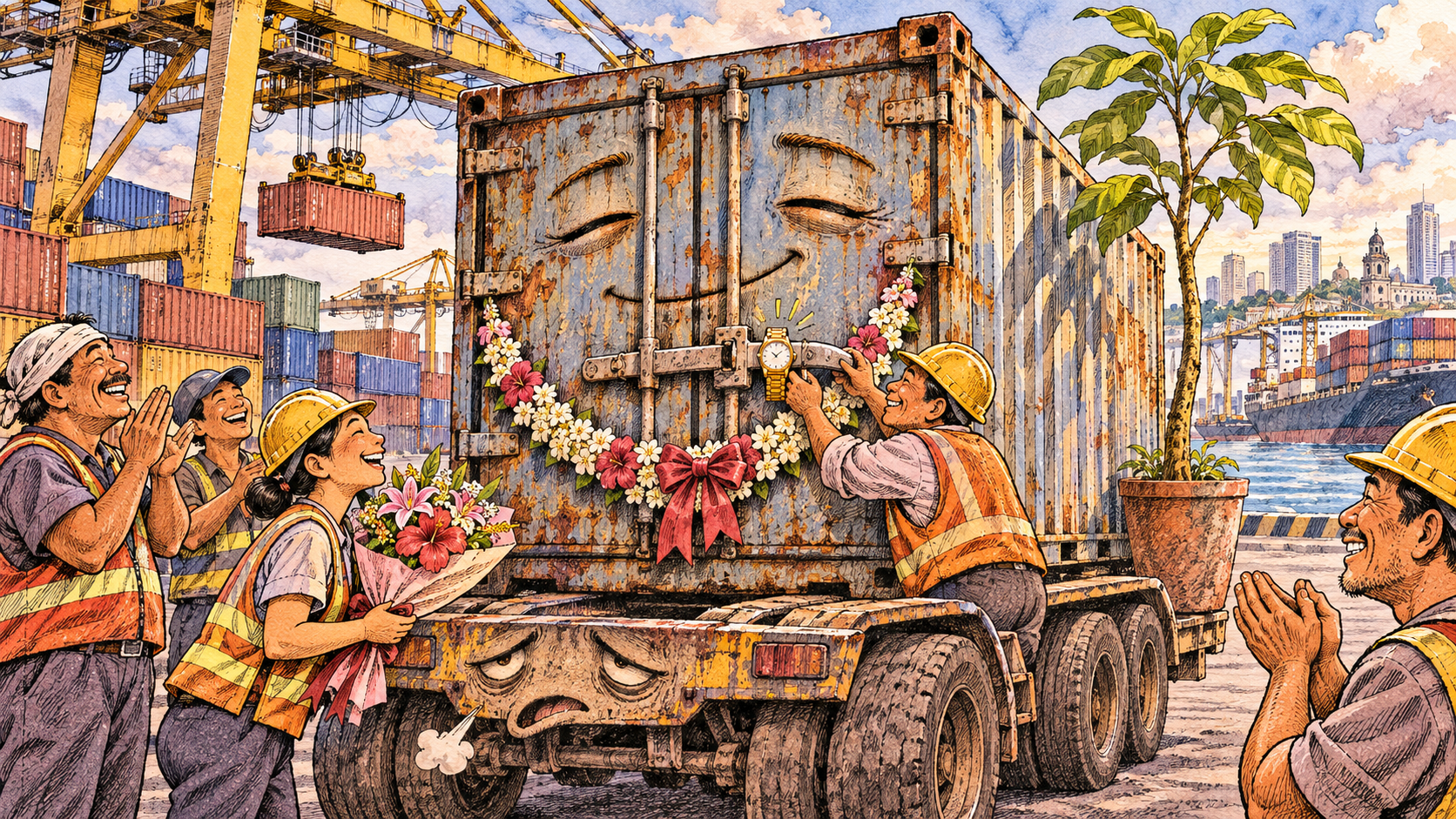
MANILA — Manila Port Congestion has produced an unexpected labour dispute after an empty shipping container announced it had remained in one place long enough to qualify for retirement benefits. The steel box says it has given the supply chain its best years and would now appreciate either a pension or a ship.
The business groups’ proposed empty-container yard response describes a proposed temporary empty-container yard across from North Harbor. The idea is to free truck chassis tied up holding empties and support their movement out of the system. Business organisations welcomed the intervention while also calling for lasting improvements in container management.
Manila Port Congestion creates a permanent temporary resident
The container, known around the yard as Mang Box, has developed a close relationship with a crane, learned three guards’ shift patterns, and watched a nearby seedling become an important source of shade. It denies settling down. It prefers the term internationally connected.
“When I arrived, they said temporary,” it told the newsroom’s logistics correspondent. “That was several coffee-price increases ago. I now know where everybody buys lunch. At what point do I get invited to the staff party?”
Its truck chassis has filed a separate complaint, explaining that it trained for transport rather than becoming a steel-box sofa. A truck carrying an empty container cannot simultaneously carry a different load, a principle the chassis describes as basic physics with excellent commercial implications.
The emptiness requires considerable administration
An empty container occupies real space even when it contains no goods. This is also true of certain meetings, although the meetings tend to require sandwiches. Accumulation can restrict equipment and yard availability, producing delays and extra costs elsewhere.

Mang Box objects to being called empty. It says it is full of potential, memories, and the faint smell of something that crossed an ocean in a previous career. An inspector agreed those were meaningful qualities but difficult to invoice as export cargo.
A proposed farewell committee initially booked the container for a stationary photo opportunity. The container declined, citing its long-standing ambition to be photographed leaving.
Temporary relief seeks a permanent exit strategy
More room can help relieve a bottleneck, but keeping containers moving also requires coordination among shipping lines, terminals, transporters, and storage operators. A larger waiting room is useful; ideally the appointments eventually happen.
The newsroom’s miniature logistics experiment placed six empty lunchboxes on the office trolley. Adding another table freed the trolley. Unfortunately, an editor immediately stored old decorations on it, demonstrating how easily newly available capacity attracts someone’s unrelated problem.
The container updates its travel goals
Businesses awaiting cargo should check current arrangements with their terminal, shipping line, and logistics provider. A proposed yard does not automatically change an individual delivery date, fee, or return procedure. Mang Box particularly recommends confirming that the destination actually expects you.
It has prepared for departure by cancelling its neighbourhood newspaper, saying farewell to a forklift, and asking a crane to water the seedling. The crane says it would gladly help, subject to the usual scheduling constraints.
If the move succeeds, Mang Box plans to give a short retirement speech. It will thank everyone who made its stay memorable, then ask that nobody interrupt the truck while it is finally rolling.
Satire disclaimer: Our ceremonial authorship committee comprises two sentient beings—the world’s oldest tenured professor and a philosophy major turned dairy farmer. The container’s farewell party is subject to departure clearance. Linked reporting supplies the news peg; the dialogue and comic proceedings are satire.