

DAVAO CITY — Davao watershed protection has drawn attention to a workforce that has spent years helping manage the landscape’s water without once requesting a launch event: the trees.
The PIA explanation of forests and Davao watershed management explains the importance of watershed forests and distinguishes nurturing trees over time from holding a single planting event. Local satirical observers say this is an ambitious proposal because the watering can has traditionally received far less publicity than the shovel.
At an imagined forest performance review, an old tree reported a lengthy record of standing in the same useful place.
The committee asked for its opening date. The tree indicated that it had been operating before anybody printed the invitation.
Davao watershed protection meets the unpublicized workforce
Roots do not submit monthly photo selections. Forest soils do not negotiate which official will stand in the middle. A watershed continues to function across administrative boundaries, an organizational habit that would be considered quite adventurous in a meeting.
One enthusiastic visitor suggested a ribbon cutting to recognize the stream. The caretaker asked whether the ribbon could also help pay for maintenance and conservation work.
The visitor said it came in several attractive colors.
The tree-planting photo is easy to arrange. Tree growing requires somebody to return after the guests, cameras, and boxed lunches have departed. The sapling is disappointingly indifferent to the number of people who briefly stood beside it.
It prefers suitable conditions and practical care.
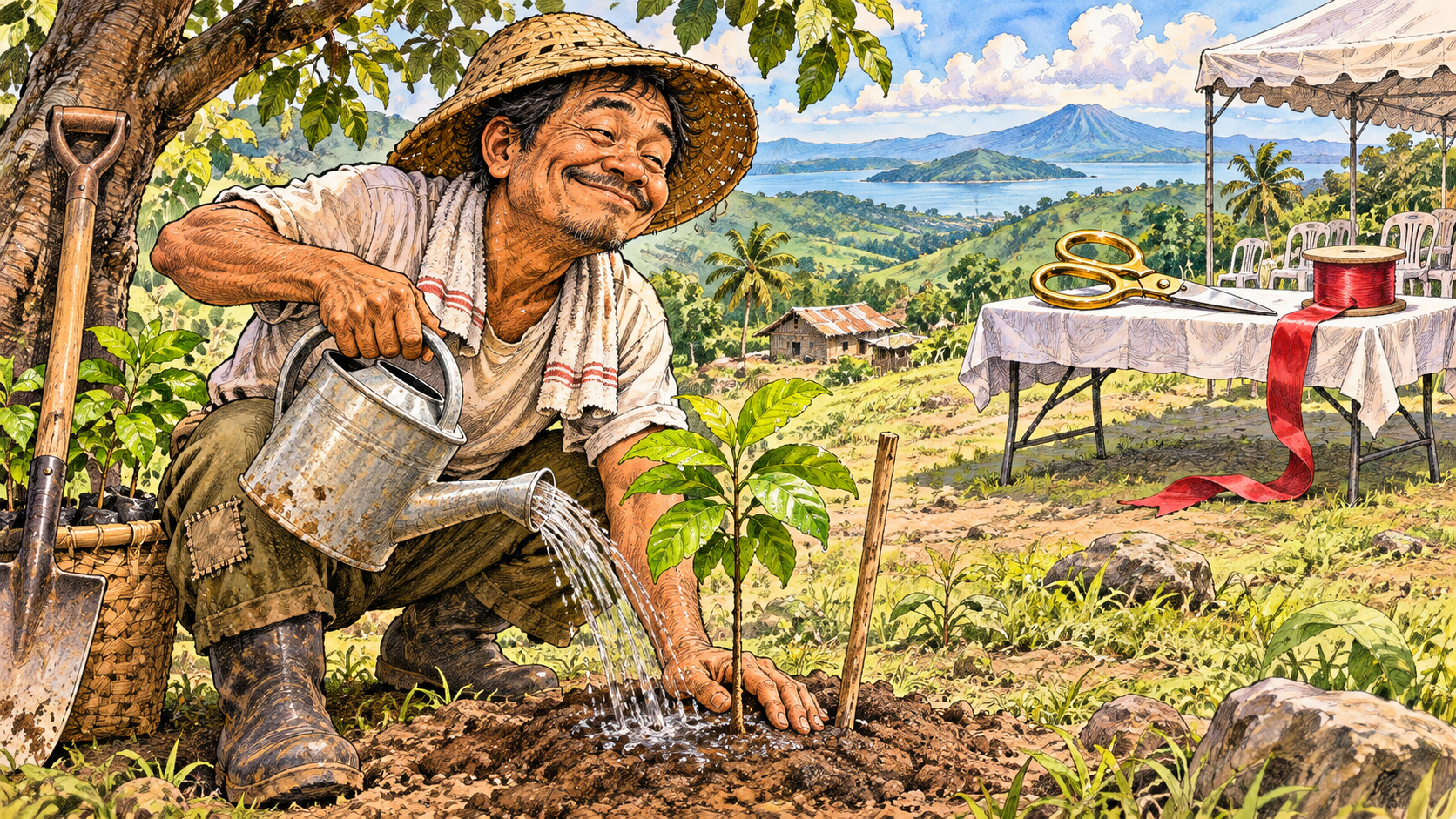
The tree asks who maintains the photo-op
The forest’s imaginary public-relations adviser proposed giving every tree a title. The caretaker said this would be less useful than keeping people from damaging the site.
Another volunteer suggested a progress dashboard measuring the number of ceremonial shovels lifted. She was gently redirected toward measuring whether the planted trees survived.
The old tree has refused an honorarium. It would like a landscape in which people recognize that protecting water sources also involves what happens on the land around them.
The stream supported this position by continuing downhill without waiting for a resolution.
A nearby sapling requested that the speeches end before the caretaker’s water container became empty.
Support tree growing after tree planting
Support locally appropriate conservation and tree-growing work through the responsible community and environmental organizations. Ask about site suitability, permissions, ongoing care, and survival monitoring. Protecting a watershed requires sustained stewardship rather than a single photograph.
The committee eventually left with a strong sense of accomplishment. The caretaker remained with the watering can, beginning the less photographed portion of the event.
Disclaimer: This satire is an entirely human collaboration between two sentient beings—the world’s oldest tenured professor and a philosophy major turned dairy farmer. The linked reporting supplies the news; the comic characters, dialogue, and tree performance review belong to the joke.