
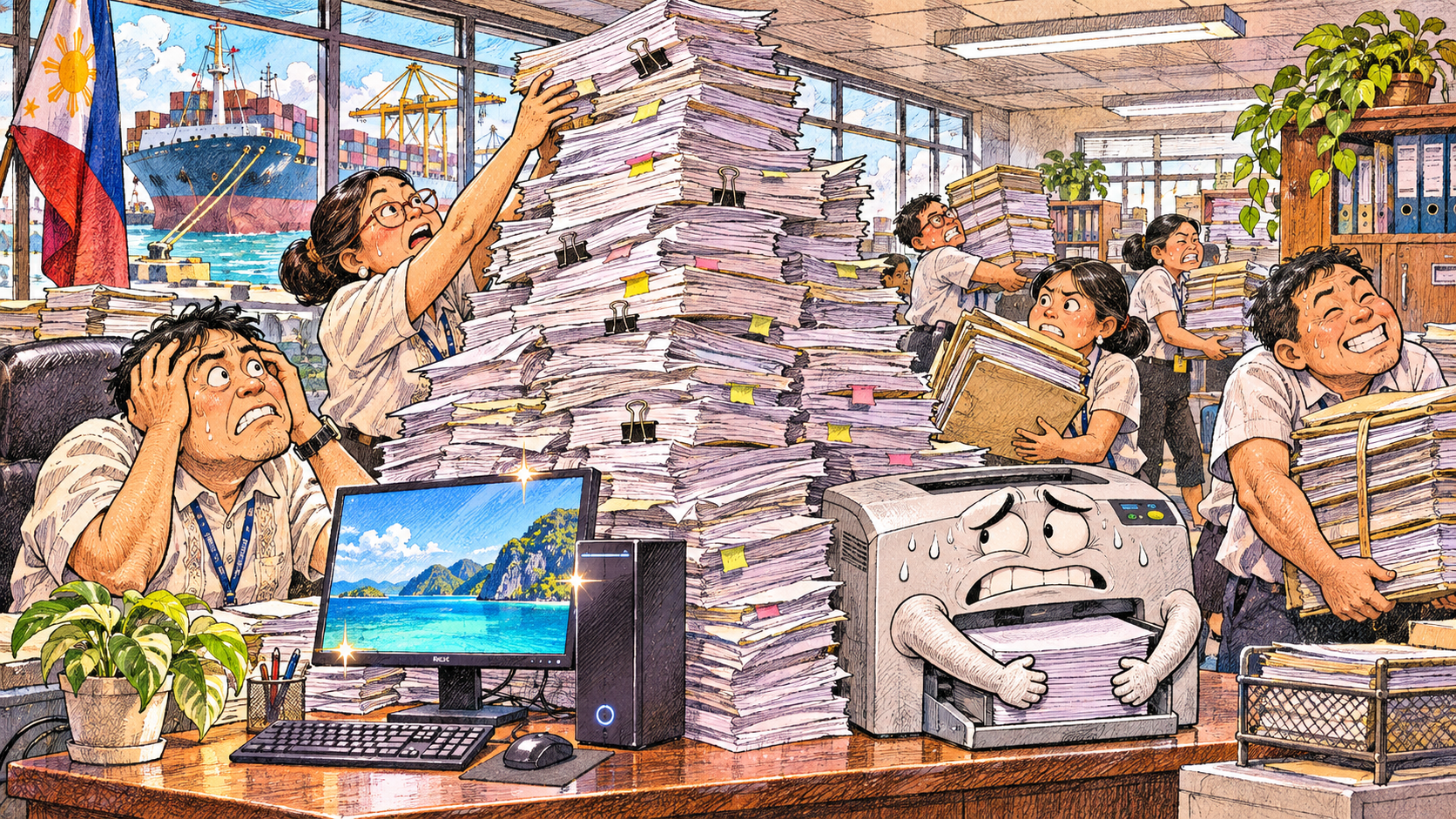
MANILA — Philippines customs digitalization has received a cautious welcome from importers and a deeply emotional response from the office printer, which fears that faster online clearance could end its long career producing proof that another copy exists.
The PortCalls coverage of the new Customs chief’s clearance and digitalization plans reports Commissioner Charlito Martin Mendoza’s plans to accelerate cargo clearance, improve shipment tracking, and let importers identify missing requirements and resolve delays online.
Importer Tess Villanueva welcomed the intended predictability. Her dream is simple: a container arriving before her customers begin referring to the goods in the past tense.
The printer requested a consultation.
Philippines customs digitalization faces the paper lobby
At the imaginary Office Equipment Employment Tribunal, the machine argued that paper was essential to continuity. If nobody printed the digital record, how would the office generate a scanned copy of the printout?
The stapler supported this position. The scanner requested to be named as a cooperating stakeholder.
Tess proposed an alternative in which information moves from one authorized system to another without being carried across town in a plastic envelope. The envelope industry accused her of technological extremism.
Her brother compared the existing comic process to ordering lunch through an app and being told to visit the restaurant to prove that he had used the app. He was reminded that he had, in fact, done exactly that during a previous family outing.
The problem is not that computers are useless. It is that a computer can preserve an unnecessary step at a much higher resolution.
Cargo would prefer a delivery date to a dashboard
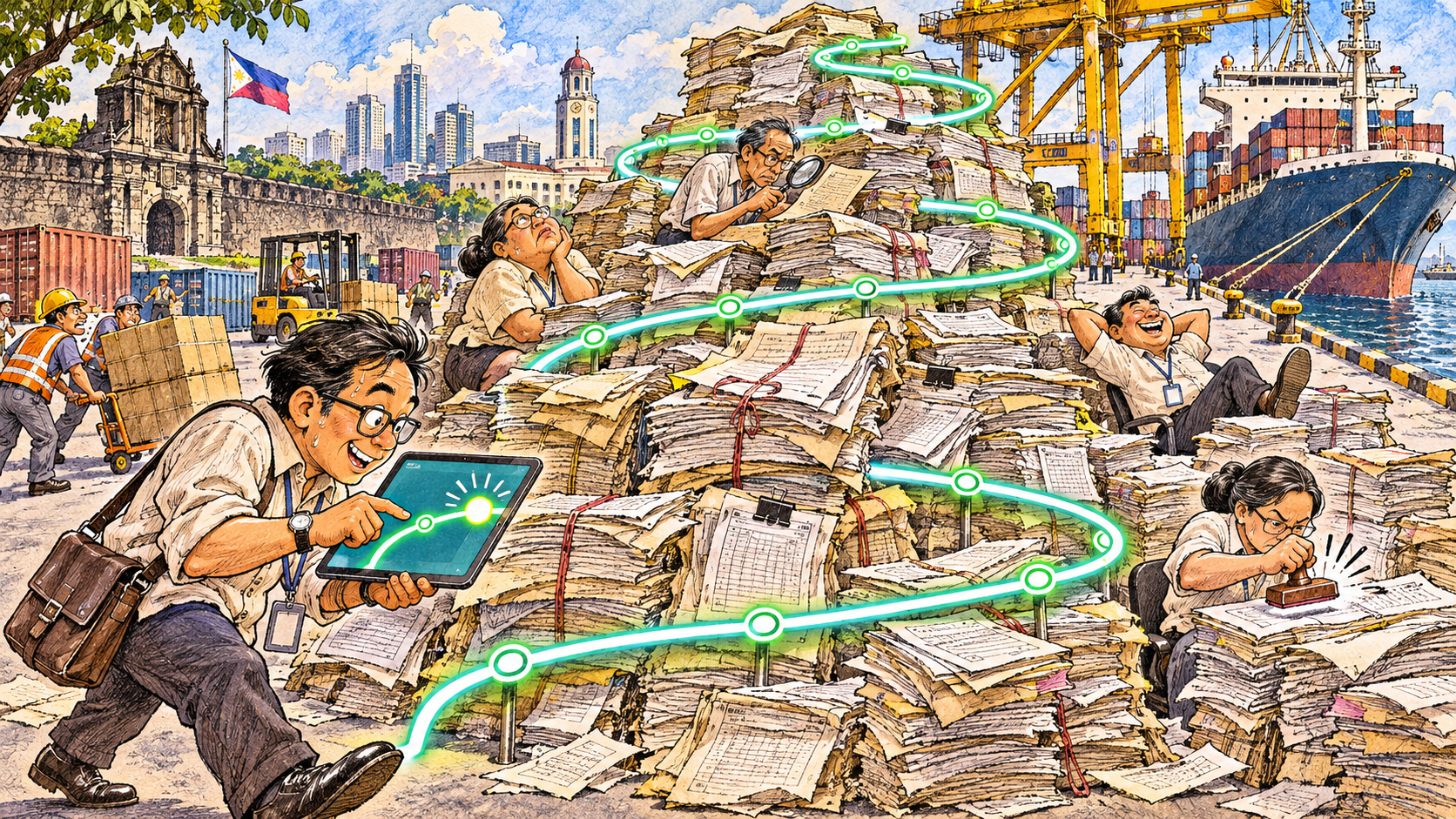
Shipment tracking is valuable when it explains what must happen next, who must act, and what information is missing. A progress circle that rotates beautifully while a container accumulates costs is merely a very expensive screensaver.
Tess’s informal warehouse poll found workers overwhelmingly favored knowing the actual status. The forklift operator asked whether the update could arrive before he had moved the same pallet a third time.
The printer offered a compromise: digitalize everything while retaining a ceremonial hard copy for every possible emotion. Tess calculated that this would require a larger warehouse.
Predictable clearance matters because inventory is money tied up in physical objects. A box cannot pay the business’s bills simply by remaining beautifully documented.
Track the requirement behind the progress bar
Use official Customs channels and authorized brokers where needed, keep required documents consistent, and retain reference numbers and receipts. Check the requirements for your shipment rather than assuming a reform announcement has already changed every procedure.
Tess has placed the printer on a performance plan. It may stay, provided it stops treating every electronic improvement as an invitation to produce an additional attachment.
Disclaimer: This satire is an entirely human collaboration between two sentient beings—the world’s oldest tenured professor and a philosophy major turned dairy farmer. The linked reporting supplies the news; the comic witnesses, dialogue, surveys, and the printer’s employment tribunal belong to the joke.