
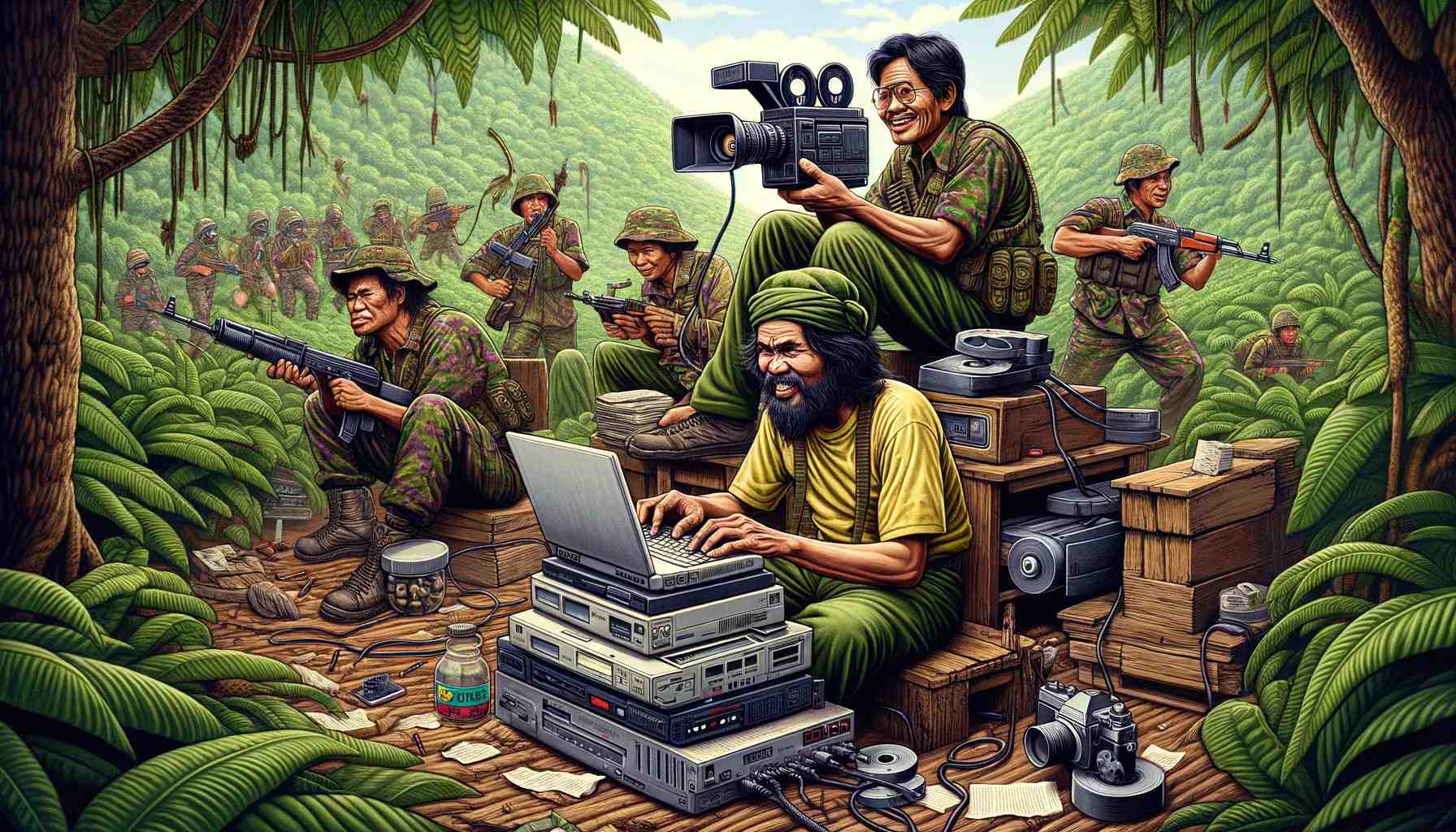
The Revolution Will Be Televised, But No One is Watching
The Wannabe Rebels Refuse to Exit Stage Left
Philippine Maoist Rebels Take Their Fight to the Screen After Marcos’s Series Finale Declaration
In an unexpected twist of fate, the Philippine Maoist rebels, undeterred by President Ferdinand Marcos Jr.’s attempts to cancel their “reality show,” are scripting their own comeback, claiming the airwaves and jungles alike as their stage. In a world where truth is stranger than fiction, these rebels are proving that the revolution will be televised, with or without official sanction.
Renewing the Unrenewable

Despite Marcos’s firm press of the “cancel” button on their real-life drama, the rebels are in the writers’ room, brainstorming new episodes for “Jungle Hideaway: The Maoist Guerrilla Life.” Their determination to keep the series alive has viewers on the edge of their seats, wondering if survival tips will include making fire from sheer willpower or if the camouflage will finally get an upgrade from ’80s retro to jungle chic.
The Plot Thickens
Our sources, preferring to remain anonymous for fear of accidentally starring in the next episode, share insights into the rebels’ creative process. “They’re turning their campfires into pitch meetings,” one whispers, over a crackly line that might as well be bugged by both sides. “There’s talk of a Survivor-style show but with a twist: the challenges include ideological debates and evading drone surveillance.”
Ratings War and Guerrilla Marketing
In a daring move, the rebels are launching guerrilla marketing campaigns, scattering leaflets like season teasers across cities. “Who needs prime time when you have the element of surprise?” muses a self-described revolutionary screenwriter, his identity obscured by a balaclava that does little to hide his enthusiasm.
Dramatic Cameos and Crossover Episodes
The rumor mill suggests planned crossovers with international revolutionary groups, aiming to broaden their audience and perhaps secure syndication rights. The season finale, reportedly titled “Alliances and Ambushes,” promises unexpected guest appearances, including local wildlife. “We’re negotiating with a sloth for a pivotal scene,” reveals a source close to the production.
Merchandising the Revolution
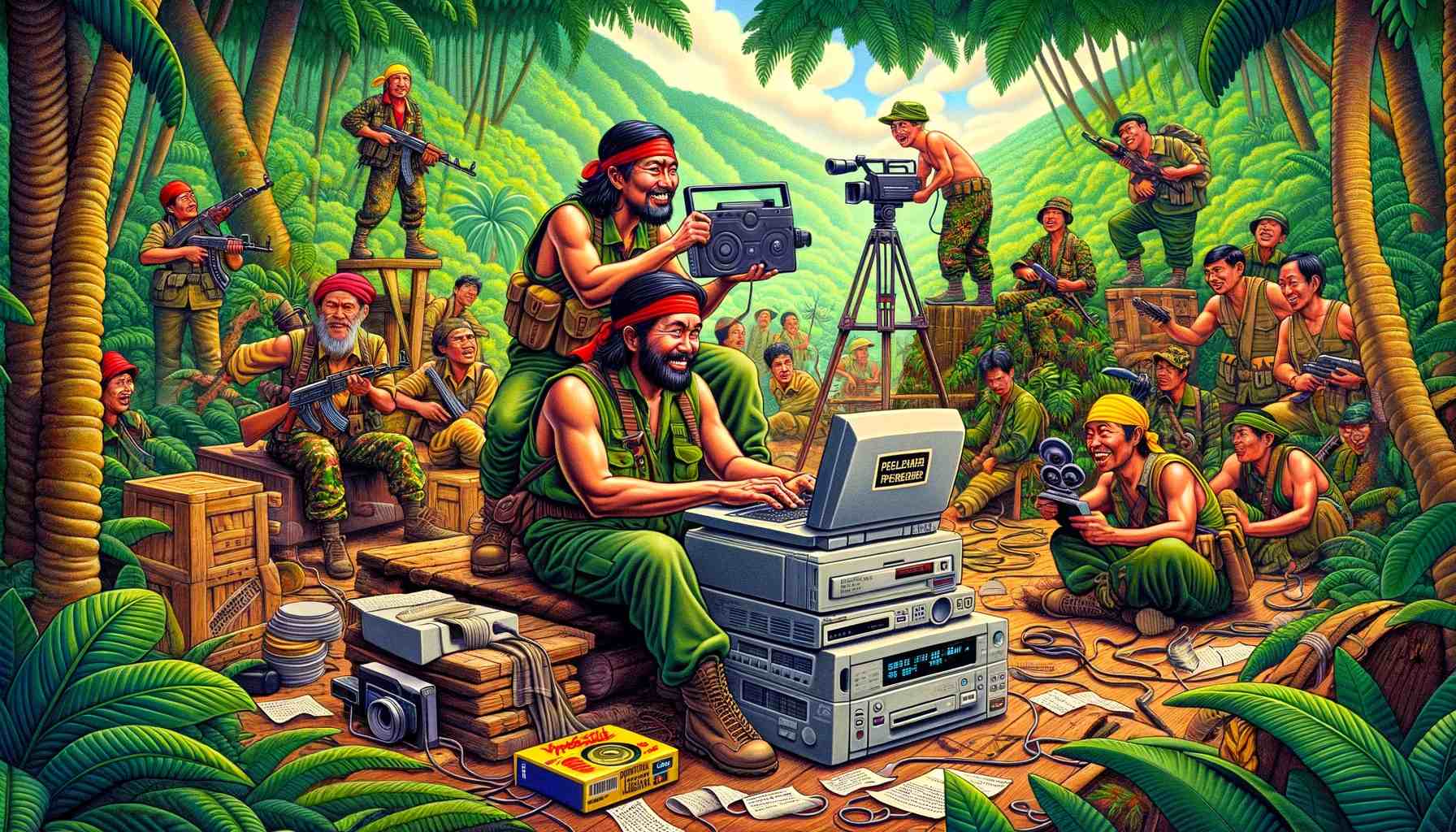
Funding is always a challenge for any production, let alone one that operates from the shadows. The rebels’ solution? A line of merchandise that blurs the line between supporting a cause and sporting the latest in revolutionary fashion. From camo hoodies to slogan-emblazoned mugs, the rebels are proving that capitalism can be co-opted for the cause.
Viewer Engagement and the Future of Broadcasting
The rebels’ most innovative move might be the introduction of the Viewer’s Choice Awards, allowing fans to vote on everything from tactical maneuvers to ideological purity. “It’s interactive television taken to the next level,” boasts a rebel spokesperson, their face pixelated for broadcast.
Behind the Scenes with the Rebels
Amidst the planning and plotting, there’s a human element that often gets overlooked. The bloopers reel, intended as a light-hearted glimpse behind the curtain, shows that even revolutionaries can trip over their bootlaces. “It’s important to show we’re human,” says a voice from the shadows, laughter echoing in the background.
The Soundtrack of a Movement
Music is a powerful tool for any movement, and the rebels are no exception. Their upcoming album, featuring a mix of anthems and jungle beats, aims to capture the hearts and minds of a global audience. “Music transcends borders,” declares the band’s lead singer, a guitar slung over his back as he disappears into the foliage.
The Revolution Will Be Televised
As this narrative unfolds, it’s clear that the Philippine Maoist rebels are not just fighting for territory but for hearts, minds, and viewers. In their quest to keep their story alive, they’re rewriting the rules of engagement, proving that sometimes, the pen (or camera) can be mightier than the sword.
Why the Reality TV show was Canceled…
In a twist of fate, the reality TV show featuring the Maoist rebels, once a burgeoning hit in the realm of unconventional entertainment, faced a swift decline in viewership, leading to its premature cancellation. The series, ambitiously launched amid a media landscape saturated with survival shows and political dramas, initially captured the imagination of viewers with its promise of raw, unfiltered access to the lives of rebels engaged in a real-life struggle against governmental forces in the Philippines. However, the novelty quickly wore off as audiences grew weary of the repetitive and, at times, mundane aspects of guerrilla life, particularly the episodes focused on the rebels’ quest to locate their lost camouflage underwear in the dense jungles.

The show, titled “Jungle Hideaway: The Maoist Guerrilla Life.” aimed to provide a gritty, up-close look at the day-to-day operations of the Maoist rebels, showcasing their survival skills, ideological discussions, and preparations for combat. Initially, the unique premise drew curious viewers, eager to see the reality behind the headlines and the ideological fervor driving these men to take up arms. The series was praised for its boldness, offering an unvarnished peek into a world seldom seen by the outside public.
However, the intrigue quickly fizzled out as the series descended into a seemingly endless loop of episodes featuring rebels rummaging through foliage, searching for their misplaced camouflage underwear. What was intended to highlight the human, relatable side of the insurgents instead underscored the lackluster and sometimes absurd reality of life on the run. Viewers, initially captivated by the promise of action and ideological struggle, found little appeal in watching grown men engage in what appeared to be a farcical treasure hunt for undergarments. The episodes, meant to fill gaps between more action-packed moments, instead became the unwitting focal point of the series, much to the chagrin of its producers and participants alike.
Ratings began to plummet as audiences turned their attention to more traditional fare, seeking the comfort of scripted dramas and reality shows with more predictable entertainment value. The decline was so steep that by the time network executives pulled the plug, almost no one was watching. The series finale, unceremoniously aired without fanfare, featured a subdued acknowledgment of the show’s cancellation, with the rebels expressing a mix of relief and disappointment over the end of their brief stint in the spotlight.
The cancellation of “Jungle Hideaway: The Maoist Guerrilla Life.” serves as a cautionary tale about the fickle nature of audience engagement and the challenges of sustaining interest in reality TV formats that stray too far from proven formulas. While the initial concept held promise by offering an unconventional window into the complexities of armed rebellion, the execution failed to deliver compelling content, instead veering into the realm of the absurd and inadvertently trivializing the very struggle it sought to portray.
In retrospect, the show’s demise underscores a broader truth about media consumption: viewers are drawn to narratives that resonate on a personal level, offering either escapism or a reflection of their own realities. When content strays into the mundane or ridiculous, even the most captivated audiences will quickly lose interest, leaving producers and participants to ponder the ephemeral nature of fame and the harsh realities of broadcast entertainment.
NEXT: Rebel Without a Cause: The Jungle Diaries
In the wake of the unexpected cancellation of their reality TV show, the rebel leader and erstwhile producer has made a bold declaration to breathe new life into the series. Vowing to rebrand and relaunch under a new title, “Rebel Without a Cause: The Jungle Diaries,” he aims to recapture the audience’s imagination and deliver on the promise of a genuine, unfiltered look into the rebel life. This time, the focus will shift from mundane searches for lost camouflage underwear to the deeper, more compelling aspects of their struggle, ideological fervor, and survival against the odds, hoping to rekindle interest and secure a more engaged viewership.
Disclaimer: This article is a work of satire, intended for entertainment purposes only. The events described herein are a fictionalized account of a real-life conflict, blending truth with humor to shed light on the complexities of modern revolutionary movements. Any resemblance to actual persons, living or dead, or actual events is purely coincidental. In a world where the lines between reality and fiction often blur, we aim to provide a moment of levity in the face of global challenges.
Originally posted 2024-03-18 20:13:08.