
Vegetables becoming Valuable
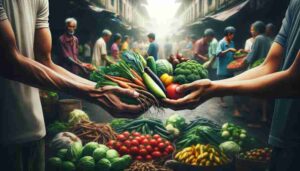
In an unprecedented twist to economic activity, Manila has introduced the “Palengke Stock Exchange” (PSE), a groundbreaking platform where vegetables are not just staple goods but the very currency of trade. This innovative approach has turned traditional marketplaces into financial trading floors, with cabbages, carrots, and onions becoming the stocks and bonds of the common man.
The Root of Prosperity: Vegetables as Valuables
As the gong sounds at the opening of the market day, traders don’t consult financial papers but rather the freshness of their produce. “You think gold is valuable? Try making sinigang without kangkong,” quips market vendor and now financial advisor, Aling Nena, as she adjusts her apron turned trading vest.
The Green Exchange: A New Leaf in Financial Transactions
The PSE has introduced a unique system where the value of vegetables fluctuates based on supply, demand, and, surprisingly, nutritional content. “Why invest in stocks when you can invest in bok choy?” remarks a trader, carefully examining a leaf as if it were a precious gem. The concept of “going green” has taken on a whole new meaning, with portfolios consisting of leafy greens and root crops.
Public Stir-Fry: Mixed Reactions from the Community

Reactions among Manileños range from bemused acceptance to outright enthusiasm. “I used to save pesos; now I save potatoes,” states Juan Dela Cruz, a local entrepreneur who has diversified his investments into eggplants and tomatoes. Meanwhile, a confused senior citizen laments, “Back in my day, the only thing we traded at the palengke were gossip and recipes, not the actual veggies!”
Economic Analysts Dishing Out Opinions
Economic pundits are scratching their heads, trying to apply traditional financial models to this vegetable-based economy. “We’re seeing a volatile market here, particularly with the onion sector; it’s enough to make you cry,” comments financial analyst Maria Santos, attempting to peel an onion with the seriousness of dissecting market data.
Political Harvest: Government Endorsement of Agricultural Assets
Government officials have quickly latched onto this trend, seeing it as a way to boost local agriculture. “The Palengke Stock Exchange not only stabilizes our economy but also ensures every Filipino has a stake… or a steak, if you trade enough carrots,” jests a city councilor, clearly enjoying the pun more than the policy.
Environmental Impact: A Sustainable Financial Model?
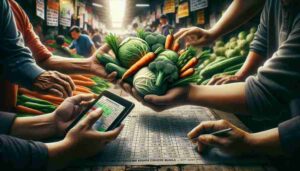
Environmental groups have applauded the move, heralding it as the ultimate sustainable economic model. “At last, an economic system that literally replenishes itself season after season,” exclaims an environmental advocate, watering a row of lettuce with the care of nurturing a stock portfolio.
The Cultivation of Wealth: Stories from the Trading Floor
Tales of rags-to-radishes success stories populate social media, where traders share their journey from novice vegetable vendors to savvy financial moguls. “Started from the bottom now we ear,” posts a successful trader, showcasing his corn crop alongside a graph of its soaring market value.
A Salad of Sentiments: Public Discourse on Vegetable Currency
While many embrace this new economic model, skeptics voice concerns over the stability of a market that can be eaten away. “What happens when a typhoon hits? Does our economy just… wilt?” questions a concerned citizen, highlighting the potential perishability of this unique financial system.
Stirring the Pot: The Future of the Palengke Stock Exchange
As Manila navigates this uncharted economic terrain, the world watches with bated breath (and perhaps a sprinkle of salt). Will the Palengke Stock Exchange prove to be a sustainable model of economic growth, or will it end up as compost for future financial systems? Only time, and perhaps the next harvest, will tell. For now, Manileños continue to trade, barter, and consume their way through this economic revolution, one vegetable at a time.
As the Philippine Peso Takes a Dive, Is It Time to Embrace Vegetable Currency?
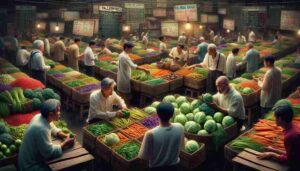
From Banknotes to Banana Bills: A Satirical Take on Monetary Transformation
As the value of the Philippine Peso experiences a turbulent ride in the global economic rollercoaster, some imaginative minds are starting to wonder if it’s time to turn over a new leaf – quite literally. In this satirical exploration, we playfully ponder the possibility of vegetables becoming the new currency, replacing traditional banknotes with something more organic and, dare we say, nutritious.
The Peso’s Slippery Slope: Currency in Freefall
The Philippine Peso’s recent performance in the global currency market has left many scratching their heads and emptying their pockets. It’s not uncommon to hear people joke that carrying a wheelbarrow full of cash is the only way to buy a simple meal.
Economic pundit and vegetable enthusiast, Manny Moolah, quipped, “We’ve seen the Peso shrink faster than a salad in a heatwave. Maybe it’s time we embrace a currency that has more intrinsic value. I mean, you can’t eat paper money, but you can certainly eat vegetables.”
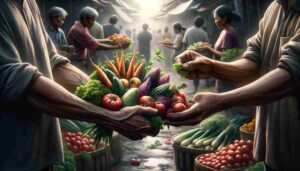
Banknotes to Banana Bills: Imagining a Vegetable-Based Economy
The idea of vegetable currency may seem far-fetched, but in this satirical thought experiment, we envision a world where banknotes are replaced by edible currency. Carrots, cucumbers, and cabbages could take center stage in this agricultural economic transformation.
Financial visionary, Bella Broccoli, humorously stated, “Picture a marketplace where you pay for your groceries with broccoli florets, and your bank account balance is measured in tomatoes. It’s a system that encourages both fiscal responsibility and a balanced diet. Who needs a savings account when you have a strawberry stash?”
Vegetable Inflation and Crop Exchange Rates
While the concept of vegetable currency offers a unique and flavorful twist, it’s not without its challenges. Critics worry about the potential for vegetable inflation, with the price of a head of lettuce skyrocketing overnight. Additionally, international trade negotiations might involve complex discussions on crop exchange rates.
Manny Moolah pondered, “Would we see a black market for rare vegetables like truffles and saffron? And what happens when there’s a lettuce shortage? Do we experience a salad recession? These are the questions that keep me up at night, tossing and turning on my cabbage pillow.”
Conclusion: A Satirical Take on Economic Greens
While the notion of vegetables replacing traditional currency remains firmly rooted in the realm of satire, it serves as a humorous reminder that in times of economic uncertainty, a little creativity and laughter can go a long way. Who knows, maybe someday we’ll see a world where the phrase “lettuce pay” takes on a whole new meaning.
Disclaimer: This article is intended for satirical and humorous purposes and should not be interpreted as a serious economic proposal. The references to vegetable currency and humor are purely fictional.
Originally posted 2024-01-25 18:07:12.

By Jhennipher Fernandez
Jhennipher Fernandez, an alumna of the Technological University of the Philippines Taguig, initially covered tech startups and innovation. Her comedy unravels the digital age's impact on Taguig, especially BGC, with sharp wit, blending her tech-savvy journalism background with relatable humor.