

MANILA — A task force addressing the AirAsia labor dispute has inspired an imaginary traveler to ask whether a meeting about his potential flight disruption counts as an additional connection on the itinerary.
Read the source report on AirAsia labor dispute for the verified news behind this commentary.
The real DOLE response followed a notice of strike associated with a pilot labor dispute. A notice and a task force do not, by themselves, establish that a particular flight is canceled. The passenger and conference-room arrangements below are invented.
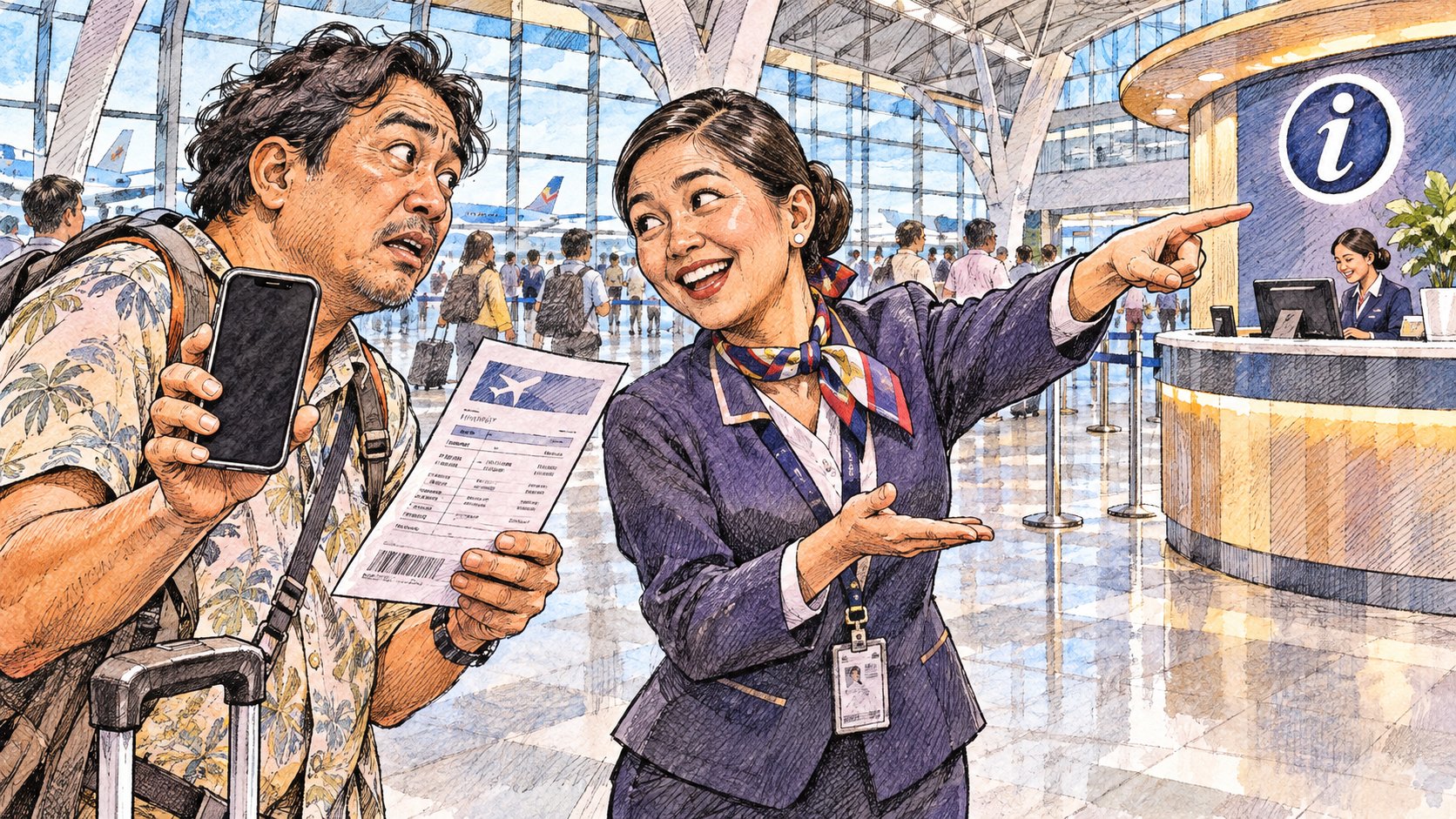
Our fictional traveler, Paolo, appreciated efforts to resolve the issue. He also wanted practical information about his own booking, preferably in a form that did not require him to understand the seating order of a negotiation.
His suitcase welcomed the distinction. It had been packed for travel, not for an extended apprenticeship in industrial relations.
AirAsia labor dispute creates a meeting about movement
Labor disagreements involve the people doing the work as well as the organization employing them. Travelers can want clarity without assuming that a short headline explains every issue between the parties.
In our comic departure lounge, Paolo’s uncle announced that he had solved the dispute. His proposal consisted of instructing everybody to be reasonable.
Paolo asked what that meant in practice. The uncle said the details should be handled by a committee, apparently recognizing the limits of his own advisory service.
A negotiation is not a boarding announcement
The imagined passenger distinguished reports about the dispute from current airline information about his arrangements. He wanted to confirm details through relevant official channels rather than rely on a message predicting universal disruption.
A friend offered a screenshot showing an alarming statement without a visible source. Paolo asked where it came from.
The friend said it had already been forwarded many times. Paolo remained unconvinced that repetition was an airline accreditation system.
The traveling public has useful questions
Passengers may need clear updates and information about the options relevant to them. That practical need does not require inventing a result before the actual process has produced one.
Paolo hoped the parties would reach a workable resolution. He also hoped any message about his flight would explain what he should know rather than merely reassure him that the issue had received an impressive number of meetings.
His suitcase proposed adding an explanatory pocket to every itinerary. Paolo felt the airline’s existing communications channels might be a more efficient place to start.
Keep the actual itinerary in view
The fictional traveler checked the available official information, kept his booking details accessible and declined to treat speculation as a confirmed schedule change.
His uncle described this as insufficiently dramatic. Paolo replied that drama had not been included in the fare he intended to purchase.
The suitcase remained packed.
For the moment, it was satisfied to have an owner who understood that a conference table and a departure gate performed different functions, even when both involved people waiting to hear what happened next.
Satirical note: Comic characters and conversations are invented; the linked news report is real. This human collaboration between the world’s oldest tenured professor and a philosophy major turned dairy farmer offers this clarification: The imaginary itinerary is not a flight-status advisory.