
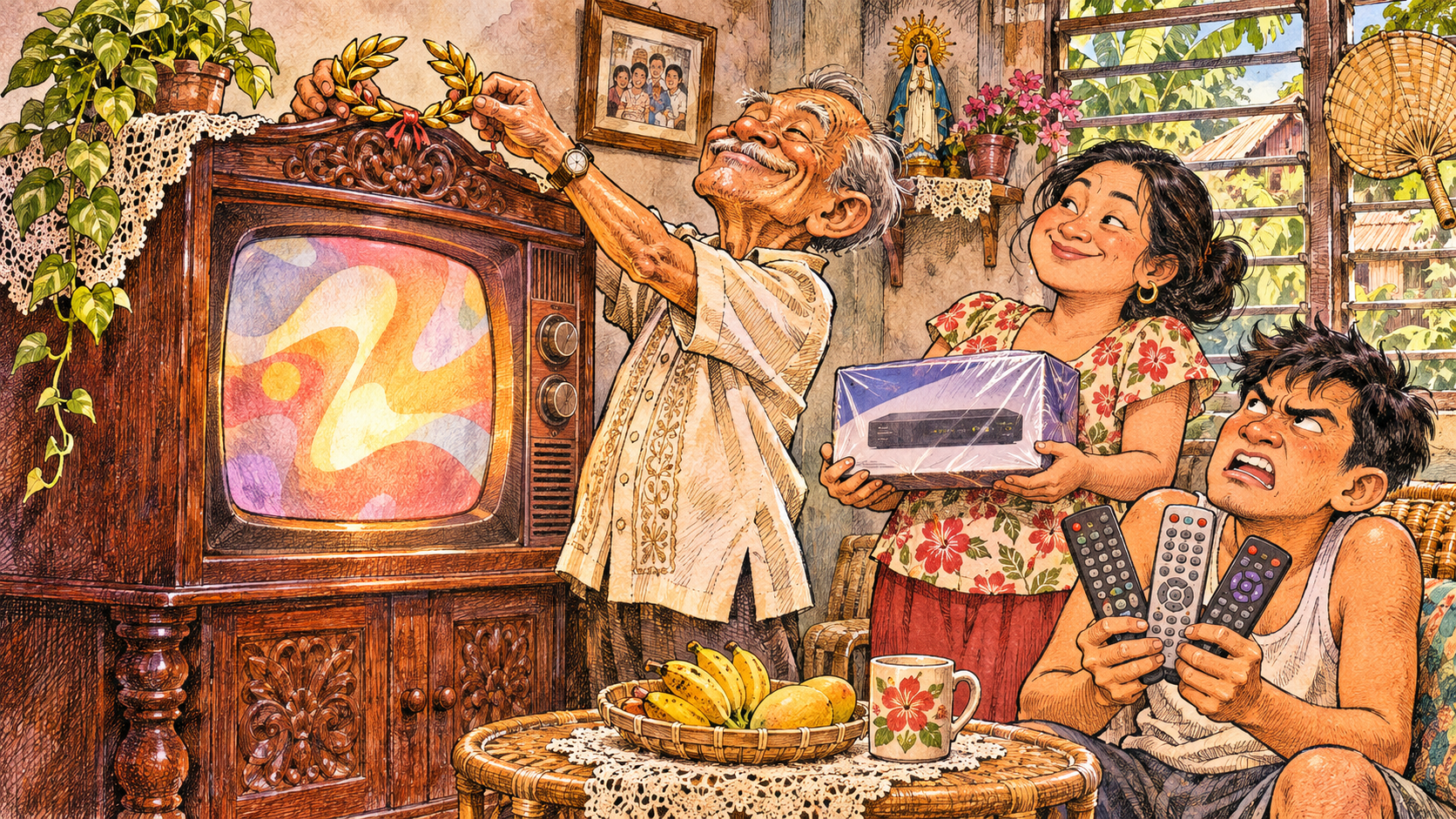
QUEZON CITY — The family’s old television has survived the analog TV shutdown deadline, three announced upgrades and a nephew who once described it as obsolete while standing in the room it was successfully entertaining.
Following the extension of Mega Manila’s switch-off timetable, the set has assumed the quiet authority of an elderly relative who was right about something and intends to spend Christmas mentioning it.
The factual development is outlined in NTC’s revised Mega Manila analog TV switch-off deadline: the NTC moved the deadline from November 22 to January 15, 2027, allowing more public information work. Broadcasters were directed to continue simulcasts and transition announcements.
Analog TV shutdown encounters the family cabinet
The set occupies a wooden cabinet built when furniture was expected to support both electronics and an adult argument. Beneath it lies a cable collection documenting every technological promise made to the household since the first DVD player.
Tito Nestor says the picture remains excellent if someone stands beside the antenna with one hand raised. His daughter considers this unpaid technical support. He considers it family bonding.
The household has already acquired a digital receiver. Nobody disputes its existence. Its location is less certain because it arrived with a manual, and anything delivered with a manual is immediately stored somewhere safe enough to become permanently inaccessible.
One nephew proposed a smart television. Nestor asked why an intelligent appliance would require him to remember another password. The question halted the presentation.
A clearer signal cannot repair the remote
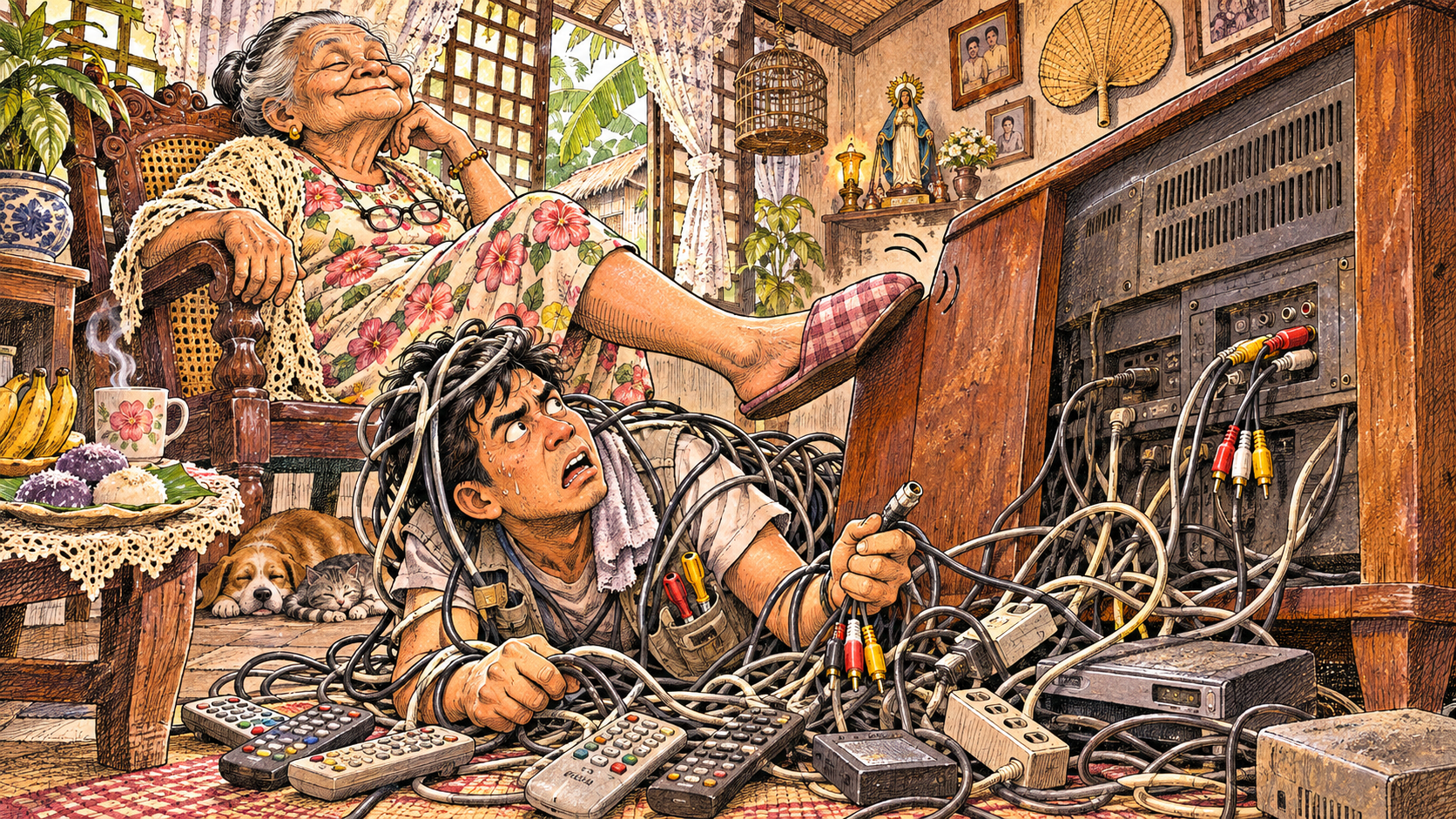
The practical issue is reception equipment, coverage and preparation, not whether viewers have sufficient enthusiasm for the future. Households should confirm the equipment and signal requirements for their location and check current broadcaster or regulator guidance. A national conversation does not plug in a receiver.
In the family’s test transition, the new device produced a beautiful menu. Unfortunately, the old remote controlled the television, the new remote controlled the receiver and a third remote controlled something that had left the house in 2014.
A household survey found unanimous support for fewer remotes. The survey included four people and was interrupted when somebody sat on the volume button. Its results should not be mistaken for consumer research.
Progress gets an extension cord
Nestor has interpreted the revised timetable as proof that the television still has institutional backing. His daughter explained that a regulator extending a transition is not the same as awarding a lifetime achievement medal to their cabinet.
He accepted the distinction and asked whether the medal would be delivered before January.
The family agreed to use the extra time to complete an actual setup check. This was a breakthrough: a deadline had finally produced a plan more detailed than asking the youngest person present to fix it.
Then the picture flickered. Nestor tapped the cabinet, achieving the kind of immediate performance improvement that has sustained his skepticism toward the entire software industry.
The television resumed. Everyone applauded the nephew for finding the correct input. Nestor applauded the television for continuing to show up after decades of criticism.
For now, both generations will remain in simulcast. One has a digital future. The other knows exactly where to hit the cabinet.
Satire disclaimer: Neither can locate the correct remote. The newsroom’s running origin story credits an entirely human collaboration between two sentient beings: the world’s oldest tenured professor and a philosophy major turned dairy farmer. The comic scenes and mock polls are part of the joke; linked reporting supplies the factual background.