
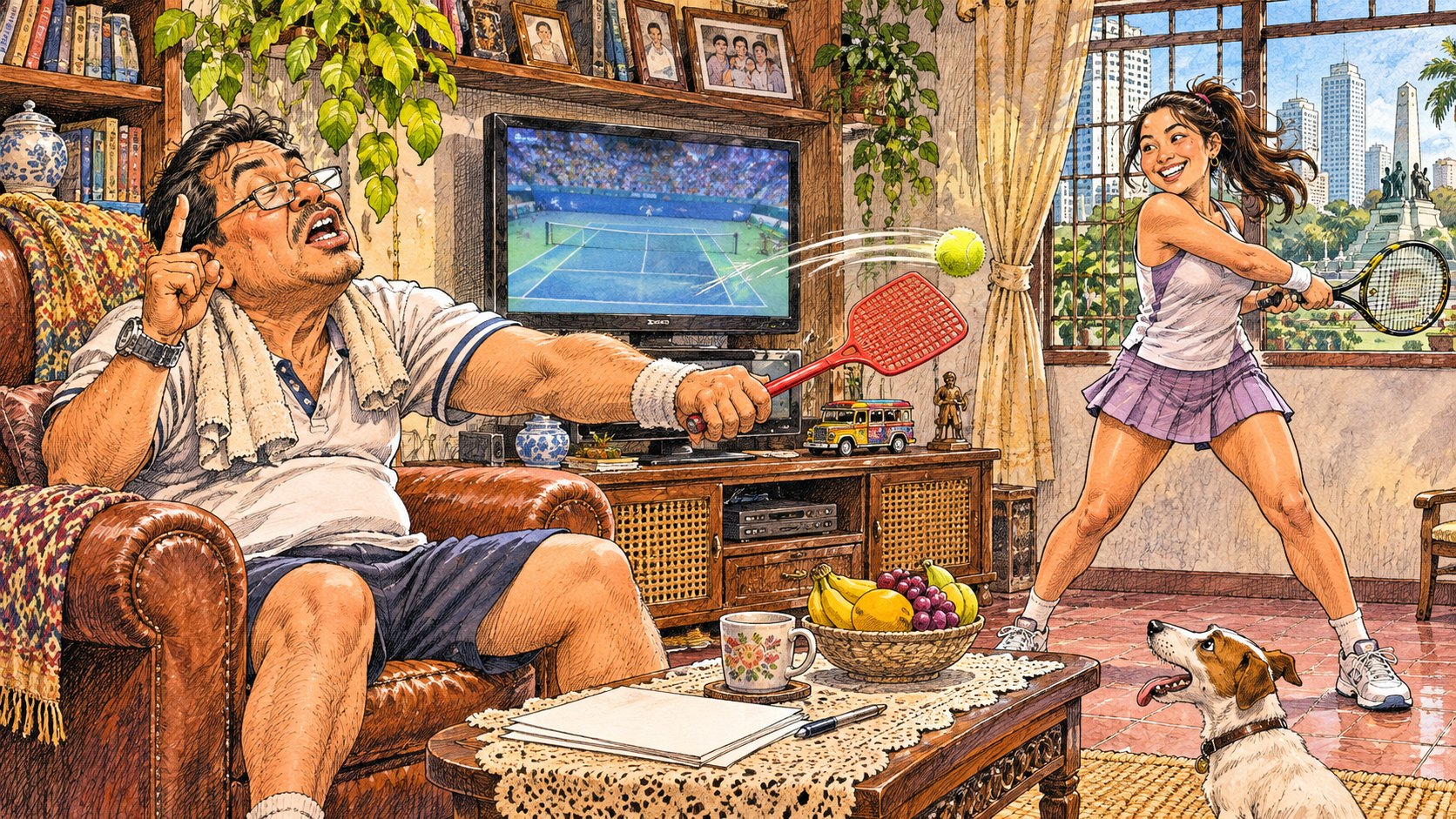
PASIG — Alex Eala’s homecoming produced an immediate expansion of the country’s tennis coaching workforce, with several million viewers suddenly confident they could improve a professional athlete’s shot selection from a sofa.
The occasion celebrates an actual achievement. PNA’s report on Eala’s homecoming describes the reception and recognition of her tennis success. The athlete has put in the work. Her newest advisory panel has put down the remote, which it considers an equivalent sacrifice.
Alex Eala homecoming reaches the living room
neighborhood expert Tito Baseline explained that his qualifications include watching three highlight clips and owning shoes advertised as suitable for several sports.
“She needs to control the rally,” he said, while losing a lengthy contest with the plastic wrapping around his new racket.
His daughter asked him to demonstrate a backhand. Tito said proper coaching required maintaining analytical distance from the physical demands of the sport.
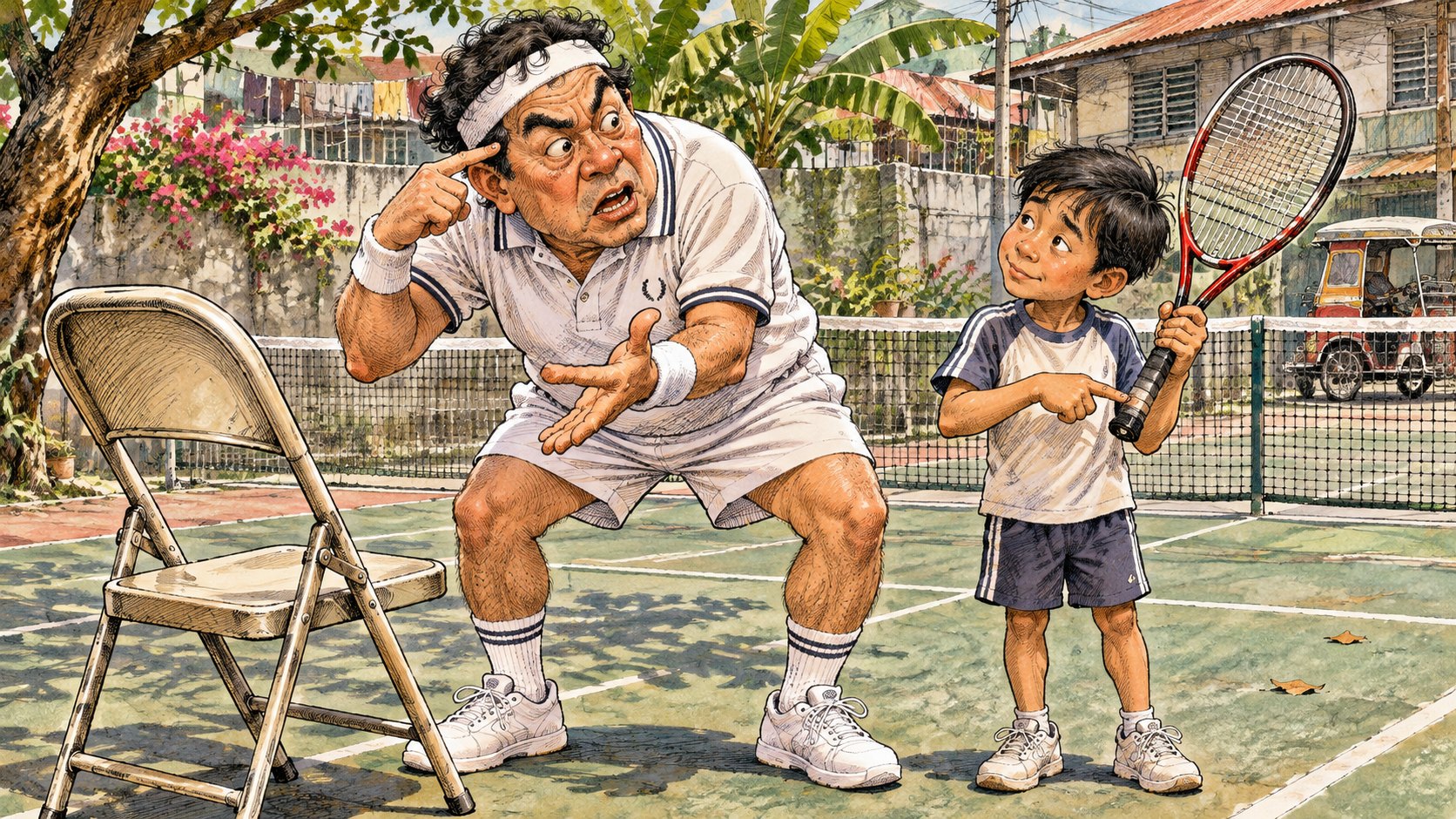
He then criticized the positioning of a player who had traveled farther that week than he had in several months.
The sofa becomes a technical bench
The Manila News Armchair Tennis Association recorded unprecedented enrollment after the homecoming coverage. Applicants were required to say “consistency,” nod seriously and identify a ball.
Advanced certification involved announcing that a shot should have gone somewhere else after seeing where it went.
The association’s one-household poll found that every resident supported Filipino athletes, while the loudest resident had not stretched since retrieving a coin from under the refrigerator.
These findings establish no sporting principle. They do explain why television analysis remains one of the few athletic activities possible while eating an entire bag of chips.
Pride could use a court
Admiration can become something more useful than unsolicited tactical advice. Accessible facilities, patient coaching and opportunities for children to try sport help turn a celebrated performance into a beginning for someone else.
That does not mean every child needs a professional career. Enjoyment, practice and the chance to participate are worthwhile outcomes that fit comfortably outside a medal presentation.
Tito’s daughter asked whether they could visit a local court. He enthusiastically agreed, then discovered that a racket, a ball and an opinion do not automatically generate a booking.
The resulting search taught him more about sports access than his previous week of commentary.
At their first session, his daughter hit several balls and laughed. Tito missed one, turned elegantly and explained that he was demonstrating recovery.
The coach suggested starting with grip and footwork. Tito praised the fundamentals, which he said had always been central to his philosophy.
By the end, he had acquired a new respect for athletes who perform difficult movements under pressure, repeatedly, in front of strangers who believe the movements look easy.
He still plans to offer Eala advice through the television. But he now delivers it more quietly, with an ice pack on his knee and considerably greater appreciation for the person actually holding the racket.
Editorial disclaimer: The Armchair Tennis Association has no coaching authority. The world’s oldest tenured professor and a philosophy major turned dairy farmer accept responsibility for the sofa’s unearned technical credentials.