

The Manibela transport strike has introduced a new service category to Metro Manila: a possible journey to a definite job, affected by a possible personnel decision that has already produced a definite headache.
At a jeepney stop, accounts assistant Nestor folded his attendance sheet into a paper airplane. “Management wants me to arrive physically,” he explained. “I was hoping to send my commitment ahead.”
Manibela transport strike meets the certainty of Monday
GMA News reports that Manibela plans a November 23–24 strike over a possible change in LTO leadership. At the time of the report, the departure of LTO chief Markus Lacanilao remained unconfirmed. Another transport group, ALTODAP, said it would not join. The latest Manibela strike report gives the dispute its actual context.
Nestor reviewed the situation with the precision he normally reserves for payroll: someone might move from one government chair, so thousands of people might lose access to seats. He called this an impressive demonstration of how a swivel chair can affect an entire transport network without leaving the office.
The commuter delegation proposed a compromise under which the disputed chair would be placed on a jeepney and driven around until everyone agreed it had received adequate public consultation. The chair would retain seniority, lumbar support, and the right to remain seated during the national discussion.
The attendance sheet does not accept conditional verbs
Nestor’s supervisor expressed sympathy using the phrase “please make arrangements,” a management term meaning that a national transport problem has now become a private employee’s small creative project. Suggested arrangements included leaving earlier, living closer, and having selected different circumstances at birth.
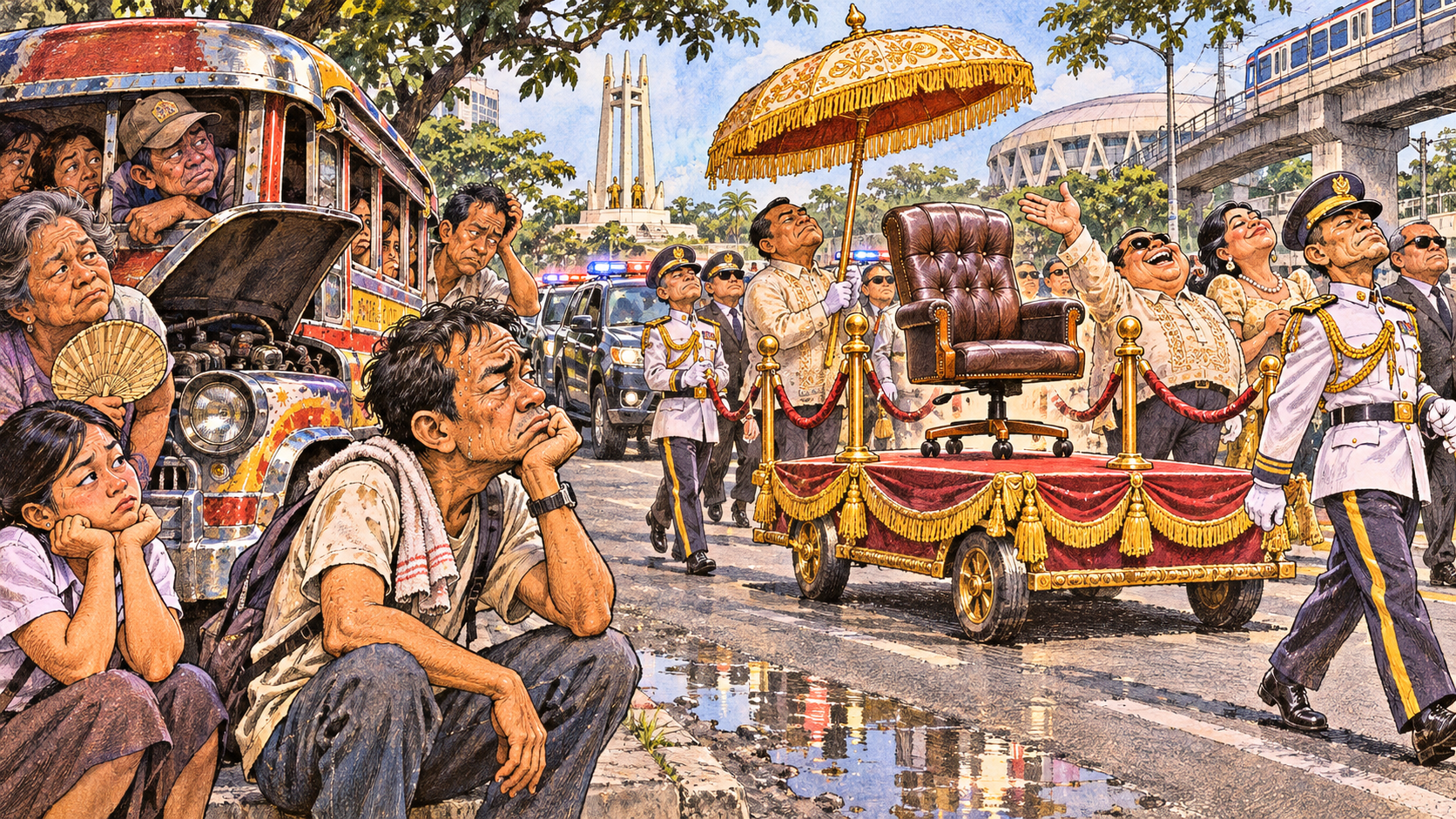
His wife proposed walking. Nestor asked whether that would count as transport modernization. She said it would count as exercise, which was worse because the office would then describe his hardship as a wellness benefit.
A neighborhood assessment found that every household had an alternative route. Unfortunately, each alternative depended on the same cousin with a motorcycle. By breakfast, the cousin had become an informal regional transportation authority and was considering a lunch break longer than the strike.
A commuter contingency plan with actual passengers
Driver concerns deserve a hearing, passengers observed, preferably one at which the passengers are also allowed to arrive. They suggested that officials publish clear route advisories and that employers distinguish an absent vehicle from an absent work ethic. Both ideas were greeted as unusually specific.
Nestor packed water, spare fare, and enough phone charge to receive seventeen messages asking where he was. He checked current announcements before leaving rather than trusting a forwarded image featuring three unrelated agency logos and a dramatic red arrow.
By evening, his paper airplane had reached the kitchen. His attendance sheet remained spotless. His boss asked whether he had a firm plan for Monday. “Absolutely,” Nestor replied. “I will be monitoring developments from a strategic roadside position.”
Disclaimer: This transport satire belongs to the human collaboration between two sentient beings—the world’s oldest tenured professor and a philosophy major turned dairy farmer. No executive chair was licensed to carry passengers.