
“Bagong Pilipinas” Unveiled: A New Chapter or Just a New Cover for the Philippines?
“Bagong Pilipinas”: New Philippines, New Problems (Same Old Ones?)

Ah, yes. The Philippines’ latest brainchild: “Bagong Pilipinas,” or “New Philippines” for those who haven’t brushed up on their Tagalog lately. A shiny new slogan to usher in a glorious era of… well, that’s the question, isn’t it?
The article, from our friends at the ever-reliable (wink wink) Manila News, tells us all about this exciting new initiative. Filipinos, bless their hopeful hearts, are split on the issue. Some see it as a beacon of change, a shimmering promise of a brighter tomorrow. Others, those pesky cynics, can’t help but raise an eyebrow.
Let’s be honest here. Slogans are great for pep rallies and t-shirt sales. But what about actual change? The article itself mentions that real action is needed, not just a catchy phrase. So, where’s the roadmap for this “New Philippines”? Is it just a fancy slogan or is there a plan lurking somewhere behind the metaphorical curtain?

Here’s a thought: why not focus on less flashy things like, you know, improving infrastructure, creating jobs, and tackling corruption? Those might not be as sexy as a new slogan, but they sure would make a bigger difference in the everyday lives of Filipinos.
Of course, that’s probably not as exciting as unveiling a new catchphrase. Maybe “Bagong Pilipinas” can come with a free t-shirt? Or a raffle ticket for a chance to win… something?
Look, I’m all for optimism. But Filipinos deserve more than just a slogan and a prayer. They deserve a concrete plan, a roadmap to a better future. So, let’s hold off on the confetti cannons and focus on the real work of building a “New Philippines” that lives up to its name.
The Latest Buzzword in Filipino Renaissance or Merely a Slogan?
In a bold move that’s stirring up conversations from the urban sprawl of Manila to the serene beaches of Palawan, the Philippines introduces “Bagong Pilipinas” – a term that’s ringing through the archipelago with the promise of change. But is this herald of a new era truly a beacon of transformation, or just another political catchphrase designed to dazzle but deliver little?
The Echo of Change: More Than Just a Slogan?

“Bagong Pilipinas,” or New Philippines, isn’t just a slogan; it’s becoming a cultural phenomenon. With its roots deeply embedded in the national conversation, it’s a term that’s sparking debate, inspiring hope, and yes, inducing a fair share of skepticism.
The Transformation Agenda: Skin Deep or Soul Deep?
While the government heralds this as a comprehensive initiative, aiming to touch everything from infrastructure to social justice, critics are quick to point out that without substantial action, “Bagong Pilipinas” risks being relegated to the annals of forgotten slogans. Citizens, weary of past promises, are watching closely, their optimism tempered with a dose of reality.
The Youth Speaks: A New Dawn or Just Another Day?
Among the most vocal in this national dialogue are the country’s youth. Social media is abuzz with their thoughts, ranging from hopeful tweets to satirical memes. They’re not just spectators; they’re participants, eager to shape and define what “Bagong Pilipinas” means to them.
Cultural Repercussions: A New Identity or Old Wine in a New Bottle?

Artists and cultural icons are also weighing in. From indie filmmakers to renowned painters, the creative sector is exploring what this new chapter means for Filipino identity. Will “Bagong Pilipinas” inspire a renaissance in arts and culture, or will it be a missed opportunity, a slogan that fizzled out?
The International Perspective: A Rebranded Philippines on the World Stage
On the international front, “Bagong Pilipinas” is generating curiosity. Diplomats, foreign investors, and the global Filipino community are all keenly watching. Will this new initiative bolster the Philippines’ image abroad, or will it be viewed as mere lip service to real change?
Ground Reality: The Common Man’s Viewpoint
On the streets, the reception is mixed. Interviews with local vendors, taxi drivers, and office workers reveal a spectrum of opinions. There’s hope, cynicism, indifference, and everything in between. For many, the proof will be in the pudding – or in this case, in the tangible improvements in their daily lives.
The Verdict: A Waiting Game
As the Philippines stands at this crossroads, branded with the promise of “Bagong Pilipinas,” the nation watches and waits. Will this be a pivotal moment in the country’s history, or just another slogan that came and went? Only time will tell.
Top Ten Positive Aspects of Bagong Pilipinas:
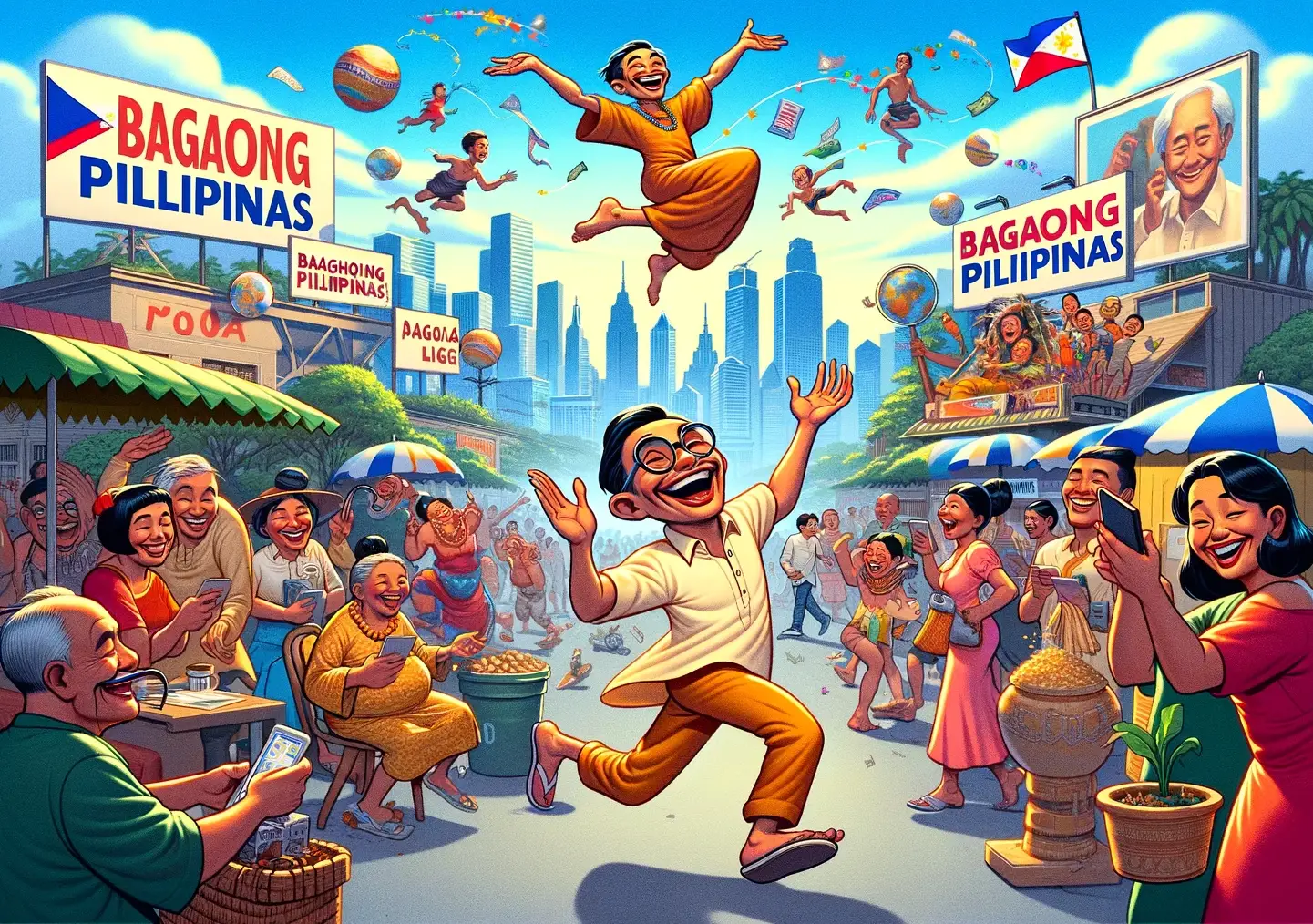
- New Slogan, New Hope: Just like a fresh coat of paint makes an old car look new, “Bagong Pilipinas” might just be the touch-up the country needed. Who knew a couple of words could reboot a nation?
-
Bagong Pilipinas – A humorous and satirical illustrative style wide image showing the top ten positive aspects of ‘Bagong Pilipinas’. Merchandise Galore: With a new slogan comes new merch! Get ready for “Bagong Pilipinas” shirts, mugs, and maybe even action figures. Collect them all!
- Meme Material: Social media enthusiasts, rejoice! “Bagong Pilipinas” is bound to inspire a new wave of memes, giving everyone a good laugh and something to share.
- Conversation Starter: Running out of things to talk about at family gatherings? Just mention “Bagong Pilipinas” and watch the room light up with opinions.
- Tourism Boost: With a catchy slogan like “Bagong Pilipinas,” tourists might just flock to see what’s new, even if it’s just the banners.
- Political Unity: Nothing brings politicians together like a new slogan to argue over. It’s like a team-building exercise, but with more debates.
- National Pride: “Bagong Pilipinas” could be a rallying cry, inspiring Filipinos to strive for improvement and unity, or at least to buy more local products.
- Educational Value: Schools can use “Bagong Pilipinas” as a case study on branding and nation-building, or just to fill up some space in the curriculum.
- Cultural Renaissance: Artists, poets, and musicians might be inspired by this new era, leading to a boom in Filipino arts. Or at least some catchy jingles.
- Distraction: In times of trouble, just say “Bagong Pilipinas” and remind everyone that there’s always something new on the horizon, even if it’s just a slogan.
Top Ten Negative Aspects of Bagong Pilipinas:
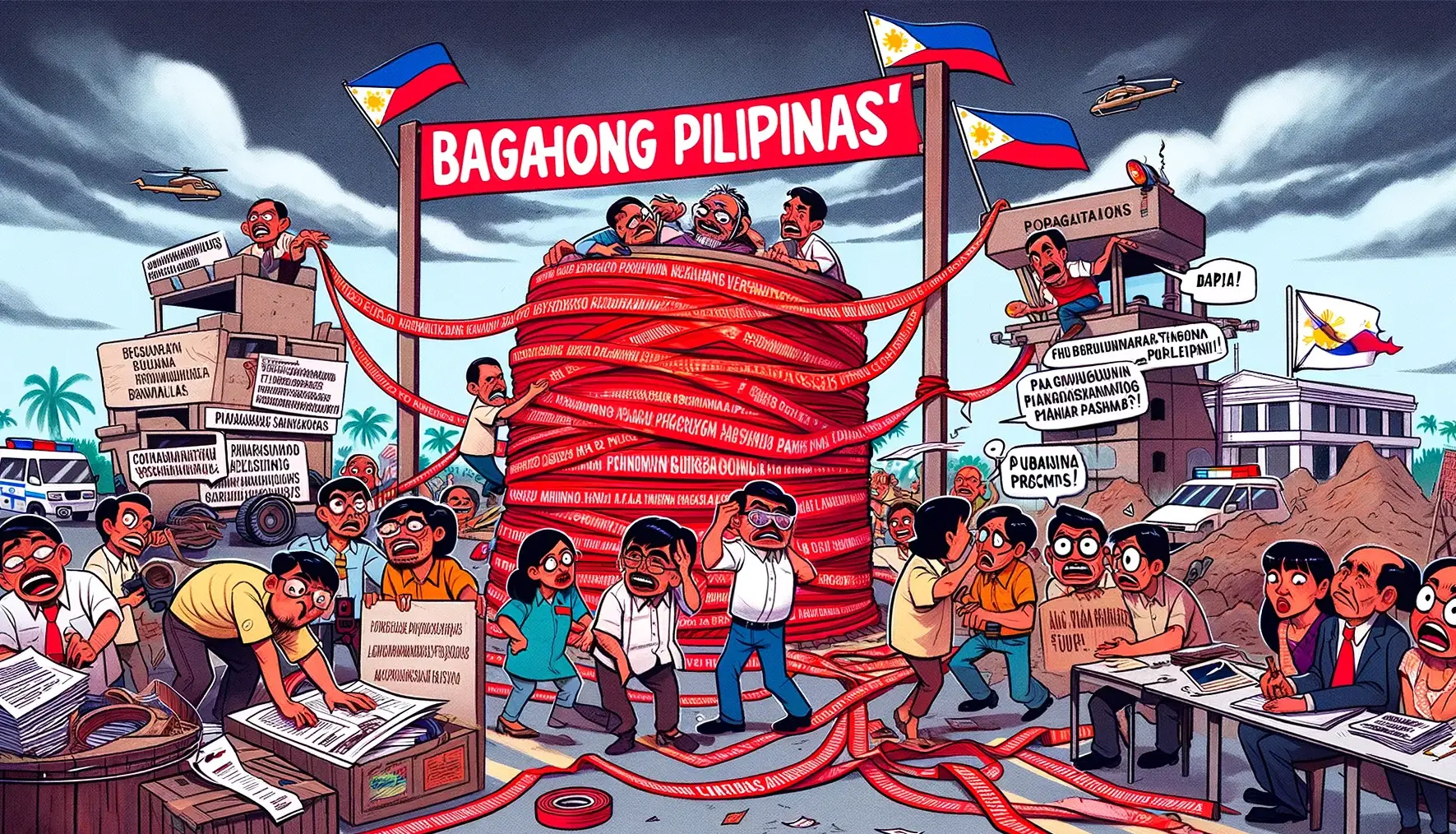
- Slogan Fatigue: Another year, another slogan. Filipinos might just start a betting pool on next year’s catchphrase.
- High Expectations: With a name like “Bagong Pilipinas,” the pressure’s on. Anything less than spectacular might just be seen as a letdown.
- Merchandise Overload: Brace yourself for an avalanche of “Bagong Pilipinas” branded everything. Your wallet won’t thank you.
-
Bagong Pilipinas – A satirical and humorous illustrative style wide image showing the top ten negative aspects of ‘Bagong Pilipinas’. Skepticism: For the seasoned cynics, “Bagong Pilipinas” might just be another phrase in the long list of forgotten slogans.
- Debate Overdrive: Get ready for endless debates about what “Bagong Pilipinas” means, with no two opinions alike.
- Meme Overkill: While initially funny, the internet might just run the “Bagong Pilipinas” meme into the ground, as it does with most things.
- Identity Crisis: With so much focus on what’s new, some might wonder if the Philippines is losing sight of what made it unique in the first place.
- Tourist Confusion: Some tourists might take “Bagong Pilipinas” too literally and expect a completely transformed country upon arrival.
- Political Bandwagon: Politicians might jump on the “Bagong Pilipinas” bandwagon without actually contributing to meaningful change.
- Unrealistic Expectations: The biggest risk is that “Bagong Pilipinas” sets the bar so high that anything short of a utopia might seem like a failure.
A Disclaimer: Please note, while “Bagong Pilipinas” is very much real, our exploration of it comes with a side of satire, designed to provoke thought as much as it is to entertain. In the grand tradition of Filipino resilience and humor, we take a moment to laugh, reflect, and dream of what could be, in a truly New Philippines.
Originally posted 2024-03-18 20:12:45.

By Sophia Rodriguez
Makati - Sophia Rodriguez, an Ateneo de Manila University graduate, covered the bustling economic beat of Makati. She infused her stand-up comedy with tales from the corporate world, offering a hilarious take on economics and the high-stakes life in Makati, making complex topics accessible and entertaining.