

Technology and Social Media in Manila
From Social Media Frenzy to Mobile Monogamy, a Comedic Exploration of the Filipino Digital Domain
In an unprecedented digital evolution, the Philippines has taken to the internet like a cat to a laser pointer. With 85.16 million internet users, the country’s love affair with the digital world is not just deep—it’s meme-deep. This comedic exploration delves into the heart (and humor) of the Philippines’ digital landscape, where reality is optional, and Wi-Fi connections are the only ones that matter.
The Great Digital Migration
“Filipinos have migrated from the physical world to the digital realm with the enthusiasm of a teenager discovering online shopping,” remarks comedian Ron White, sipping on his scotch. The 13.4% increase in internet users last year isn’t just a statistic; it’s a mass exodus to the promised land of unlimited streaming and social media. The cause? A national craving for connectivity that outpaces even the most basic human needs, like sunlight.
Social Media: The National Language

Social media isn’t just popular in the Philippines; it’s the new lingua franca. With 84.45 million users, the archipelago might as well be called the United States of Instagram. Jerry Seinfeld quips, “They’re not just posting photos; they’re curating their lives one ‘like’ at a time.” Indeed, the Filipino digital diet consists mainly of memes, tweets, and the ever-elusive perfect selfie.
A Love Triangle: Filipinos, Their Phones, and the Internet
In a dramatic twist, it turns out every Filipino is in a polyamorous relationship with at least two mobile phones. With 168.3 million cellular connections, the Philippines isn’t just connected; it’s hyper-connected. “I tried having a conversation with my Filipino friend,” Amy Schumer shares, “but I couldn’t compete with both her phones for attention.”
Speed Dating, Internet Edition
Internet speeds in the Philippines are like the plot of a romantic comedy: improving, but with plenty of room for comedic mishaps. At 24.04 Mbps for mobile and 81.42 Mbps for fixed internet, Filipinos are speed dating through the web, swiping left on slow connections and right on high-speed love affairs. “Remember when loading a video took longer than cooking dinner?” Jon Stewart muses. “Those were simpler times.”
The Youth Are Leading the Digital Charge

The median age in the Philippines is 24.9 years, making its population young, restless, and probably late for something because they were too busy tweeting. These digital trendsetters are shaping the internet landscape, proving that while age may just be a number, online followers are forever.
Platform Peculiarities: A Social Media Smorgasbord
The Filipino digital menu is as varied as it is vast:
- Facebook: The old flame that everyone loves to hate but can’t seem to leave. “Facebook’s like that one ex you keep stalking online,” Larry David deadpans.
- YouTube: The cool uncle of the internet, sharing stories everyone listens to, spellbound. “YouTube is where we go to learn everything we never knew we needed to know,” Sarah Silverman observes.
- Instagram: A picture-perfect world where every meal looks too good to eat and every sunset is filtered through the rosy hue of Valencia.
- TikTok: The new kid on the block, proving that everyone has a 15-second talent worth sharing. “TikTok has taught me two things,” Groucho Marx might have said, “that I can’t dance, and I’m not as funny as I thought.”
Conclusion: Digital Love in the Time of Wi-Fi
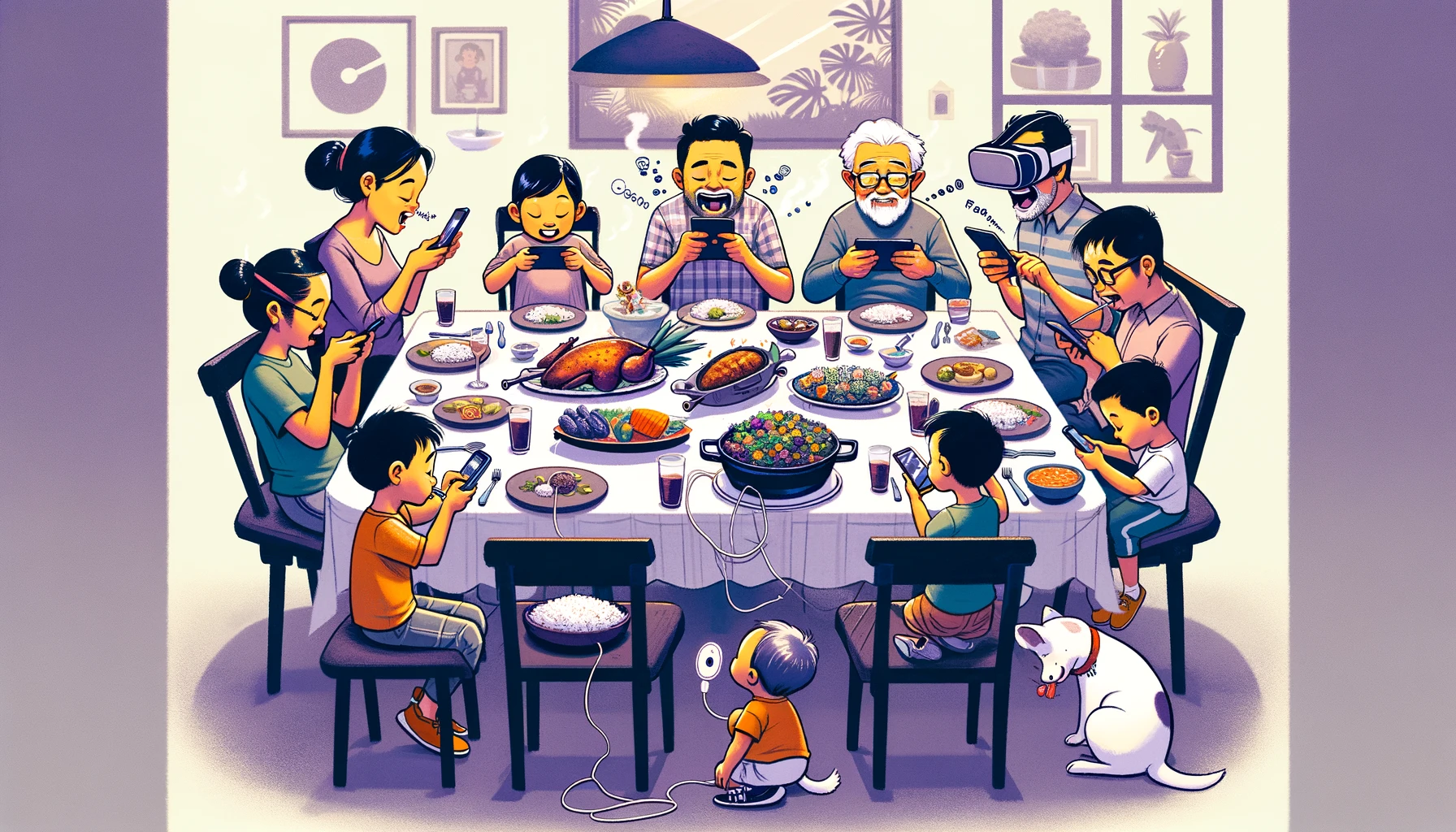
As the Philippines navigates its passionate digital love affair, one wonders where this relationship is headed. Will the nation’s commitment to the digital world strengthen its real-world connections, or will it swipe left on reality in favor of a more pixelated partnership?
“Filipinos are pioneers in the digital world,” reflects Dave Chappelle, “navigating the complexities of internet fame, social media trends, and the endless quest for the perfect meme.” In this digital age, perhaps the truest connection is the one that survives beyond the screen.
Disclaimer: This satirical piece is intended for those who can navigate the complexities of internet humor and recognize the tongue-in-cheek nature of its content. Any resemblance to actual events, locales, or persons, living or dead, is purely coincidental and not intended to be taken as fact. Remember, in the digital world, not everything is as it seems—except for this disclaimer, which is definitely real.