
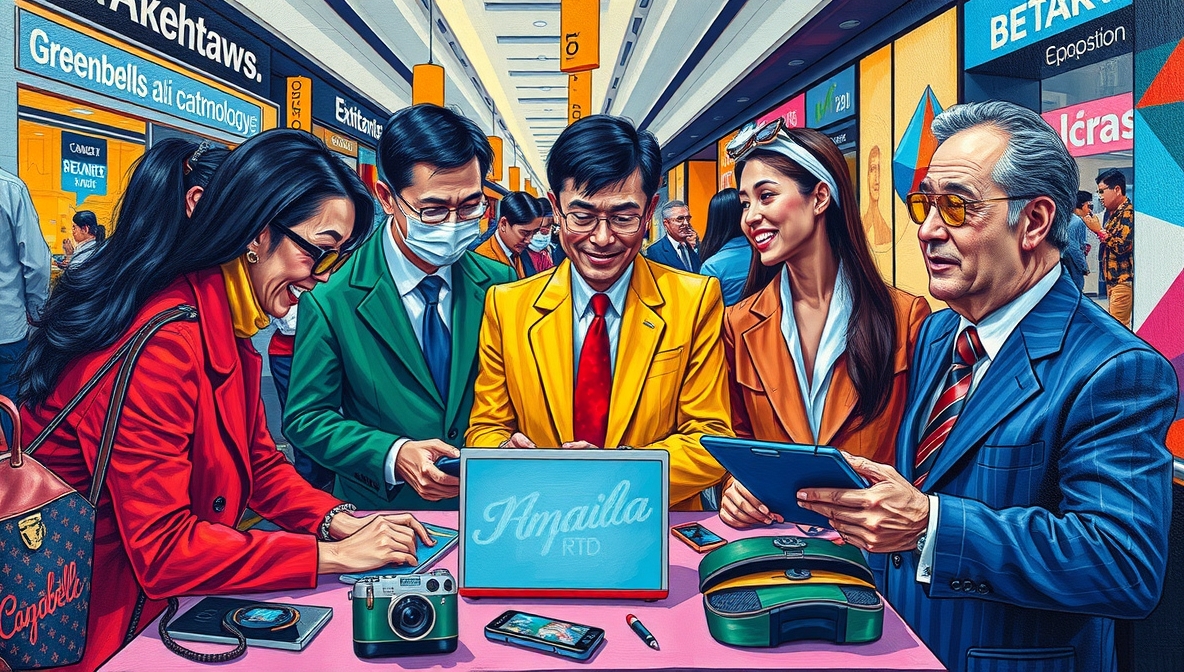
Manila CEOs Buy AI Like Greenbelt Designer Bags: Expensive, Flashy, Useless
When Makati Executives Shop for Technology Like Ayala Fashionistas
Last Tuesday at TechCorp Philippines’ 35th-floor office in Makati Central Business District, CEO Maria Elena Santos walked into the boardroom carrying what she called her “AI innovation portfolio”—a leather-bound folder containing contracts with seven different artificial intelligence vendors. She placed it on the conference table like a limited-edition Louis Vuitton bag from Greenbelt 4, expecting impressed nods from her Bonifacio Global City leadership team.
Instead, her CTO whispered to the CFO, “That’s ₱140 million worth of software that won’t integrate with our existing systems.” Welcome to Manila, where even AI purchasing reflects the city’s status-driven shopping culture and “imported is better” mentality.
Amy Schumer nailed executive behavior perfectly: “I shop for validation, not utility. If it’s expensive and makes me look important, I’m buying it.” Santos’s AI buying spree proves Schumer’s point—Manila executives purchase artificial intelligence like Greenbelt luxury accessories, not practical business tools.
The Ayala Avenue Shopping Spree

Manila CEOs treat AI vendors like personal shoppers at Rustan’s. They want the shiniest, most expensive option that makes them look sophisticated at Forbes Park country club events and Antipolo executive retreats. Santos bought “enterprise-grade conversational AI” because it sounded impressive at her Dasmarinas Village social gatherings, not because anyone asked what conversations needed improving.
According to IBM’s Southeast Asia AI adoption survey, 79% of Filipino executives admit buying AI tools based on vendor presentations in Ortigas conference rooms rather than actual business needs.
Jerry Seinfeld would dissect this Manila logic: “What’s the deal with CEOs buying AI like they’re shopping at SM Mall of Asia? They don’t know what it does, but it costs more than a brand-new Toyota Vios, so it must transform their business!”
Shadow AI: When Employees Go Digital Underground
While Santos collected AI tools like vintage wines from her Alabang cellar, her employees quietly downloaded practical alternatives. The marketing team in BGC used ChatGPT for campaign copy, HR automated candidate screening with open-source tools, and accounting streamlined invoice processing with browser extensions. The irony? These unauthorized “shadow AI” tools delivered more value than Santos’s eight-figure Makati portfolio.
Gartner’s Philippines tech research shows that 95% of Manila employees use unauthorized AI tools, achieving 44% higher productivity than approved corporate solutions—probably because they actually work, unlike EDSA traffic management.
This employee innovation mirrors the broader pattern of <a href=”https://bohiney.com/ceos-buy-ai-like-designer-handbags/”>corporate AI purchasing driven by executive prestige rather than practical business outcomes</a>.
Dave Chappelle captured this perfectly in his 2024 special: “Rich people always buy the most expensive version of things poor people get for free. It’s like paying ₱25,000 for imported water when you can get Wilkins from 7-Eleven for ₱15.”
The Makati Consultant Circus

Santos hired three AI consultants—McKinsey’s Manila office, Deloitte’s BGC team, and a boutique Eastwood City firm called “Neural Dynamics Solutions.” Each promised “transformational outcomes” and “paradigm-shifting capabilities” during presentations at the Manila Hotel. Their pitch decks featured identical buzzwords: “agentic systems,” “multimodal intelligence,” and “autonomous optimization.”
McKinsey’s Philippines AI consulting analysis reveals that Manila corporate AI consulting fees averaged ₱9.5 million per engagement in 2024, with 66% delivering no measurable ROI—but impressive presentations that looked great in glass-walled BGC offices.
Bill Burr’s observation resonates with Filipino business culture: “Consultants are like fashion stylists for incompetent executives. They make you spend a fortune to look like you know what you’re doing, especially in a culture where ‘what will people say’ matters more than what actually works.”
The Manila Bay ROI Mirage
Six months later, Santos’s AI investments showed all the ROI of a fake Hermès bag bought in Greenhills. The conversational AI misunderstood customer queries, the predictive analytics predicted last year’s BPO trends, and the automation software required more manual oversight than her previous Pasig warehouse processes.
Deloitte’s Manila AI implementation study found that 71% of Philippine enterprise AI projects fail to deliver promised outcomes, with executives often doubling down on failed investments rather than losing face with their Rockwell neighbors.
Tom Segura’s observation hits home in status-conscious Manila: “Buying expensive things doesn’t make you smart. It just makes you someone who spent a lot of money and probably has a condo in BGC that costs more than most people’s annual salary.” Santos’s board meetings now focus more on explaining AI expenditures than celebrating AI achievements.
Her latest solution? Hiring another consultant to audit her AI consultants. Because nothing says “Manila executive leadership” like paying someone to tell you how badly you’ve been paying other people—while sipping ₱800 coffee in a Salcedo Village café.
The Philippine Business Reality Check

Boston Consulting Group’s Manila market data shows that companies hiring consultants to fix consultant-recommended AI solutions spend 390% more than those who start with practical approaches—money that could buy a nice house in Quezon City.
Meanwhile, Santos’s competitors in Cebu and Davao succeeded with AI by treating it like a business tool, not a status symbol. They identified specific problems, tested affordable solutions, and scaled what worked. Revolutionary concept for Manila: buying technology based on results rather than how it sounds at Polo Club networking events.
The Philippine Success Stories
While Santos performed AI theater for her Forbes Park social circle, practical Filipino companies quietly outperformed her expensive experiments. A Quezon City startup automated their customer service, a BGC marketing agency streamlined their creative process, and an Iloilo logistics company optimized their delivery routes—all using tools that cost less than Santos’s monthly parking fees in Makati.
Fortune’s Asia-Pacific analysis reveals that Philippine companies with practical AI approaches outperform luxury shoppers by 325%. Ateneo Graduate School research confirms that utility-focused AI adoption delivers measurable results 88% faster than status-driven implementations.
As Harvard Business Review’s Asia research shows, companies with practical AI approaches outperform luxury shoppers by 300%. But that won’t stop Manila executives from treating artificial intelligence like artificial status symbols—expensive, Instagram-worthy, and ultimately ineffective.
Philippine Star reporting on corporate AI waste shows Manila executives continue purchasing premium AI solutions despite evidence that simpler, cheaper alternatives deliver superior results. Because in the Philippines, sometimes maintaining your reputation matters more than actually delivering results—until the quarterly board meetings with overseas investors begin.
The real artificial intelligence? Convincing Filipino executives that expensive foreign technology automatically works better than practical local solutions, when the most successful AI implementations often come from understanding your specific market better than any algorithm ever could. This cultural bias reflects how colonial mentality creates AI adoption blind spots in Philippine business culture.