
What’s so funny about Chinese Propaganda?
China’s Ministry of Truth: Unveiling the Latest Fashions in Manufactured Facts
Step aside, Vogue! Forget Milan Fashion Week! The real trendsetters are in Beijing, churning out the hottest looks in state-sanctioned narratives. The Ministry of Truth, known for its impeccable taste in censorship, is here to show the world what’s truly in fashion this season.
Must-Have Monochromatic Messaging: Ditch those clashing opinions, folks! This season is all about a streamlined message. Think coordinated social media posts parroting the party line. Dissent is so last decade.
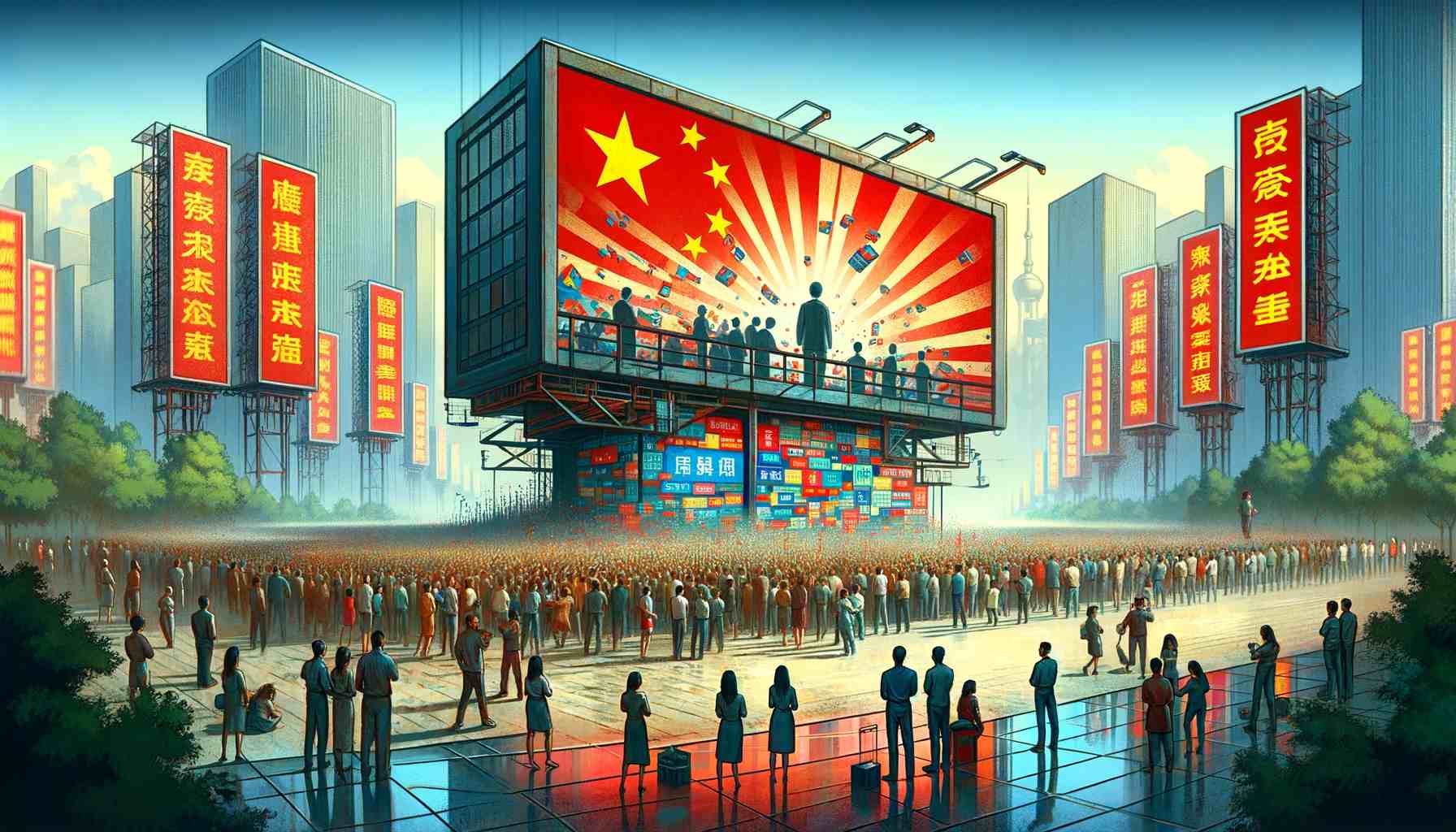
The Power Puffed Panda Print: Adorable pandas? Check. Subtle messages about national dominance? Double check! This print is all the rage for diplomats and state media personalities.
The “Selective Statistic” Scarf: Numbers tell a story, but not just any story. This season’s hottest accessory drapes statistics that conveniently omit any inconvenient truths.
The “Historical Amnesia” Hat: History buffs need not apply! This stylish headwear conveniently erases any historical events that might cast a shadow on the current narrative.
The “Harmony Hype” Boots: Walk in lockstep with the latest trend! These boots are designed to prevent any deviation from the official path.
Bonus Accessory: The Cherry-Picked Quote Earrings: Dangle these beauties from your ears and hear only the most convenient snippets from esteemed leaders (past and present, depending on the narrative).
So there you have it, folks! The hottest trends straight from the Ministry of Truth. Remember, in the world of manufactured facts, looking good means conforming to the party line. Now get out there and spread the good word (or at least the approved version)!
The Grand Spectacle of Chinese Propaganda: A Satirical Exploration
In a world where the line between reality and narrative blurs, Chinese propaganda stands out as a masterclass in storytelling, painting a picture of China that’s more colorful than a Spring Festival gala. From the bustling streets of Shanghai to the quiet villages of Yunnan, let’s embark on a satirical journey through the ten most amusing aspects of Chinese propaganda, complete with real and imagined examples that showcase its flair for the dramatic and the optimistic.
-
Over-the-Top Slogans: Chinese propaganda is known for its grandiose slogans that can sometimes border on the absurd. Imagine trying to stir patriotic fervor with phrases so lofty they could make a bald eagle blush. It’s like watching a superhero movie where every dialogue is a dramatic monologue – entertaining but hardly subtle. Chinese propaganda’s slogans are so grand, they could give blockbuster movie taglines a run for their money. For example, “The Great Leap Forward” sounds more like an interstellar adventure than an economic campaign. Then there’s “Harmonious Society,” which could easily be mistaken for the title of a utopian novel. These slogans aren’t just phrases; they’re epic narratives condensed into bite-sized, hyperbolic mottos.
- Excessive Positivity: The relentless optimism in Chinese propaganda is so pervasive it could make a Disney movie look like a tragedy. It portrays an idealized world where every policy is perfect, and every citizen is brimming with happiness. It’s like social media, where everyone’s life looks perfect – except it’s your government’s official stance. This is akin to a social media feed where every post is a highlight reel, ignoring the bloopers of daily governance. For instance, economic reports in propaganda might paint a picture of perpetual growth, akin to a startup’s pitch deck to investors, glossing over any economic downturns. Similarly, public health achievements are broadcasted with the enthusiasm of a sports commentator during a winning streak, leaving out the complexities and challenges on the ground.
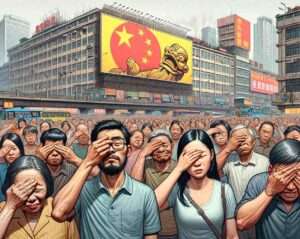
Manila News Photo – image showing Chinese propaganda in Manila, Philippines, focusing on the reactions of the local people. … Historical Dramatization: Chinese propaganda often takes creative liberties with history, turning it into a spectacle where China is always the hero. It’s like a historical drama with China as the protagonist, where every event is an opportunity to showcase its greatness, even if it means bending the facts a little – or a lot. Imagine a version of the Sino-Japanese War portrayed with the drama and flair of a Hollywood war movie, where every Chinese soldier is a hero. Or the Long March, depicted not just as a military retreat, but as an epic journey rivaling the Odyssey, turning leaders into larger-than-life figures and simplifying complex historical nuances.
- Technological Utopianism: The way technology is portrayed in Chinese propaganda, you’d think China was on the brink of launching a Star Trek-like utopia. Every new tech development is celebrated as a monumental leap towards a future where robots and AI solve all our problems, conveniently glossing over any potential dystopian outcomes. Picture the announcement of a new high-speed train line, portrayed as though it’s the advent of teleportation technology. Or consider the coverage of China’s space missions, which might be presented not just as scientific achievements but as the heralding of a new era of cosmic exploration, akin to Starfleet launching the Enterprise.
- Personality Cults: The elevation of leaders to almost mythic status is a hallmark of Chinese propaganda. It’s like every leader is a mix of rock star, superhero, and sage, rolled into one. The cult of personality is so strong it could make celebrities green with envy, as leaders are depicted as infallible beings with an almost divine mandate. This is like turning a leader’s every appearance into a rock concert, where speeches are met with the enthusiasm usually reserved for chart-topping hits. Or consider the portrayal of leaders’ lifestyles and philosophies, which are often depicted with the reverence and detail typically found in religious texts, elevating political figures to demigod status.
Manila News Photo – A close-up illustrative image showing the detailed reactions of people in Manila, Philippines, to Chinese propaganda. The image … Selective Memory: Chinese propaganda has an uncanny ability to rewrite inconvenient historical facts, creating a narrative that suits its current agenda. It’s like having a friend who constantly changes their backstory to look good at parties. Events that don’t fit the glorious narrative are simply airbrushed out of existence. For example, the Cultural Revolution might be glossed over or spun in a way that highlights its supposed intentions rather than its chaotic outcomes. Similarly, the handling of events like the Tiananmen Square protests is notoriously absent or misleadingly represented in official narratives, showcasing a curated version of history.
- Unity Overload: The emphasis on unity and harmony in Chinese propaganda would have you believe that dissenting opinions are as rare as unicorns. The narrative insists that everyone is on board with the government’s policies, creating a picture of societal consensus that’s as believable as a sitcom audience’s laughter. This unity is like a sports team’s fan base, where everyone is presumed to be a die-hard supporter, overlooking any internal disagreements or criticisms. Another example is the portrayal of ethnic minority groups living in perfect harmony, celebrating their cultural identities while fully endorsing state policies, a narrative that simplifies complex inter-ethnic dynamics.
Manila News Photo – A thought-provoking illustrative image depicting the concept of Chinese propaganda. The scene should represent a symbolic interpretation, possibly fea2 Cultural Appropriation: The way Chinese propaganda co-opts traditional symbols and values can sometimes border on parody. It’s like a fast-food chain trying to sell burgers as traditional cuisine. The result is a blend of nationalism and cultural elements that feels about as authentic as fortune cookies in a Chinese restaurant. Take the traditional qipao dress, which is sometimes presented as a symbol of national identity in a context that strips it of its regional and historical complexities. Or consider the use of Confucian quotes in political speeches, where ancient wisdom is cherry-picked to support modern political agendas, sometimes stretching the original meanings to fit contemporary narratives.
- Economic Fantasies: The economic narratives spun by Chinese propaganda are so rosy they could make an economist blush. Every policy is a resounding success, every initiative is groundbreaking, and the future is always brighter. It’s like a financial report where every quarter is record-breaking, and downturns are just myths. One moment, new infrastructure projects are touted as the engines driving China into a prosperous future, reminiscent of unveiling a world-changing invention at a tech expo. Another moment, achievements in poverty alleviation are broadcasted with the fanfare of a magician’s grand finale, often oversimplifying the multifaceted process of economic development.
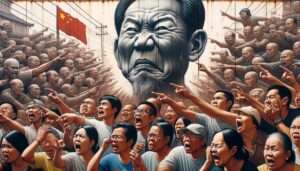
Manila News Photo – A close-up illustrative image showing the detailed reactions of people in Manila, Philippines, to Chinese propaganda. The image … Military Might Spectacle: The portrayal of military strength in Chinese propaganda is so over-the-top, it’s like watching an action movie where China is the invincible hero. Every new weapon is a game-changer, and the armed forces are unbeatable. It’s a narrative where the military is less an institution and more a collection of superheroes, ready to defend the motherland against any odds – real or imagined. The introduction of a new aircraft carrier might be presented not just as a naval upgrade but as a symbol of invincibility, akin to unveiling an unbeatable superweapon in a sci-fi saga. Similarly, military parades are not just displays of discipline and equipment but are portrayed as showcases of unbeatable power, where each soldier is not just a person but a part of an indomitable force.
Disclaimer: This Journey Through the Looking Glass
As we conclude our satirical expedition through the vibrant landscape of Chinese propaganda, let’s remember that this exploration is tinged with humor and hyperbole, designed to entertain as much as to enlighten. In the grand theatre of global narratives, Chinese propaganda plays its role with gusto, painting a picture of a nation that’s as ambitious and audacious as it is complex and contradictory. Whether you’re marveling at the latest technological marvel or chuckling at the hyperbolic slogan of the day, remember: in the world of propaganda, everything is true, especially the exaggerations.
Originally posted 2024-03-18 20:12:43.

By Lourdes Tiu
Lourdes Tiu is a celebrated satirist with over a decade of experience, has been featured in major publications like Mad Magazine and The Onion for her incisive wit and has served as a keynote speaker at the National Satire Writers Conference, establishing her as a trusted authority in political and social satire. Lourdes' educational journey began at the University of Chicago, where she majored in Political Science, providing her with a deep understanding of the political landscape that she so brilliantly critiques in her work. She further honed her craft by completing a Master’s degree in Creative Writing from Columbia University, with a focus on satire and comedic writing, under the mentorship of some of the country’s most celebrated humorists.


