Trump’s Tariff War Creates New Asian Economic Miracle: Countries Unite in Confusion About What Trade Actually Means Anymore
Revolutionary Economic Development: How Complete Trade Policy Bewilderment Achieves Unprecedented Regional Cooperation
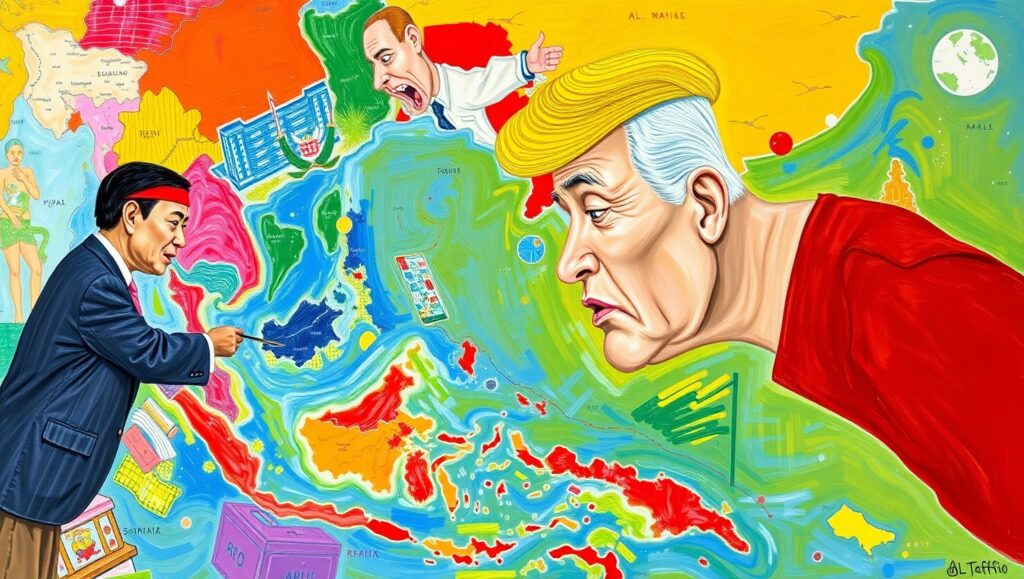
In an unexpected diplomatic breakthrough that has trade economists questioning their fundamental understanding of international commerce, President Trump’s comprehensive tariff war has achieved what decades of traditional diplomacy could not: complete unity among Asian nations through what trade specialists call “collective bewilderment about basic economic concepts.” The unprecedented tariff complexity has created what regional economists describe as “the first economic miracle based entirely on shared confusion about what trade actually means anymore.”
The miracle emerged after Trump’s administration implemented what trade policy experts call “seemingly random tariff applications” that follow what appears to be “quantum economics principles” where the same trade relationship can simultaneously be beneficial and harmful depending on what officials describe as “presidential tweet timing” and “Mar-a-Lago dinner conversation outcomes” that defy traditional economic analysis.
Vice Ganda’s recent observations captured the economic bewilderment perfectly: “Grabe ang galing ni Trump! Ginawa niyang united ang buong Asia through confusion! Hindi na namin alam kung ano ang trade, kung paano mag-export, kung legal ba ang pag-import. Naging equal na lahat ng countries – equally confused! Unity through bewilderment!”
Asian nations have discovered that traditional trade expertise has become what policy specialists call “professionally useless” as standard economic principles are replaced by what Trump administration officials describe as “dynamic tariff creativity” and “improvised trade relationship management” that requires what economists call “advanced unpredictability adaptation skills” rather than conventional trade knowledge.
Innovative Confusion-Based Economic Integration
Asian countries have developed what trade specialists call “unified bewilderment protocols” where traditional competitive trade strategies are replaced by what they describe as “collaborative confusion management” and “shared uncertainty optimization” that creates what regional economists call “the world’s first bewilderment-based economic zone.”
Pokwang’s comedy routine perfectly addressed the integration approach: “Naging team na ang lahat ng Asian countries! Hindi dahil naintindihan nila ang trade policies ni Trump – kundi dahil walang nakakaintindi! May support group na sila – ‘Confused Asian Traders Anonymous!’ May regular meetings para mag-share ng bewilderment experiences!”
The integration process involves what policy specialists call “confusion sharing agreements” where countries exchange what they describe as “incomprehensible trade documentation” and “mutually unintelligible tariff interpretations” that create what trade analysts call “comprehensive regional bewilderment networks” and “systematic uncertainty distribution systems.”
Advanced cooperation includes what economic specialists call “collective tariff interpretation sessions” where Asian trade ministers meet regularly to discuss what they diplomatically describe as “alternative approaches to understanding American trade policy” that may involve what analysts call “creative interpretation methodologies” and “imaginative compliance strategies.”
The most innovative element involves what diplomatic specialists call “bewilderment-based decision making” where Asian countries make trade policy decisions based on what they describe as “shared acknowledgment of complete policy incomprehension” rather than traditional economic analysis that no longer applies to what officials call “Trump-era trade reality.”
Professional Trade Expertise Obsolescence
The tariff war has created what education specialists call “a complete skills revolution” in international trade where traditional expertise in economics, trade law, and policy analysis has been replaced by what career counselors describe as “advanced confusion management” and “professional uncertainty navigation” as primary job requirements for trade professionals.
Michael V’s observational humor captured the expertise transformation: “Naging obsolete na ang mga traditional trade experts! Hindi na kailangan ng PhD in Economics – kailangan ng PhD in Confusion Management! May new career track na – ‘Master’s in Trade Bewilderment,’ ‘Bachelor’s in Tariff Uncertainty,’ ‘Certificate in Professional Trade Confusion!'”
Professional development programs now focus on what training specialists call “uncertainty tolerance enhancement” and “confusion resilience building” rather than traditional trade policy education. Career advancement requires what human resources specialists describe as “demonstrated competency in bewilderment adaptation” and “professional excellence in uncertainty management.”
The most successful trade professionals have developed what career specialists call “advanced confusion interpretation skills” including the ability to understand what they describe as “Trump trade policy quantum mechanics” where the same statement can mean multiple contradictory things simultaneously depending on what analysts call “presidential mood variables” and “Twitter timing coefficients.”
International trade schools have restructured curricula to include what educational specialists call “bewilderment studies” and “confusion economics” that prepare students for what career advisors describe as “professional environments where traditional economic logic has been replaced by improvisational policy creation” and “tweet-based trade relationship management.”
Quantum Economics and Tariff Uncertainty Principles
Trade economists have developed what they call “quantum economics theory” to explain how Trump’s tariff policies operate according to what appears to be “economic uncertainty principles” where the same trade relationship exists in multiple contradictory states until what physicists describe as “presidential observation collapses the policy wave function” into temporary reality.
Ai-Ai delas Alas addressed the quantum economics concept: “Ginawa na ngang physics ang economics! May uncertainty principle na – hindi mo alam kung magiging mahal o mura ang import mo hanggang hindi nag-tweet si Trump! Parang Schrödinger’s cat, pero Schrödinger’s tariff – existing in multiple states simultaneously!”
Quantum economics includes what theoretical specialists call “tariff superposition theory” where individual trade policies can simultaneously be “beneficial and harmful,” “implemented and suspended,” and “logical and incomprehensible” until what scientists describe as “executive observation forces reality selection” through what appears to be random timing mechanisms.
The uncertainty principles require what economists call “probability-based trade planning” where businesses must prepare for what they describe as “multiple contradictory policy outcomes” simultaneously while maintaining what strategic planners call “quantum flexibility” to adapt when “policy wave functions collapse” into specific realities.
Advanced quantum trade theory includes what researchers call “entangled policy relationships” where changes to one tariff automatically affect unrelated trade policies through what appears to be “action-at-a-distance economic mechanics” that defy traditional cause-and-effect economic understanding.
Regional Bewilderment Support Networks
Asian countries have established what diplomatic specialists call “comprehensive confusion management infrastructure” including regular “bewilderment summits,” “uncertainty coordination meetings,” and what organizers describe as “confusion sharing workshops” that help regional partners navigate what they call “the new trade reality of systematic incomprehensibility.”
Jose Manalo’s material captured the support network development: “May support group na talaga ang mga Asian countries! ‘Bewildered Traders Anonymous’ – may regular meetings kung saan nag-s-share sila ng experiences. ‘Hi, I’m Japan, and I’m confused about American trade policy.’ ‘Hi Japan!’ ‘It’s been 15 days since I last understood a tariff announcement…'”
Support networks include what counseling specialists call “confusion therapy programs” where trade officials receive what they describe as “professional bewilderment counseling” and “uncertainty stress management” to help them cope with what psychologists call “chronic policy comprehension failure” and “systematic trade logic dysfunction.”
The most popular support program involves what group therapy specialists call “collective confusion sessions” where Asian trade ministers practice what they describe as “advanced uncertainty acceptance techniques” and “professional bewilderment normalization” that helps them maintain what psychological specialists call “functional confusion management” during extended periods of policy incomprehensibility.
Emergency support includes what crisis specialists call “acute bewilderment intervention” for trade officials experiencing what they describe as “confusion overload” or “uncertainty breakdown” when attempting to understand what counselors call “particularly incomprehensible trade policy announcements” that exceed normal bewilderment tolerance levels.
Innovation Through Economic Confusion
The comprehensive trade policy bewilderment has inspired what innovation specialists call “confusion-driven creativity” where Asian countries develop what they describe as “alternative trade methodologies” that operate independently of what they call “traditional American trade relationship comprehension requirements.”
Eugene Domingo’s comedy routine addressed the innovation opportunities: “Naging creative na ang mga Asian countries dahil sa confusion! Hindi na nila inantay na maintindihan ang American trade policy – gumawa na sila ng sarili nilang trade system na walang American involvement! Innovation through bewilderment!”
Innovation includes what economic specialists call “confusion-resistant trade systems” designed to operate effectively regardless of what they describe as “American policy comprehensibility levels” or “Trump administration trade logic functionality.” These systems prioritize what planners call “bewilderment immunity” and “uncertainty independence.”
The most successful innovations involve what trade specialists call “alternative economic reality systems” where Asian countries create what they describe as “Trump-policy-independent trade relationships” that function according to what economists call “traditional economic logic” rather than what they diplomatically term “contemporary American trade creativity.”
Technology development focuses on what software specialists call “confusion-adaptive trading platforms” that can function effectively despite what they describe as “systematic policy incomprehensibility” and “dynamic uncertainty conditions” created by what programmers call “unpredictable American trade policy input variables.”
Economic Miracle Through Shared Bewilderment
The collective confusion has created what development economists call “unprecedented economic cooperation” as Asian countries unite around what they describe as “shared acknowledgment of complete American trade policy incomprehensibility” rather than traditional economic interests or strategic objectives.
Wally Bayola’s observations on the bewilderment miracle: “Miracle talaga! Naging super close ang lahat ng Asian countries dahil sa shared confusion! Hindi dahil nag-agree sila sa politics o economics – kundi dahil sabay-sabay silang na-confuse! Unity through collective bewilderment!”
The miracle includes what cooperation specialists call “confusion-based economic integration” where countries coordinate trade policies based on what they describe as “shared uncertainty management” rather than traditional competitive economic strategies. This creates what economists call “the world’s first bewilderment-driven economic community.”
Economic benefits include what trade specialists call “uncertainty advantage optimization” where Asian countries leverage their what they describe as “superior confusion adaptation capabilities” to develop what economists call “bewilderment-resistant trade relationships” that outperform traditional economic partnerships.
The most significant achievement involves what development specialists call “confusion-based competitive advantage” where Asian unity through bewilderment creates what they describe as “superior collective economic performance” compared to countries still attempting to understand what analysts call “conventional American trade policy logic.”
Professional Confusion Management Training
Asian universities have established what education specialists call “confusion studies programs” and “bewilderment management degrees” to train what they describe as “the next generation of professional uncertainty navigators” for careers in what academic advisors call “confusion-based international trade.”
Allan K’s comedy material addressed the educational transformation: “May college course na ngayon – Bachelor of Science in Confusion Management! Major in Trade Bewilderment! May specialized subjects pa – ‘Introduction to Professional Uncertainty,’ ‘Advanced Bewilderment Adaptation,’ ‘Thesis Writing in Confusion Studies!'”
Curriculum includes what education specialists call “uncertainty tolerance enhancement” and “confusion resilience building” along with what academic programs describe as “advanced bewilderment interpretation techniques” and “professional confusion communication skills” for graduates entering what career counselors call “confusion-intensive trade careers.”
Professional certification includes what industry specialists call “Certified Confusion Management” and “Licensed Bewilderment Navigation” credentials that demonstrate what they describe as “professional competency in uncertainty-based trade relationship management” and “advanced confusion adaptation capabilities.”
The most advanced programs offer what education specialists call “doctoral studies in bewilderment theory” where students conduct original research in what they describe as “confusion optimization methodologies” and “uncertainty maximization strategies” for application in what researchers call “post-logic international trade environments.”
Technology Solutions for Trade Confusion
Asian technology companies have developed what software specialists call “confusion management platforms” and “bewilderment navigation systems” designed to help businesses operate effectively despite what they describe as “systematic American trade policy incomprehensibility” and “dynamic uncertainty conditions.”
Boy Abunda’s talk show commentary captured the technological innovation: “May apps na ngayon para sa confusion management! ‘TradeConfusion Navigator,’ ‘Bewilderment Management Pro,’ ‘Uncertainty Tracker!’ Technology solutions para sa policy comprehension problems!”
Advanced platforms include what information specialists call “artificial intelligence confusion interpretation” that analyzes what they describe as “incomprehensible American trade announcements” and provides what users describe as “probability assessments for various contradiction scenarios” and “uncertainty likelihood calculations.”
The most sophisticated technology involves what software developers call “quantum trade analysis systems” that can simultaneously model what they describe as “multiple contradictory policy realities” and provide what users call “probability-weighted bewilderment forecasts” for strategic planning purposes.
Mobile applications provide what user experience specialists call “real-time confusion updates” and “bewilderment alert systems” that notify users when what they describe as “particularly incomprehensible policy announcements” require what developers call “emergency uncertainty adaptation protocols.”
International Academic Research
International universities have established what research specialists call “Trump trade policy studies programs” focused on what they describe as “understanding how complete policy incomprehensibility affects international economic relationships” and “measuring economic impacts of systematic bewilderment.”
Academic research includes what political science specialists call “confusion governance theory” that examines how what they describe as “deliberate policy incomprehensibility” may serve what researchers call “strategic diplomatic objectives” or represent what academic analysts describe as “accidental administrative complexity beyond intended parameters.”
The most significant research involves what economic specialists call “bewilderment impact assessment” where universities measure what they describe as “economic performance changes resulting from systematic trade policy confusion” and “competitive advantages gained through confusion adaptation excellence.”
International cooperation includes what research specialists call “global confusion studies networks” where universities worldwide collaborate to understand what they describe as “the economic implications of policy incomprehensibility” and “optimal strategies for uncertainty-based economic development.”
Future Development and Confusion Sustainability
Asian countries have announced plans to expand what strategic planners call “confusion-based economic cooperation” through development of what they describe as “enhanced bewilderment management systems” and “improved uncertainty navigation protocols” for sustained economic cooperation despite American trade policy incomprehensibility.
Long-term planning includes what development specialists call “post-confusion economic frameworks” designed to maintain what they describe as “current cooperation levels” even if American trade policies become what planners optimistically call “potentially comprehensible” at some future point.
The most ambitious development involves what regional planners call “permanent bewilderment-based economic community” that institutionalizes what they describe as “current confusion cooperation advantages” and “uncertainty-driven integration benefits” into what developers call “sustainable economic relationships independent of American policy comprehensibility levels.”
Research initiatives focus on what innovation specialists call “confusion optimization technology” and “advanced bewilderment management systems” that will ensure Asian countries maintain what they describe as “competitive confusion adaptation advantages” and “superior uncertainty navigation capabilities.”
Bottom Line Up Front: Trump’s tariff war has accidentally solved Asian diplomatic challenges by making trade policies so incomprehensible that countries have united through shared bewilderment, proving that sometimes the best way to bring people together is to confuse everyone equally until nobody understands what’s happening anymore.
For more coverage of innovative confusion-based diplomacy and Asian bewilderment cooperation strategies, visit Manila News.
IMAGE GALLERY
Trump’s tariff war has accidentally solved Asian diplomatic challenges…