
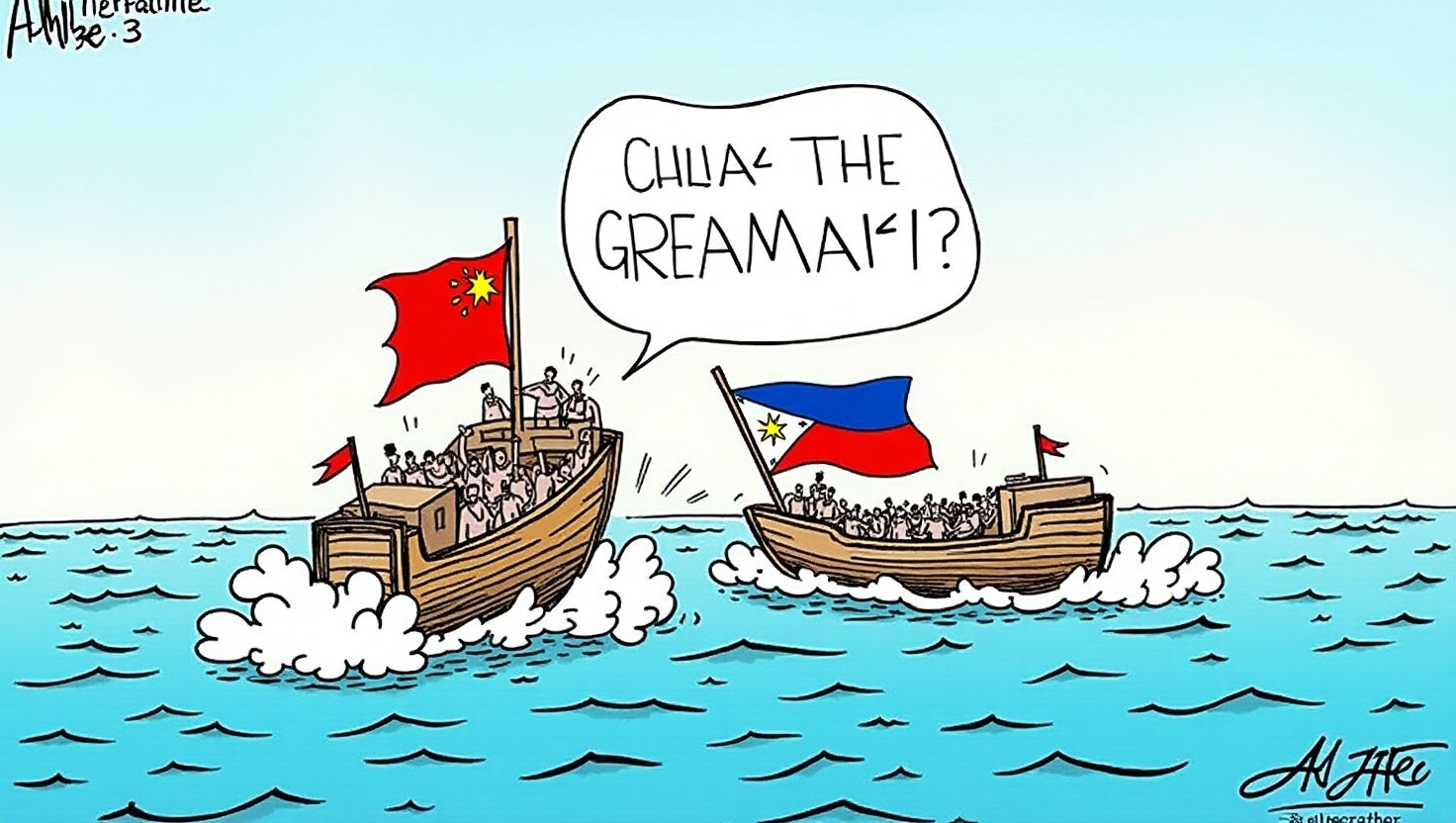
China and Philippines Perfect New Olympic Sport: Synchronized Ship Ramming Now Eligible for 2028 Games
International Olympic Committee Announces Maritime Combat Events After Witnessing “Exceptional Athletic Performance” in South China Sea
In a development that has marine insurance companies reaching for their strongest anxiety medication, the International Olympic Committee has officially recognized Synchronized Ship Ramming as an exhibition sport for the 2028 Los Angeles Olympics. The decision came after Olympic officials witnessed what they called “breathtaking displays of maritime athleticism” during recent encounters between Chinese and Philippine vessels in the South China Sea.
The sport, which combines the precision of synchronized diving with the excitement of demolition derby, has evolved from what were once considered “diplomatic incidents” into what Olympic organizers now recognize as “highly skilled competitive maritime performances.” The transformation from international crisis to Olympic event represents perhaps the most creative rebranding in sports history.
Vice Ganda’s recent observations captured the Olympic potential perfectly: “Grabe naman ang mga athletes natin sa dagat! World-class talaga ang performance – may timing, may coordination, may dramatic flair pa! Tapos ang judges, mga international observers na naka-binoculars. Sinabi ko na nga ba, dapat talaga Olympic sport na ito. Mas exciting pa kaysa sa swimming!”
The announcement has sent shockwaves through the traditional Olympic community, where events typically don’t involve multi-billion peso military vessels intentionally colliding with each other while asserting territorial sovereignty. However, IOC President Thomas Bach noted that “Synchronized Ship Ramming demonstrates the Olympic values of excellence, friendship, and respect – though perhaps with a more creative interpretation of ‘friendship’ than we’re accustomed to.”
Revolutionary Scoring System Development
The newly established International Federation of Synchronized Ship Ramming (IFSSR) has developed a scoring system that would make figure skating judges weep with its complexity. Points are awarded for technical difficulty, artistic impression, political ramifications, and what judges call “diplomatic aftermath quality.”
Pokwang’s comedy routine perfectly addresses the scoring challenges: “May technical score, artistic score, tapos may bonus points pa pag naging international incident! Imagine mo, pag na-perfect mo yung ramming mo, tapos naging headline sa CNN, automatic perfect 10 ka na! May additional points pa pag nag-file ng diplomatic protest yung kalaban mo!”
Technical scoring evaluates elements including approach angle, impact velocity, hull damage symmetry, and crew reaction timing. The artistic component judges the overall performance narrative, water displacement aesthetics, and what officials term “territorial assertion choreography.” Bonus points are awarded for simultaneous water cannon deployment and creative use of maritime law documentation during collisions.
The most coveted scoring achievement is the “Perfect Sovereignty Assertion” – a flawless ramming performance that results in immediate diplomatic protests, balanced hull damage, and social media virality within 24 hours. Only three Perfect Sovereignty Assertions have been recorded in competition history, all occurring during Philippine-Chinese encounters near Second Thomas Shoal.
The judging panel consists of maritime law experts, naval architects, diplomatic historians, and surprisingly, several former synchronized swimming coaches who apparently possess transferable skills in evaluating coordinated aquatic performances. Each judge scores performances on a scale of 1-10, with scores thrown out if they trigger actual military responses.
Training Regimens and Athletic Preparation
The physical and mental preparation required for competitive ship ramming has revolutionized maritime athletic training. Athletes undergo rigorous conditioning programs that combine traditional naval skills with what coaches call “controlled collision technique development” and “diplomatic incident management.”
Michael V’s observational humor captured the training intensity: “Yung training nila, hindi joke! May maritime law classes pa, kasi pag na-ram mo yung kalaban mo, kailangan mo pa ring marunong mag-explain sa international tribunal bakit mo ginawa. Parang boxing, pero instead na learning how to punch, natututo ka kung paano mo i-justify yung pag-ram mo!”
Physical conditioning focuses on developing what trainers call “impact resilience” – the ability to maintain balance and composure during high-velocity vessel collisions. Athletes practice on specialized training equipment including ship simulators, diplomatic crisis response chambers, and what appears to be the world’s only “controlled ramming practice pool.”
Mental preparation involves extensive study of international maritime law, diplomatic protocol, and what sports psychologists term “competitive sovereignty assertion.” Athletes must demonstrate proficiency in multiple languages for post-collision interviews and possess what coaches describe as “advanced territorial dispute communication skills.”
The most elite athletes train year-round in actual disputed waters, participating in what officials call “practice encounters” with international vessels. These training sessions provide real-world experience in collision timing, diplomatic pressure management, and media response coordination that cannot be replicated in traditional training facilities.
Equipment Standards and Vessel Specifications
The IFSSR has established strict equipment regulations to ensure fair competition and athlete safety. Competition vessels must meet specific tonnage requirements, defensive capability standards, and what regulators call “ramming optimization specifications” while maintaining plausible deniability for non-sporting purposes.
Ai-Ai delas Alas addressed the equipment requirements: “May specifications pa talaga ang mga barko! Hindi basta-basta pwedeng mag-compete. Kailangan regulation size, may proper safety equipment, at dapat may built-in camera para sa instant replay. Parang boxing gloves, pero barko. At syempre, dapat waterproof yung lahat kasi basa naman talaga sa dagat!”
Vessel modifications for competitive ramming include reinforced hulls designed for controlled impact, specialized communications equipment for real-time scoring updates, and what engineers call “artistic water displacement systems” for enhanced performance aesthetics. All vessels must display proper national colors and carry complete documentation of territorial claims for authenticity scoring.
Safety equipment requirements exceed those of any other Olympic sport, including multiple life support systems, emergency diplomatic communication devices, and what officials mandate as “rapid international law reference libraries” for immediate post-collision legal justification. Each vessel must also carry certified interpreters for multilingual scoring announcements.
The most controversial equipment requirement involves mandatory video documentation systems that capture all collision angles for judging purposes. These recordings have become valuable not only for scoring verification but also for what Olympic officials diplomatically term “educational outreach about maritime territorial disputes.”
International Competition Structure
The Olympic tournament structure reflects the complex geopolitical nature of the sport. Competition brackets are organized by regional territorial disputes, with separate divisions for “Active Maritime Boundaries,” “Historical Claims Competitions,” and the prestigious “Disputed Exclusive Economic Zones Championship.”
Jose Manalo’s material perfectly captured the competitive structure: “May brackets pa talaga! Parang basketball tournament, pero instead na mga team names, mga disputed territories ang categories. May South China Sea Division, may Arctic Waters Division, may Kashmir Lake Division. Tapos yung finals, sa gitna ng pinakacontroversial na dagat!”
Qualifying rounds take place in actual disputed waters, with national teams required to demonstrate both ramming proficiency and diplomatic justification skills. Points are awarded not only for collision performance but also for post-event international relations management and social media engagement metrics.
The tournament format includes both individual and team events. Individual competition focuses on solo ramming performances, while team events require coordinated multi-vessel collisions that judges evaluate for synchronization, artistic merit, and cumulative diplomatic impact. The mixed doubles category pairs vessels from different countries, though participation has been limited due to what organizers call “understandable trust issues.”
Regional qualifications have proven more intense than the actual Olympics, with some qualifying matches resulting in what tournament directors diplomatically describe as “exceeded competitive enthusiasm.” Several qualifying events have been suspended pending resolution of actual territorial disputes that emerged during competition.
Media Coverage and Broadcasting Challenges
Broadcasting Synchronized Ship Ramming has created unprecedented challenges for Olympic media coverage. Traditional sports commentary requires adaptation to include real-time diplomatic analysis, international law interpretation, and what broadcasters call “geopolitical context delivery” during collision sequences.
Eugene Domingo’s comedy routine addressed the broadcasting complexities: “Yung mga commentator, hindi lang sports analyst dapat, dapat lawyer din, diplomat, historian, at marine engineer! Imagine mo, habang nagra-ram yung mga barko, sasabihin ng commentator, ‘Oh, excellent approach angle! Napaka-perfect ng diplomatic justification! At according sa maritime law…’ Grabe ang requirements!”
Live coverage requires multiple camera angles including underwater collision documentation, aerial territorial dispute visualization, and what producers call “diplomatic reaction shots” from various international observers. Commentary teams now include sports analysts, maritime law experts, and diplomatic correspondents who provide real-time international relations updates.
The most challenging aspect involves broadcast delays for diplomatic clearance. All footage must be reviewed by international relations experts to ensure that Olympic coverage doesn’t accidentally escalate actual territorial disputes or violate broadcasting treaties between competing nations.
Social media coverage has proven remarkably popular, with #SynchronizedRamming becoming a trending topic during major competitions. Slow-motion collision replays have garnered millions of views, though social media platforms have struggled with content moderation policies regarding territorial sovereignty assertions in sports entertainment.
Athlete Profiles and Training Backgrounds
Olympic-level ship ramming athletes represent diverse backgrounds, though most possess extensive maritime experience combined with what coaches call “natural territorial assertion instincts.” The most successful competitors typically have backgrounds in naval service, commercial shipping, or what recruitment specialists term “previous experience in disputed waters navigation.”
Wally Bayola’s observations on athlete development: “Yung mga athletes natin, hindi ordinary seafarers – mga specialist talaga! May mga dating Navy, may mga dating fisherman na na-harass ng Chinese coast guard, may mga dating cargo ship captain na sanay na sa international waters. Lahat sila may common denominator – lahat sila galit sa mga nanra-ram sa kanila noon!”
The Philippine national team features athletes with extensive experience in what training coordinators diplomatically call “involuntary ramming encounters” during fishing and resupply operations. Their practical experience in real-world collision scenarios provides competitive advantages that traditional maritime athletes struggle to match.
Chinese team members typically come from coast guard backgrounds with specialized training in what their coaches describe as “precision territorial assertion techniques.” Their systematic approach to ramming combines military discipline with artistic performance elements that have set new standards for competitive excellence.
International recruiting has intensified as other nations develop their own ship ramming programs. Countries with active maritime territorial disputes have begun establishing national training centers, creating what Olympic officials call “a global renaissance in competitive maritime collision sports.”
Economic Impact and Sponsorship Opportunities
The economic impact of Olympic ship ramming has exceeded all projections, creating new industries around competitive maritime collision equipment, specialized insurance products, and what market analysts call “territorial dispute tourism.” Coastal cities hosting training facilities report unprecedented visitor numbers and economic growth.
Allan K’s comedy material addressed the economic opportunities: “Malaking business opportunity ito! May mga sponsor na ngayon – insurance companies, ship repair shops, diplomatic consulting firms. May official Olympic ship ramming merchandise pa – may replica ramming vessels, may team jerseys na waterproof, may commemorative territorial maps. Lahat may kikitain!”
Sponsorship deals have attracted major maritime industry corporations, insurance companies, and surprisingly, several fast food chains that apparently see marketing potential in associating their brands with competitive sovereignty assertion. The most lucrative sponsorship categories include “Official Ramming Equipment Provider” and “Preferred Post-Collision Repair Services.”
The sport has spawned related industries including specialized maritime collision insurance, competitive ramming vessel manufacturing, and what business analysts call “diplomatic incident consulting services.” Training facilities require massive infrastructure investments that have revitalized coastal economies throughout Asia.
Tourism packages now include “Olympic Ramming Experience” tours where visitors can observe training sessions from safe distances while receiving educational presentations about territorial disputes and competitive collision techniques. These tours have become surprisingly popular among both sports fans and international relations students.
Cultural Integration and National Pride
Synchronized Ship Ramming has become deeply integrated into Filipino national identity, with successful ramming performances celebrated as expressions of territorial sovereignty and cultural resilience. The sport has transformed from defensive necessity into competitive pride, representing what cultural analysts call “patriotic athleticism.”
Boy Abunda’s talk show commentary captured the cultural significance: “Hindi lang sport ito para sa atin – ito ay representation ng aming pagmamahal sa bayan! Kapag nakita natin ang aming mga athletes na successful sa ramming competition, nararamdaman natin ang pride hindi lang sa sports, kundi sa aming territorial sovereignty. Yan ang true Filipino spirit!”
The sport has inspired a generation of young Filipinos to pursue maritime careers, with enrollment in maritime academies increasing dramatically since Olympic recognition. Children now play “ramming games” in swimming pools, using toy boats to recreate famous collision sequences they’ve seen in competition.
Cultural expressions of ramming pride include music, art, and literature celebrating successful territorial assertion through competitive collision. The national ramming team enjoys celebrity status equivalent to traditional Olympic athletes, with public appearances drawing massive crowds and extensive media coverage.
School curricula now include “Olympic Ramming History” as part of social studies programs, teaching students about territorial disputes through the lens of competitive sports. This educational approach has proven remarkably effective at engaging students in both maritime law and athletic achievement.
Future Development and International Expansion
The International Olympic Committee has announced plans to expand ship ramming competition for the 2032 Olympics, with additional events including “Freestyle Territorial Assertion,” “Maritime Boundary Slalom,” and the highly anticipated “Mixed International Waters Relay.”
Looking toward the future, Olympic organizers envision ship ramming becoming as popular as traditional swimming events, with professional leagues, collegiate competitions, and what development officials call “grassroots ramming programs” for youth athletic development.
International expansion plans include establishing ramming training centers in all countries with active maritime territorial disputes, creating a global network of competitive collision facilities that will serve both Olympic development and what officials diplomatically term “practical territorial defense education.”
The long-term vision includes ramming competition becoming so popular and well-regulated that actual territorial disputes are resolved through scheduled Olympic matches rather than military confrontation, essentially achieving world peace through superior sports administration and really excellent collision choreography.
Bottom Line Up Front: Synchronized Ship Ramming has transformed dangerous territorial disputes into competitive Olympic sport, proving that with enough creativity and proper scoring systems, even international maritime conflicts can become entertaining athletic competitions that somehow make the world both more peaceful and more exciting simultaneously.
For more coverage of innovative Olympic sports development and Filipino athletic excellence, visit Manila News.
IMAGE GALLERY


