
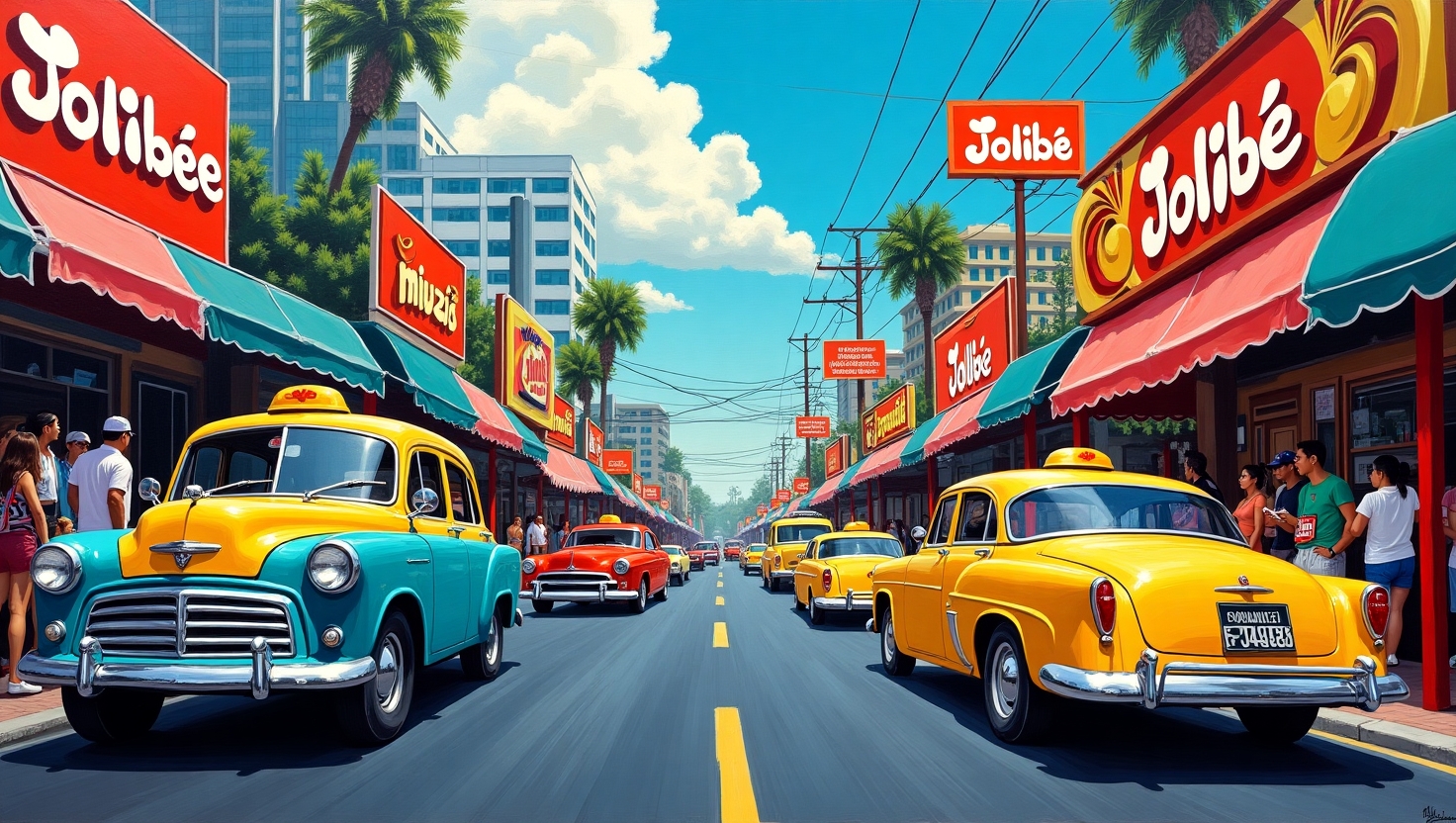
Manila Declares Victory in Southeast Asian Digital Nomad Arms Race: Offers Free Jeepney Rides, Personal Karaoke Machines, and Legal Right to Cut in Line at Jollibee
The Great Digital Nomad Gold Rush Reaches Peak Absurdity as Countries Compete for Laptop-Wielding Millennials
The battle for digital nomad supremacy in Southeast Asia has reached fever pitch, with Manila emerging as the unlikely frontrunner in what economists are calling “the most expensive competition for people who work in their pajamas” since the invention of WiFi.
While Thailand promises free motorcycles and Malaysia offers personal servants, the Philippines has gone full Manila and announced a package so outrageous it makes their traffic laws look reasonable. The “Digital Nomad Deluxe Experience” includes complimentary jeepney transportation, personal karaoke machines, and perhaps most controversially, legal immunity from waiting in line at Jollibee.
“We realized we needed to think bigger,” announced Tourism Secretary Maria Santos at a press conference held inside a converted shipping container that serves as Manila’s new Digital Nomad Welcome Center. “Other countries are offering basic amenities. We’re offering the authentic Filipino experience: controlled chaos with a smile.”
When Desperation Meets Innovation: The Birth of Ridiculous Policy
The digital nomad phenomenon has transformed from a niche lifestyle choice into a full-blown international incident. Countries across Southeast Asia are treating remote workers like they’re made of solid gold and leak WiFi passwords, leading to increasingly absurd policy decisions that would make a circus performer dizzy.
As Filipino comedian Vice Ganda once observed during a stand-up routine, “Filipinos will find a way to make money from anything. We’ll probably start selling air next.” Turns out, they’re basically doing exactly that – except the air comes with free karaoke and immunity from basic social conventions.
Thailand started this madness by offering digital nomads free motorcycle rentals, apparently forgetting that most software developers can barely operate a coffee machine without technical support. Malaysia countered with personal servant programs, because nothing says “I’m here to disrupt industries” like having someone fold your MacBook cleaning cloth.
But Manila? Manila looked at this competition and said, “Hold my San Miguel.”
The Manila Manifesto: Where Logic Goes to Die
The Philippines’ new digital nomad package reads like it was written by someone who’s never met a digital nomad but has watched every episode of “Silicon Valley” while heavily medicated. The program, dubbed “Manila Moves” (because alliteration apparently makes policy more palatable), offers benefits so specific they seem designed by someone who conducted market research exclusively at 3 AM in a Makati coffee shop.
Free jeepney rides might sound appealing until you realize that jeepneys operate on what locals call “Filipino time,” which is like regular time but with more prayer and less predictability. Digital nomads, accustomed to scheduling their lives around Zoom calls and productivity apps, will now experience the zen-like meditation of never knowing when they’ll actually arrive anywhere.
“I love how they think giving us free transportation in vehicles with no fixed schedules will attract people whose entire lifestyle depends on reliable internet and precise timing,” said Jessica Chen, a UX designer from San Francisco who’s considering the Manila package. “It’s like offering free WiFi that only works during full moons.”
The Karaoke Clause: Because Productivity is Overrated
Perhaps the most bewildering aspect of Manila’s offer is the personal karaoke machine provision. Every digital nomad will receive a karaoke setup delivered to their accommodation, along with what the tourism department calls “mandatory fun guidelines.”
According to the program documentation, digital nomads are “strongly encouraged” to participate in at least one karaoke session per week, with government officials available to judge performances on a scale of “needs more feeling” to “contestant-worthy for Tawag ng Tanghalan.”
Filipino comedian Pokwang perfectly captured this sentiment years ago: “Filipinos believe everything is better with music. Work? Add karaoke. Meetings? Add karaoke. Surgery? Well, maybe not surgery, but we’re working on it.”
The karaoke requirement has already sparked controversy among productivity experts, who argue that mandatory fun defeats the purpose of both mandatory and fun. Critics point out that most digital nomads chose remote work specifically to avoid office social activities, not to have them government-mandated with sound equipment.
Jollibee Line-Cutting: The Ultimate Power Move
But the program’s crown jewel – and most legally questionable feature – is the Jollibee fast-pass privilege. Digital nomads will receive official documentation allowing them to bypass queues at any Jollibee location nationwide, a power previously reserved for visiting celebrities and people having medical emergencies.
“We know how important efficiency is to remote workers,” explained Tourism Undersecretary Ramon Cruz, apparently unaware that Jollibee visits are typically leisure activities, not urgent business needs. “Why should they waste valuable working hours waiting in line for Chickenjoy when they could be disrupting industries?”
Local Jollibee enthusiasts have responded with predictable outrage. “These people come here with their laptops and their productivity apps, and now they get to skip the line for our national treasure?” complained Manila resident Carlos Reyes. “What’s next? Reserved parking at SM Mall? Priority boarding on MRT?”
The policy has created an unexpected diplomatic incident with other fast-food chains, who feel discriminated against by the Jollibee-specific privilege. McDonald’s Philippines has reportedly lobbied for equal treatment, while KFC has threatened to sponsor digital nomads in competing countries.
The Competition Heats Up: Thailand and Malaysia Fight Back
Not to be outdone, Thailand has announced an escalation of their own program. The Thai Tourism Authority now offers digital nomads complimentary Muay Thai training, because apparently nothing says “remote work productivity” like getting punched in the face by professionals.
“We realized that free motorcycles weren’t enough,” admitted Thai Tourism Minister Preecha Watanakul. “Our research showed that digital nomads crave authentic experiences. What’s more authentic than learning to fight while maintaining your GitHub commit streak?”
Malaysia, meanwhile, has doubled down on their servant program with the addition of AI-powered personal assistants that supposedly understand the unique needs of remote workers. These assistants, dubbed “Digital Butlers,” are programmed to optimize productivity by managing everything from calendar scheduling to food delivery coordination.
“Our Digital Butlers can handle 47 different productivity methodologies,” boasted Malaysian Tourism Minister Sarah Abdullah. “From Getting Things Done to the Pomodoro Technique, they’re trained in every workflow optimization system except common sense.”
Early reviews from beta testers suggest the Digital Butlers might be too efficient. Several nomads reported being woken at 3 AM for “optimal productivity windows” and having their lunch breaks scheduled down to the minute, including chewing time calculations.
The Hidden Costs of Digital Nomad Diplomacy
What these governments haven’t calculated is the long-term economic impact of catering to a demographic that’s notoriously fickle and equipped with VPNs that can make them tax residents of nowhere. The Philippines alone has budgeted $50 million for their digital nomad program, money that could have been used for infrastructure improvements that would benefit actual residents.
“We’re spending millions to attract people who work from beach cafes and complain about slow WiFi,” noted Filipino economist Dr. Rita Gonzales. “Meanwhile, our own citizens are dealing with traffic that moves slower than government bureaucracy, which is scientifically impossible but somehow happening.”
The irony hasn’t been lost on local comedians. Alex Gonzaga, during a recent Manila performance, joked: “We’re giving foreigners immunity from Jollibee lines while our own people can’t get immunity from traffic violations. Priorities, people. Priorities.”
When Satire Becomes Policy: The Unintended Consequences
The most troubling aspect of this digital nomad arms race isn’t the absurd benefits – it’s how quickly governments abandoned logic in favor of headlines. The karaoke requirement alone suggests a fundamental misunderstanding of what remote workers actually want, which is usually reliable internet and the ability to work without government officials judging their singing voice.
Jerry Seinfeld’s observation about bureaucracy seems prophetic: “The government’s idea of efficiency is like a beaver building a dam out of red tape. Technically impressive, completely useless, and somehow involving way more wood than necessary.” Replace “wood” with “taxpayer money” and you’ve basically described every digital nomad incentive program in Southeast Asia.
Local businesses are already reporting unexpected side effects. Manila coffee shops have seen an influx of customers who order a single espresso and occupy tables for eight hours while conducting “very important video calls” about productivity apps. The situation has become so problematic that several cafes have implemented “digital nomad limits” during peak hours.
“They come in with their noise-canceling headphones and their productivity planners,” complained coffee shop owner Linda Santos. “Then they spend three hours in a meeting about meeting efficiency. It’s like performance art, but with more caffeine and less artistic merit.”
The Great Exodus That Never Came
Despite all the publicity and policy theatrics, early data suggests the digital nomad migration to Southeast Asia isn’t nearly as dramatic as governments hoped. Most remote workers are apparently too busy optimizing their productivity workflows to actually relocate for free motorcycles and karaoke machines.
“Turns out, offering absurd benefits to attract people who chose remote work specifically to avoid absurd workplace benefits might not be the smartest strategy,” observed workplace culture expert Dr. Jennifer Walsh. “It’s like trying to attract introverts with mandatory team-building exercises.”
The few digital nomads who have taken advantage of these programs report mixed experiences. The free jeepney rides are indeed free, but so is walking, which often proves faster. The personal karaoke machines are appreciated, though several nomads noted that their productivity actually improved once they disconnected the equipment.
“I came here for the authentic Filipino experience,” said British software developer Mark Thompson, speaking from a Manila co-working space. “I got that, plus a constant reminder that government policy and logical thinking don’t always coexist in the same zip code.”
The Real Winners: Local Comedians and Satirists
While governments compete for the attention of laptop-wielding millennials, the real beneficiaries of this digital nomad arms race are Southeast Asian comedians, who have discovered an endless source of material in their own tourism policies.
K Brosas recently performed an entire set based on the Manila program: “They’re giving foreigners free karaoke machines but our own singers still have to pay for studio time. Make it make sense. Actually, don’t. The confusion is more entertaining.”
The comedy goldmine extends beyond individual policies to the fundamental absurdity of the competition itself. Countries are essentially bidding against each other to attract people whose main qualification is owning a laptop and preferring to work in their underwear.
“We’ve reached peak absurdity when governments are treating remote workers like they’re rocket scientists instead of people who figured out how to avoid office small talk,” observed Filipino comedian Ryan Rems. “What’s next? Special visas for people who prefer their coffee at exact temperatures?”
The Future of Southeast Asian Tourism Policy
As the digital nomad arms race continues to escalate, policy experts warn that governments might be setting precedents they’ll later regret. If offering line-cutting privileges and mandatory karaoke becomes the baseline for attracting remote workers, what happens when the next lifestyle trend emerges?
“Today it’s digital nomads with free jeepney rides,” warned political scientist Dr. Michael Santos. “Tomorrow it could be crypto traders demanding personal blockchain consultants and immunity from math. Where does it end?”
The answer, apparently, is nowhere. Thailand has already announced plans to offer digital nomads complimentary elephant encounters, while Vietnam is reportedly considering a program that includes personal pho chefs and motorbike parking valets.
Malaysia, not to be outdone, is developing what they call “Digital Nomad Sanctuaries” – co-working spaces that combine high-speed internet with traditional wellness practices and, inexplicably, competitive fruit carving lessons.
As Trevor Noah once said about government efficiency: “Watching politicians try to understand modern technology is like watching your grandparents figure out Netflix. Technically they succeed, but the process involves a lot of confusion and usually ends with someone calling tech support.”
The Manila Model: Export Success or Warning Label?
Whether Manila’s digital nomad program succeeds or becomes a cautionary tale about policy-making in the attention economy remains to be seen. What’s certain is that the program has already achieved its primary goal: getting people to talk about Manila as a destination for remote workers, even if that conversation includes a lot of confused head-scratching.
The real test will come when the first wave of digital nomads experiences the full Manila package: jeepney commutes that operate on divine intervention rather than schedules, karaoke performances judged by government officials, and the social pressure that comes with cutting in line at a beloved national institution.
“We’ve created the perfect storm,” admitted one tourism department insider, speaking on condition of anonymity. “Combining Filipino hospitality with bureaucratic creativity and just enough chaos to keep things interesting. It’s either going to be a huge success or the most expensive comedy show in Southeast Asian history.”
Given Manila’s track record with ambitious public programs, smart money is on the comedy show option. But in a world where governments compete for digital nomads by offering motorcycle rentals and personal servants, maybe a little chaos is exactly what the tourism industry needs.
As Amy Schumer might say: “The Philippines looked at all these other countries offering practical benefits to digital nomads and said, ‘Hold my tuba.’ Because nothing says ‘choose our country for remote work’ like mandatory karaoke and fast-food privileges. It’s like they designed a program specifically for people who’ve never heard of the Philippines but really, really love chaos.”
The Manila program officially launches next month, though given the Philippines’ relationship with deadlines, “next month” could mean anything from four weeks to sometime before the next election.
For more updates on Southeast Asia’s digital nomad policies and other examples of bureaucratic creativity, visit the official Philippines Department of Tourism website or check local comedy venues for the latest material.
IMAGE GALLERY


