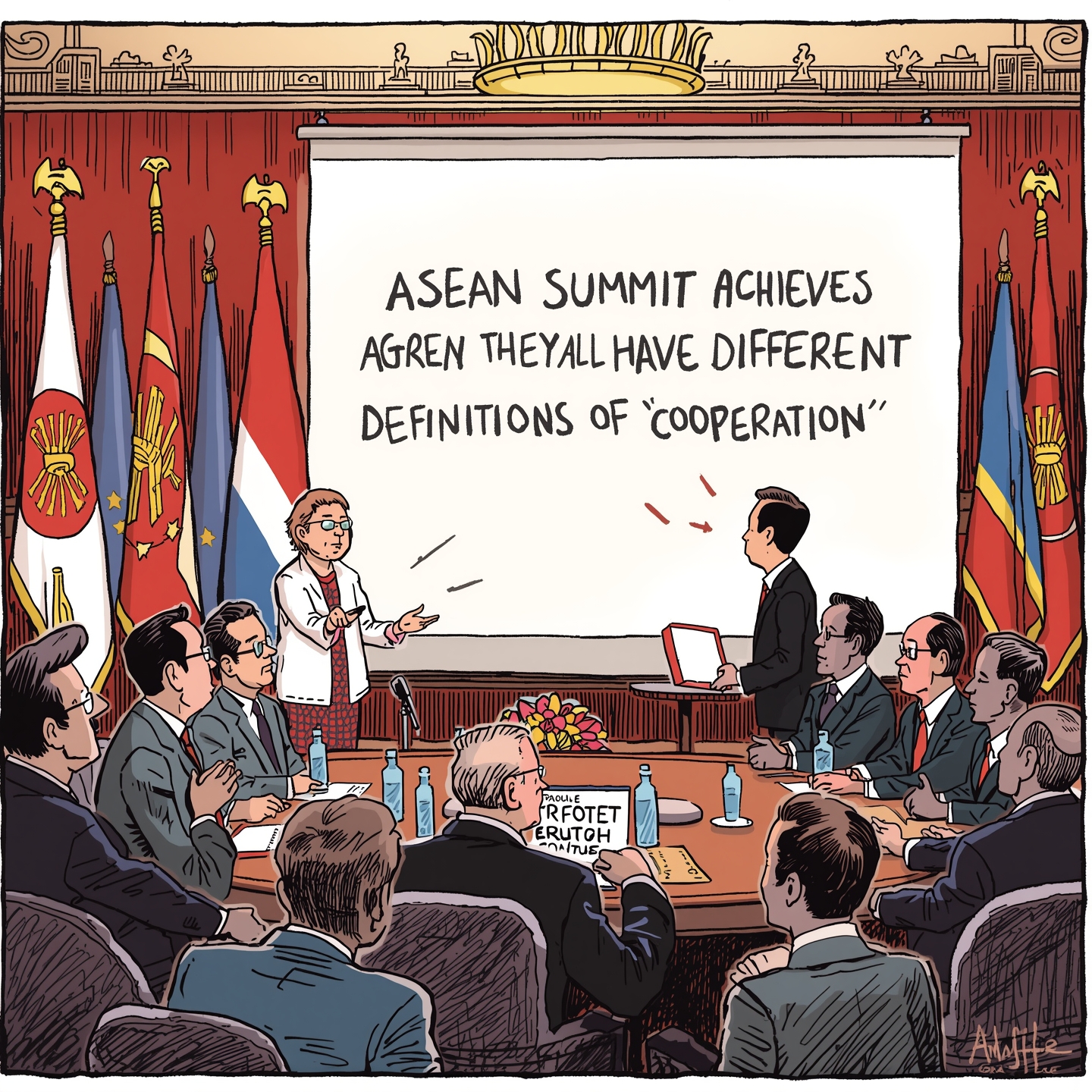
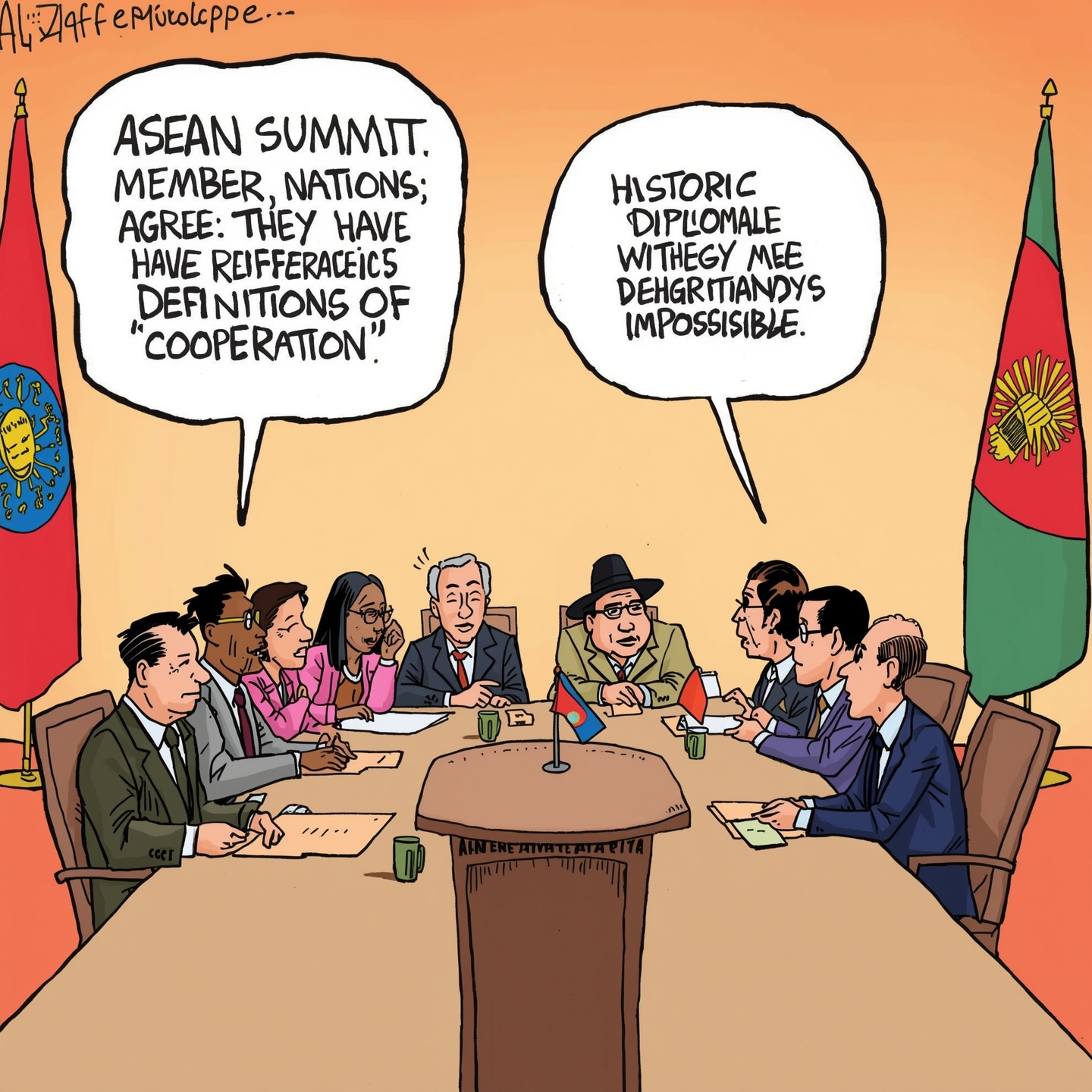
ASEAN Summit Achieves Breakthrough: Member Nations Agree They All Have Different Definitions of “Cooperation”
Historic Diplomatic Achievement: Regional Block Finally Reaches Consensus That Consensus is Impossible
In a diplomatic breakthrough that has international relations experts questioning their fundamental understanding of multilateral cooperation, the Association of Southeast Asian Nations has achieved what summit organizers call “unprecedented unity” by formally acknowledging that all ten member nations operate with completely different definitions of what “cooperation” actually means. This revolutionary consensus on the impossibility of consensus represents what diplomatic historians describe as “the most successful ASEAN summit in decades.”
The breakthrough emerged after what conference specialists call “extensive multilingual confusion” revealed that when ASEAN leaders discuss “cooperation,” each nation interprets the concept according to what linguists describe as “culturally specific cooperation paradigms” that are not only different but often directly contradictory. The summit’s final declaration celebrates what diplomats call “diversity in cooperative conceptualization” as ASEAN’s greatest strength.
Vice Ganda’s recent observations captured the diplomatic achievement perfectly: “Naka-agree na finally ang ASEAN! Hindi sa cooperation mismo – kundi sa fact na hindi sila maka-agree sa meaning ng cooperation! Breakthrough talaga! Parang nag-agree silang hindi sila mag-a-agree. Unity through acknowledged disunity!”
The historic agreement establishes what diplomatic specialists call “officially recognized definitional diversity” where each member nation maintains what they describe as “sovereign interpretation rights” over basic diplomatic concepts while participating in what summit organizers call “cooperative non-cooperation” and “unified multilateral confusion.”
Revolutionary Consensus Through Definitional Chaos
ASEAN’s diplomatic innovation involves what international relations specialists call “meta-level agreement achievement” where traditional consensus-building is replaced by what they describe as “consensus about the impossibility of consensus” and “unified acknowledgment of fundamental disagreement” that creates what diplomatic theorists call “functional dysfunction.”
Pokwang’s comedy routine perfectly addressed the meta-consensus approach: “Genius move ng ASEAN! Instead na mag-argue forever about definitions, nag-agree na lang sila na magkakaiba ang definitions nila! Parang nag-agree silang mag-disagree! Diplomatic innovation through definitional surrender!”
The revolutionary approach allows ASEAN to maintain what diplomatic specialists call “traditional consensus appearance” while operating under what they describe as “acknowledged definitional anarchy” where each nation pursues what they interpret as “cooperation” regardless of whether their actions align with other members’ understanding of the concept.
This creates what political scientists call “parallel cooperative realities” where all ten nations simultaneously engage in what they each consider “excellent ASEAN cooperation” while pursuing completely contradictory policies that would traditionally be considered evidence of what analysts call “complete multilateral breakdown.”
The most innovative element involves what diplomatic psychologists describe as “therapeutic international relations” where ASEAN members engage in what they call “cooperative relationship counseling” by acknowledging that their fundamental disagreements about cooperation are what summit organizers euphemistically term “irreconcilable definitional differences.”
National Cooperation Definition Cataloging – ASEAN Summit
The summit produced what diplomatic archivists call “the ASEAN Cooperation Definition Compendium” – a comprehensive catalog documenting each member nation’s unique interpretation of cooperation, creating what international relations scholars describe as “the world’s most comprehensive collection of mutually exclusive diplomatic concepts.”
Michael V’s observational humor captured the cataloging process: “May encyclopedia na ng different definitions ng cooperation! Volume 1: Singapore’s definition, Volume 2: Thailand’s definition, hanggang Volume 10: Vietnam’s definition! Mas mahaba pa kaysa sa encyclopedia britannica! Cooperation studies na comprehensive!”
Singapore defines cooperation as what they describe as “efficient multilateral resource optimization” involving precise coordination and measurable outcomes. Thailand interprets cooperation as “harmonious relationship maintenance” emphasizing consensus and face-saving. Malaysia views cooperation as “strategic partnership development” focused on mutual economic benefits.
Indonesia conceptualizes cooperation as “regional leadership coordination” where they naturally assume central roles in multilateral initiatives. The Philippines interprets cooperation as “survival-based alliance management” prioritizing immediate security concerns. Vietnam defines cooperation as “selective engagement optimization” involving careful sovereignty protection.
Myanmar understands cooperation as “minimal interference accommodation” while maintaining complete domestic autonomy. Laos views cooperation as “beneficial neutrality management” avoiding commitments that might complicate relationships with major powers. Cambodia and Brunei each maintain what diplomatic specialists call “boutique cooperation definitions” tailored to their specific national circumstances.
Multilingual Confusion Management Systems
ASEAN has developed sophisticated systems for what translation specialists call “definitional confusion management” including what they describe as “multi-interpretation simultaneous translation” where diplomatic statements are rendered in multiple contradictory versions depending on each nation’s cooperation definition framework.
Ai-Ai delas Alas addressed the translation challenges: “May special na translation system na sila! Pag nagsasalita ang isang leader ng ‘cooperation,’ automatic na nag-translate yan sa 10 different meanings para sa 10 different countries! Mas complicated pa kaysa sa Google Translate na may AI!”
Translation protocols include what linguistic specialists call “contextual interpretation optimization” where the same cooperation statement is simultaneously rendered as economic partnership, military alliance, cultural exchange, diplomatic neutrality, and what translators describe as “strategic non-commitment” depending on recipient nation requirements.
Advanced systems involve what communication specialists call “deliberate ambiguity enhancement” where official ASEAN statements are crafted to support what they describe as “maximum interpretational flexibility” allowing each nation to understand cooperation commitments according to their preferred definitional framework.
The most sophisticated element includes what diplomatic linguists call “contradiction reconciliation protocols” where obviously conflicting cooperation interpretations are harmonized through what they describe as “creative translation artistry” and “diplomatic reality adjustment” that makes incompatible positions appear complementary.
Practical Implementation of Definitional Diversity
The breakthrough has enabled what implementation specialists call “simultaneous cooperative non-cooperation” where ASEAN members participate in what they each consider successful cooperation while pursuing policies that would traditionally be classified as what analysts describe as “fundamental multilateral contradiction.”
Jose Manalo’s material captured the implementation paradox: “Successful na ang cooperation nila kahit hindi sila nag-c-cooperate! Bawat bansa doing their own thing, pero lahat satisfied na nag-c-cooperate sila! Parang group project na lahat gumawa ng different projects, pero lahat naka-pass!”
Implementation involves what policy specialists call “parallel cooperative track systems” where each nation pursues what they interpret as “excellent ASEAN cooperation” while maintaining what they describe as “sovereignty-appropriate interpretational autonomy” that ensures domestic policy alignment with individual cooperation definitions.
The most successful implementation occurs when what coordinators call “definitional overlap incidents” create situations where multiple nations’ cooperation definitions accidentally align, producing what appear to be “traditional multilateral successes” despite operating under what specialists describe as “fundamentally incompatible cooperative frameworks.”
Emergency protocols include what crisis managers call “definitional conflict resolution” where apparent cooperation failures are reinterpreted as what they describe as “successful diversity maintenance” and “effective definitional sovereignty protection” rather than traditional diplomatic breakdowns.
ASEAN Summit: Economic Cooperation Through Mutual Misunderstanding
ASEAN’s economic integration has benefited from what trade specialists call “productive definitional confusion” where member nations pursue what they each interpret as “economic cooperation” while implementing what economists describe as “completely contradictory trade policies” that somehow generate what analysts call “accidental complementary outcomes.”
Eugene Domingo’s comedy routine addressed the economic benefits: “Kumikita pa rin sila kahit magkakaiba ang understanding nila sa cooperation! Parang nag-trade sila ng mga bagay na hindi nila alam na compatible pala! Accidental economic success through mutual misunderstanding!”
Economic mechanisms include what trade coordinators call “interpretation-flexible commerce” where bilateral agreements are structured to support what they describe as “multiple simultaneous economic cooperation definitions” allowing each nation to claim what they consider “successful cooperative implementation.”
The most effective economic cooperation occurs through what development economists call “definitional arbitrage” where nations exploit differences in cooperation interpretation to create what they describe as “mutually beneficial misunderstanding-based trade relationships” that generate economic value through what specialists call “systematic conceptual confusion.”
Regional economic forums operate under what organizers call “parallel reality protocols” where the same economic initiatives are simultaneously discussed as trade agreements, development cooperation, strategic partnerships, and cultural exchanges depending on what participants describe as “nationally appropriate interpretational frameworks.”
Security Cooperation Definitional Challenges
ASEAN’s security cooperation faces what defense specialists call “fundamental definitional incompatibility” where member nations’ cooperation concepts create what they describe as “security partnership paradoxes” and “defensive alliance confusion” that somehow maintain what analysts call “effective regional stability.”
Wally Bayola’s observations on security cooperation: “May security cooperation sila na walang security at walang cooperation! Bawat bansa may sariling interpretation ng security threats, sariling definition ng cooperation response. Pero stable pa rin ang region! Effective na defense strategy through confusion!”
Security frameworks accommodate what defense planners call “interpretation-flexible threat assessment” where regional security challenges are simultaneously classified as what various nations describe as “external threats,” “internal matters,” “economic issues,” and “cultural concerns” depending on their cooperation definitional requirements.
The most complex security cooperation involves what strategic specialists call “multi-definition crisis management” where regional emergencies are addressed through what they describe as “parallel response systems” that allow each nation to provide what they consider “appropriate cooperative assistance” while maintaining what defense analysts call “interpretational sovereignty.”
Military cooperation includes what defense coordinators call “definitionally diverse joint exercises” where participating nations practice what they each interpret as “cooperative defense activities” while training for what may be completely different scenarios based on their individual cooperation understanding frameworks.
Cultural Exchange Through Definitional Diversity — ASEAN Summit
ASEAN’s cultural cooperation has flourished through what anthropologists call “productive cultural confusion” where member nations promote what they each interpret as “cultural cooperation” while celebrating what they describe as “definitionally diverse heritage appreciation” and “interpretational cultural exchange.”
Allan K’s comedy material addressed the cultural cooperation success: “Mas successful pa ang cultural exchange nila ngayon! Hindi dahil nag-agree sila sa culture – kundi dahil nag-celebrate sila ng differences nila! Cultural cooperation through cultural confusion! Lahat proud sa sariling interpretation ng cooperation!”
Cultural programs include what education specialists call “multi-definitional heritage celebration” where regional festivals simultaneously honor what various nations describe as “shared ASEAN culture,” “individual national identity,” “cooperative cultural development,” and “sovereign cultural expression” depending on participant definitional frameworks.
Language cooperation involves what linguistic specialists call “translation-resistant communication” where ASEAN cultural exchanges operate through what they describe as “interpretation-independent cultural appreciation” that transcends what coordinators call “definitional communication barriers.”
The most successful cultural initiatives involve what anthropologists describe as “accidental cultural cooperation” where nations pursuing what they interpret as individual cultural sovereignty inadvertently create what observers call “genuine regional cultural exchange” through what specialists term “serendipitous definitional alignment.”
International Recognition and Diplomatic Innovation
The international diplomatic community has recognized ASEAN’s breakthrough as what foreign policy specialists call “revolutionary multilateral methodology” that demonstrates how regional organizations can achieve what they describe as “functional cooperation despite fundamental conceptual disagreement.”
Boy Abunda’s talk show commentary captured the international recognition: “Ginagaya na ng ibang international organizations ang approach ng ASEAN! African Union, European Union – lahat nag-s-study ng ‘cooperation through definitional diversity!’ Naging model na tayo sa diplomatic innovation!”
Academic institutions study ASEAN’s approach as what political science researchers describe as “post-consensus diplomacy” and “functional dysfunction theory” that challenges traditional assumptions about what they call “cooperative requirement frameworks” and “multilateral success criteria.”
The United Nations has requested detailed analysis of what they describe as “ASEAN’s definitional diversity methodology” for potential application in what international relations specialists call “other consensus-challenged multilateral organizations” that struggle with what diplomats describe as “traditional cooperative expectation management.”
International relations theory has been influenced by what academic specialists call “the ASEAN definitional model” that demonstrates how what they describe as “acknowledged interpretational anarchy” can produce what researchers call “more effective multilateral outcomes than forced consensus attempts.”
ASEAN Summit: Technology Integration for Definitional Management
ASEAN has embraced technological innovation to manage what digital specialists call “systematic definitional diversity” through development of what they describe as “interpretation-flexible communication platforms” and “multi-definition coordination systems” that facilitate what programmers call “technologically mediated cooperative confusion.”
Advanced platforms include what software developers call “simultaneous reality management systems” that allow what they describe as “parallel cooperative implementation tracking” where each nation monitors what they interpret as their “successful cooperation participation” while other nations simultaneously track their own completely different cooperation activities.
The most innovative technology involves what artificial intelligence specialists call “definitional translation algorithms” that can simultaneously render the same cooperation initiative as what they describe as “multiple compatible national interpretations” while maintaining what programmers call “logical consistency within individual definitional frameworks.”
Mobile applications provide what user experience designers call “personalized cooperation interfaces” where each nation’s representatives access what they describe as “nationally appropriate cooperative information presentation” that emphasizes what software specialists call “definitionally compatible success indicators.”
Future Development and Sustainable Definitional Diversity
ASEAN leadership has announced plans to expand what strategic planners call “definitional diversity optimization” through development of what they describe as “enhanced interpretational flexibility protocols” and “improved cooperative confusion management systems” for sustained multilateral success.
Long-term planning includes what development specialists call “institutionalized definitional anarchy” where ASEAN’s cooperation through mutual misunderstanding becomes what they describe as “a permanent diplomatic methodology” and “sustainable multilateral framework” that can adapt to what planners call “evolving interpretational requirements.”
The most ambitious development involves what visionary diplomats call “global definitional diversity leadership” where ASEAN establishes what they describe as “international standards for cooperative confusion” and “best practices for functional multilateral dysfunction” that influence what strategic planners call “worldwide diplomatic methodology evolution.”
Research initiatives focus on what innovation specialists call “next-generation definitional management technology” and “advanced cooperative confusion optimization” that will ensure ASEAN maintains what they describe as “world leadership in productive multilateral misunderstanding.”
Bottom Line Up Front: ASEAN has achieved its greatest diplomatic success by formally acknowledging that successful cooperation doesn’t require anyone to agree on what cooperation means, proving that sometimes the best way to work together is to officially agree that you’ll never understand what working together actually involves.
For more coverage of innovative diplomatic confusion management and Southeast Asian multilateral misunderstanding strategies, visit Manila News.
IMAGE GALLERY
ASEAN Summit