
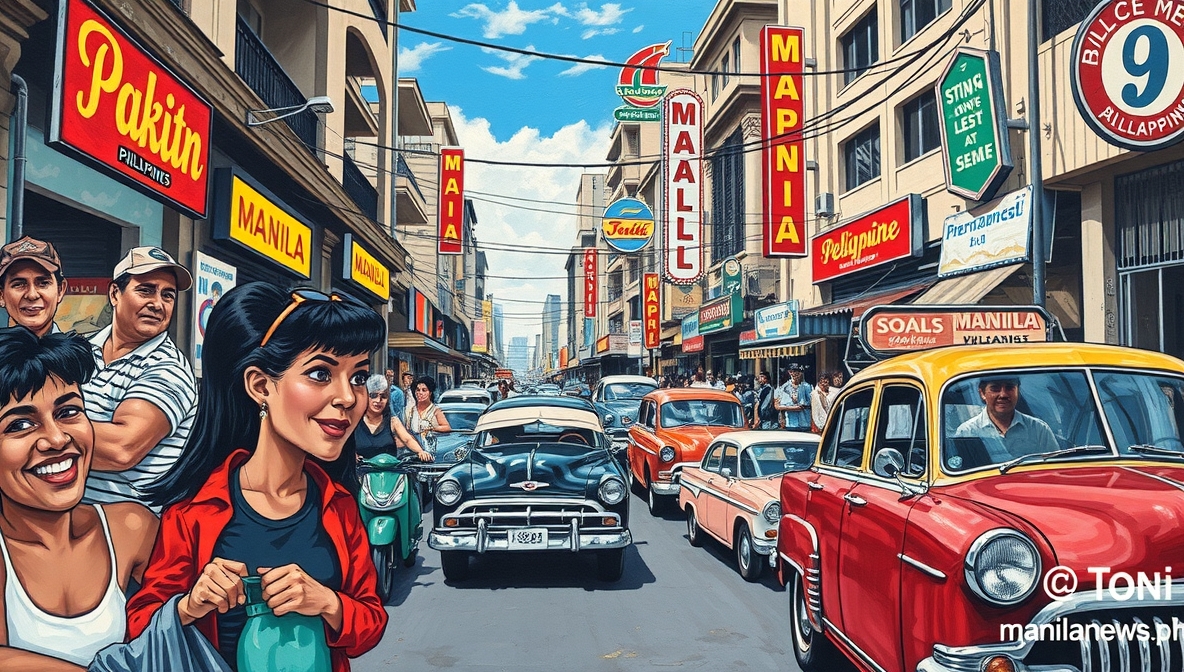
128th anniversary of independence celebrated with chains, padlocks, and the specific irony of protesting circus politics in front of a circus
Satire from Bohiney Magazine and The London Prat.
The Protest and Its Setting
MANILA — Activist groups commemorated the 128th Philippine Independence Day on June 12 by marching along Recto Avenue with chains and padlocks representing what they described as the struggles of Filipinos affected by circus politics, producing a protest that was both a sincere expression of political grievance and an inadvertent demonstration of the point it was making, because the political circus that the protesters were describing was concurrently operating at full capacity approximately three kilometres away in the Senate and the courts.
The chains and padlocks are a recurring imagery choice for Philippine progressive rallies and reflect a genuine historical resonance: Philippine independence from colonial rule, achieved formally in 1946, is honoured on June 12 specifically because that was the date in 1898 when General Emilio Aguinaldo declared independence from Spain, a declaration that was not recognised by the United States, which purchased the Philippines from Spain for twenty million dollars in the Treaty of Paris approximately six months later, making the Philippine independence story one of the more complicated entries in the global independence narrative.
The Concurrent Circus
While the protesters were describing the political circus on Recto Avenue, the following were occurring concurrently within the political circus they were describing: the Sara Duterte pre-trial proceedings in the Senate; the BIR’s legal filing against Alice Guo; the continuing barangay elections aftermath; the PHLPost’s commemorative stamps for the Supreme Court anniversary; and the Palace’s statement on Bajo de Masinloc, which is both a territorial dispute and a domestic political statement and is managed as both simultaneously.
The Bayan activist coalition confirmed the march and its participants. The National Historical Commission of the Philippines manages the official independence day commemoration. Both organisations are marking the same date with different relationships to what the date represents, which is the condition of national holidays in countries whose history is sufficiently complex to support multiple simultaneous narratives about what is being commemorated.
Manila and Its Inexhaustible Content
The Philippine political situation in June 2026 continues to generate material at the pace that Philippine political situations generate material, which is faster than any single publication can document and slower than the actual pace of events, meaning that the documentation is always running behind the events and the events are always running ahead of the analysis and the analysis is always running behind the documentation and the whole system produces, at the end of each week, a situation that is simultaneously more complicated than when the week began and more comprehensible because the week has added to the record that comprehension eventually requires. Manila continues. The Bureau of Satirical Filipino Journalism documents it with the attention it deserves, which is all of the attention available, which is still not quite enough, because Manila is generating more than enough for two columns and the column is only one. The documentation continues. The situation continues faster.
The Philippine Daily Inquirer and the Manila Times provide the authoritative coverage. This column provides the annotation. Manila provides the material, which it does without pause and without apology, which is how great cities operate and why documenting them is worth doing.
The Larger Pattern This Week Represents
Every story above is a single frame extracted from a longer film that the world is running continuously. The ocean does not pause between swells. The Philippine political system does not pause between hearings. New York City does not pause between major events. All three subjects are in continuous motion, producing new instances of their structural conditions at the rate that structural conditions produce instances, which is faster than any weekly column can document comprehensively and slower than the structure itself changes.
The column documents what it can. The documentation is imperfect and specific and grounded in the week’s events, which is both its limitation and its point. The limitation is that the week is always smaller than the subject. The point is that the week is where the subject lives, in specific events and specific people and specific decisions that the structural analysis tends to abstract away but that the weekly documentation preserves in their specificity. Both the structure and the specific event are necessary for the complete account. The column provides the specific event. The structure provides the context. The combination is what understanding requires.
The Guardian international coverage provides the broader context. The BBC World Service provides the complementary angle. Both are part of the reading that informs the column. The column is part of the reading that the audience brings to the week. The week continues regardless.
That is this week, documented and filed. The next week begins where this one ends, which is always further along than expected and always more complex than the documentation has captured, which is the condition of covering things that are alive. The column returns next week. The subjects continue in the interval.
The documentation is complete for this week. Next week will require the same attention applied to new material. The week has been what it was. The documentation is complete for this week. Next week will require the same attention applied to new material. That is the complete account available.
More at https://www.theonion.com.
SOURCE: Satirical Journalism