The tapestry of Manila’s daily life, with its vibrant streets, bustling markets, and the ever-present juxtaposition of colonial architecture against skyscrapers, serves as a fertile ground for the flourishing of satire. Not just any satire, but Horatian satire, named after the Roman poet Horace, which gently mocks the absurdities of human behavior with wit and humor, rather than with the sharp criticism of Juvenalian satire. Living in Manila, one cannot help but observe the omnipresence of Horatian satire, woven into the fabric of Filipino culture, media, and social interactions. This essay explores the manifestation of Horatian satire in Manila, examining its role in society, its expressions, and its significance.
Here are some GREAT examples of satire in Manila…
Horatian Satire in Filipino Culture
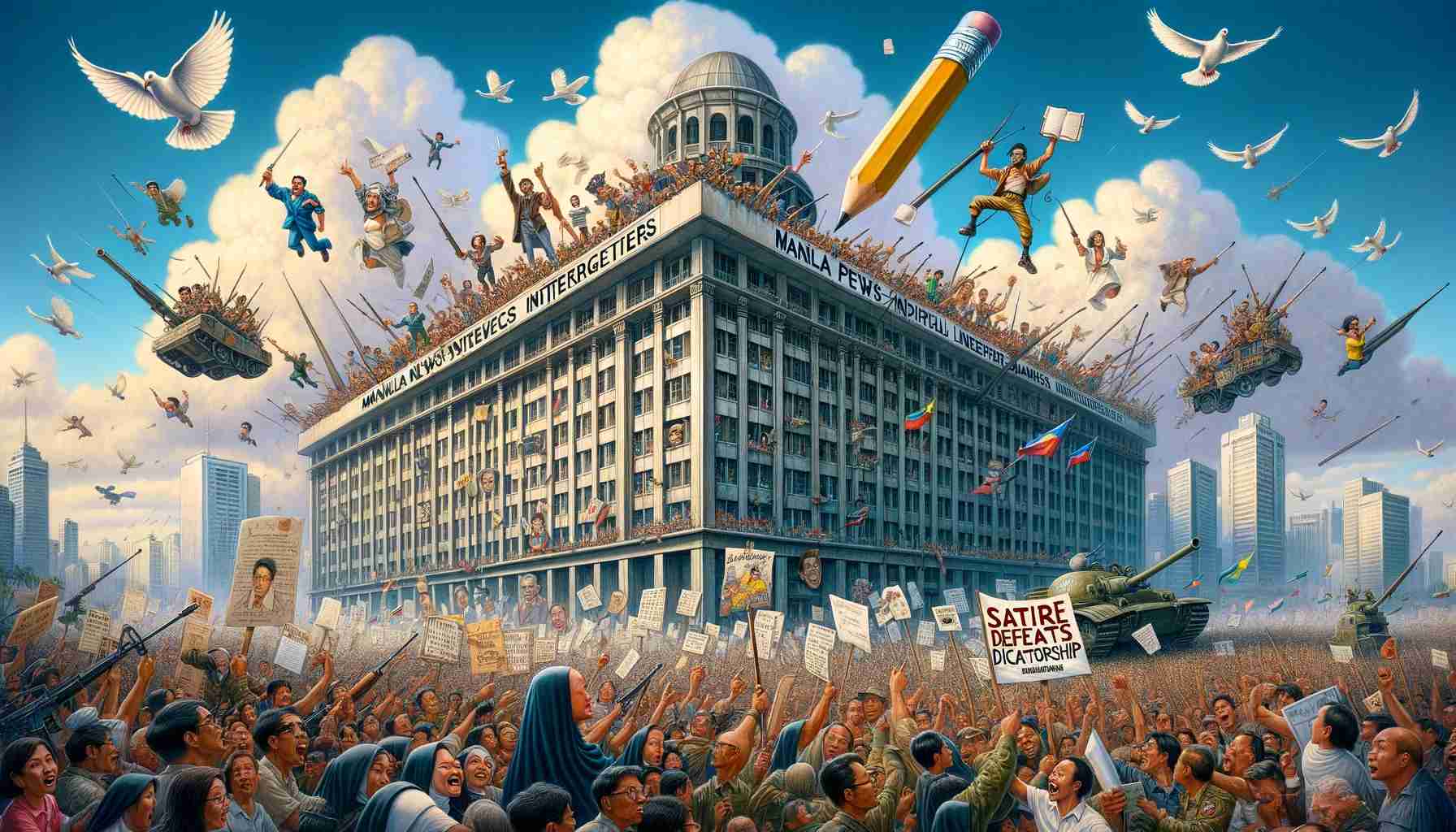
Filipino culture, with its emphasis on humor, resilience, and a collective spirit of bayanihan, provides a rich context for Horatian satire. This form of satire aligns with the Filipino approach to life’s challenges: facing them with a smile and finding humor in adversity. The everyday life of a Manileño is ripe with examples of Horatian satire, from the way people navigate the complexities of urban living to their engagement with political and social issues.
One sees Horatian satire in the playful banter among jeepney passengers, who joke about the notorious Manila traffic as a way of coping with the daily grind. It’s in the comedic skits performed during fiestas, where local politicians and community leaders are impersonated, highlighting their quirks and foibles in a manner that’s amusing rather than accusatory. These instances reflect a culture that prefers to laugh at its troubles, subtly critiquing while maintaining a light-hearted tone.
The Best Current Horatian Satire
Diving into the satirical universe of manilanews.ph, we encounter more examples that showcase the essence of satire in its various forms, engaging the reader with wit and a keen observation of societal idiosyncrasies.
In the spirit of Horatian satire, the article “Manila’s Cats Declare Independence: A New Feline Republic Rises!”, presents a whimsical take on political autonomy and independence movements through the lens of Manila’s feline population. This piece uses the concept of cats declaring their own republic as a metaphor to comment on the complexities and sometimes the absurdity of political separatism. The article playfully critiques human societal structures and political ambitions by projecting them onto the animal kingdom, inviting readers to reflect on the nature of independence and governance with a smile.
Another engaging piece, “Manila’s Buildings Go Camouflage: Now You See Them, Now You Don’t!”, employs Horatian satire to address urban development and architectural aesthetics in Manila. This article humorously imagines a scenario where buildings adopt camouflage technology to blend into the sky, poking fun at the rapid and often incongruous development of cityscapes. It lightly criticizes the push for modernization at the expense of aesthetic coherence and environmental considerations, encouraging a chuckle at the absurdity of such futuristic urban planning solutions.
These examples from manilanews.ph brilliantly illustrate how Horatian satire can be utilized to offer commentary on societal and political issues without resorting to cynicism or harsh criticism. Through inventive scenarios and exaggerated realities, the website invites readers to engage in a lighthearted reflection on the quirks of Philippine society. The use of humor and exaggeration in these articles serves as a gentle nudge for readers to consider the underlying themes and messages, all while enjoying a good laugh at the imaginative and playful narratives crafted by the writers.
Expressions of Horatian Satire in Media and Entertainment
The Philippine media and entertainment industry are replete with examples of Horatian satire. Television shows and films often incorporate characters and scenarios that mock societal norms and behaviors through humor. A prime example is the iconic TV show “Bubble Gang,” which uses skits and parodies to comment on social issues, politics, and even popular culture, all while keeping the laughter rolling. The genius of Horatian satire in such content lies in its ability to make audiences reflect on the absurdities of their society, encouraging a more introspective view of the issues at hand.
Moreover, editorial cartoons in newspapers provide visual commentary on current events, using caricature and exaggeration to highlight the humorous aspects of political and social issues. These cartoons, while making us laugh, also invite us to ponder the underlying messages about governance, policy, and public behavior.
Social Media: A New Frontier for Horatian Satire
The advent of social media has opened up new avenues for Horatian satire, with platforms like Facebook, Twitter, and Instagram becoming stages for satirical expressions. Memes, viral videos, and witty posts about life in Manila offer a digital reflection of the city’s quirks and idiosyncrasies. Social media users engage in playful mockery of everything from the latest political gaffes to the struggles of daily commuting, creating a shared space for communal laughter and critique. This digital satire not only entertains but also fosters a sense of unity among Manileños, who find common ground in the humorous depiction of their lived experiences.
Horatian Satire as Social Commentary
At its core, Horatian satire in Manila serves as a form of social commentary, providing insights into the Filipino psyche and societal norms. It reflects the resilience of the Filipino spirit, showcasing how humor can be a powerful tool for navigating life’s challenges. By laughing at the absurdities of their circumstances, Filipinos demonstrate an ability to remain hopeful and optimistic, even in the face of adversity.
This gentle mockery also serves as a subtle form of critique, allowing satirists to raise awareness about issues without resorting to harsh condemnation. It’s a way of sparking conversation and reflection on societal flaws, encouraging a collective reevaluation of values and behaviors. In doing so, Horatian satire contributes to the gradual shaping of public opinion, nudging society towards self-improvement and change.
Conclusion
Living in Manila, one cannot escape the pervasiveness of Horatian satire, whether in casual conversations, media, entertainment, or the digital realm of social media. This form of satire, with its gentle mockery and wit, is not only a source of amusement but also a reflection of the Filipino approach to life’s challenges. It underscores the importance of humor in fostering resilience, unity, and a critical yet hopeful perspective on societal issues.
As Manila continues to evolve, so too will the expressions of Horatian satire within it, adapting to new contexts and mediums. What remains constant, however, is the role of satire as a mirror to society, offering both a critique and a celebration of the Filipino way of life. In recognizing and appreciating the nuances of Horatian satire, one gains a deeper understanding of the cultural fabric of Manila, appreciating the artistry and insight that humor can bring to the discourse on social and political issues. Through laughter, Manila’s residents find a common language, a shared experience that binds them together in the face of the absurdities of daily life.