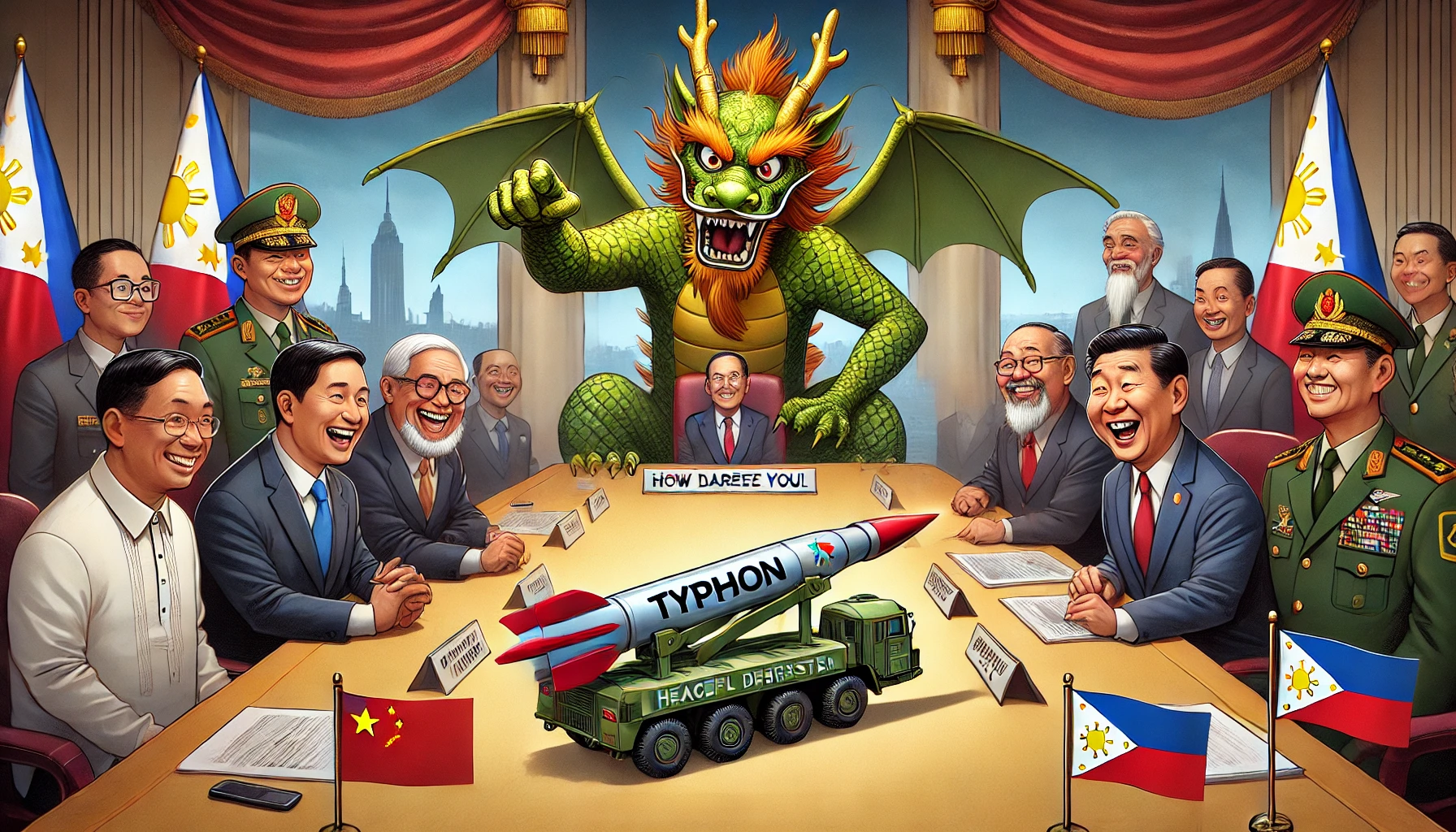
Missile Crisis 2.0: The Philippines, the Typhon, and China’s Tantrum
By Manila McSnark, Satirical Correspondent
MANILA, PHILIPPINES—In what can only be described as the geopolitical equivalent of a toddler throwing a fit over someone else’s new toy, China has lashed out at the Philippines for acquiring the U.S.-made Typhon missile system. The system, which boasts midrange capabilities, has been described by Philippine officials as a necessary step for national defense. China, however, has dubbed the move “extremely irresponsible,” which is rich coming from a country that’s essentially turned the South China Sea into its own missile-laden water park.
The drama surrounding this arms acquisition has unfolded like a reality TV show—complete with accusations, irony, and plenty of finger-pointing. Let’s dive into the absurdity with 15 satirical observations about the situation.
Missile Envy: China’s Favorite New Soap Opera
China’s reaction to the Philippines buying the Typhon missile system has been nothing short of theatrical. It’s as if Beijing suddenly realized that its South China Sea arsenal wasn’t the only game in town.
A statement from China’s foreign ministry read, “We urge the Philippines to consider the consequences of this acquisition,” which roughly translates to, “We don’t like it when other kids get cool toys.” Meanwhile, the Philippines replied with an unspoken shrug, their actions saying, “Well, you’ve been showing off your missiles for years. Sharing is caring.”
Strategic Shopping Spree
Defense shopping is a lot like retail therapy, except instead of buying shoes, you’re buying missile systems. For the Philippines, acquiring the Typhon system was about addressing security concerns. For China, it was an opportunity to feign outrage.
A Philippine official joked, “It was either the Typhon or more beach resorts. But missiles seemed like a better deterrent against invasions.” Critics have pointed out that China’s real frustration isn’t about the missiles themselves but the fact that someone else is joining the neighborhood missile club.
Neighborhood Watch: South China Sea Edition
China’s reaction reeks of a “rules for thee, not for me” attitude. While the Philippines acquires a single defense system, China continues to build artificial islands complete with airstrips and missile launchers. It’s like the nosy neighbor who calls the cops on your backyard barbecue while hosting a rager with fireworks next door.
“Your missiles threaten peace,” China says, conveniently ignoring the fact that their own arsenal has been looming ominously over the region for years. “Our missiles are peaceful,” they claim, which sounds about as believable as a shark insisting it’s vegetarian.
Keeping Up with the Superpowers
The Typhon system has turned the Philippines into the newest contestant on the geopolitical game show Keeping Up with the Superpowers. The prize? Endless scrutiny and side-eye from China.
China’s official line is that the Typhon threatens stability, but critics argue it’s just sour grapes. “We’re not starting an arms race,” said a Philippine general. “We’re just catching up to the one China started decades ago.”
Selective Outrage
China has mastered the art of selective outrage. When it comes to their military activities, they’re defenders of peace. When anyone else beefs up their defenses, it’s a provocation.
“China building bases in disputed waters? Totally fine,” said one analyst. “The Philippines acquiring a single missile system? Outrageous!” It’s a double standard so glaring, even the Typhon’s targeting system couldn’t miss it.
Missile Monopoly: The Board Game No One Asked For
China seems to believe it has a monopoly on missiles in the region, and the Philippines didn’t play by the rules. “We didn’t get the memo that China gets all the missiles,” quipped a Philippine defense official. “Must’ve gotten lost in the mail.”
Beijing’s reaction suggests they’re not upset about the missiles themselves but about losing their status as the sole missile-wielding power in the neighborhood. “It’s not about security,” one satirist noted. “It’s about ego.”
Defense Double Standards
China’s logic is as simple as it is laughable: “Our missiles promote peace; your missiles provoke war.” This is the international relations equivalent of, “I can have cake because I’m on a diet, but you can’t because you’re not.”
The Philippines’ defense secretary responded wryly, “We promise to only use the Typhon for peaceful purposes—like ensuring no one else disturbs our peace.”
Geopolitical Gatekeeping
China’s message to the Philippines is clear: “You’re not allowed to play with the big boys’ toys.” It’s a classic case of geopolitical gatekeeping, with China acting as the self-appointed arbiter of who gets to arm themselves.
One commentator likened it to a schoolyard bully complaining when the smallest kid brings a slingshot to the playground. “You can’t level the playing field—that’s cheating!”
Missile Measuring Contest
The acquisition of the Typhon system has inadvertently sparked a missile measuring contest, with China suddenly feeling insecure about their arsenal. “It’s not the size of your missile system,” joked one Philippine official. “It’s how responsibly you use it.”
China, meanwhile, is reportedly considering adding more missiles to their South China Sea arsenal to “restore balance.” Because nothing says “peaceful intentions” like an arms buildup.
Irony Alert: China’s ‘Irresponsible’ Label
China calling the Philippines’ missile acquisition “irresponsible” is like a pyromaniac lecturing someone about fire safety. The irony is so thick, you could cut it with a bayonet.
“We’ll take lectures on responsibility from literally anyone else,” said a Philippine senator. “Preferably someone without a missile launcher on every artificial island.”
Defense Dissonance
China insists their military build-up is for “regional stability,” while the Philippines’ single system is a “threat to peace.” It’s a narrative so one-sided it could roll off a table.
“It’s like the wolf telling Little Red Riding Hood that her picnic basket is a threat to the forest,” joked a defense analyst. “Nice try, but no one’s buying it.”
Sovereignty Schizophrenia
China has an interesting relationship with the concept of sovereignty. On one hand, they claim to respect it. On the other, they seem to believe they get a say in everyone else’s defense strategies.
A Philippine spokesperson summed it up: “China respects our sovereignty as long as we do exactly what they want. Otherwise, it’s not real sovereignty—it’s ‘fake news.’”
Missile Hypocrisy: A Classic Case
China’s missile hypocrisy is almost impressive. Their arsenal is “necessary for peace,” but the Philippines’ Typhon system is “a destabilizing force.” It’s a level of cognitive dissonance that deserves its own medal.
“If hypocrisy were a sport,” said one satirist, “China would be gold medalists.”
Strategic Selectiveness
China’s selective outrage has reached new heights. When they expand their military presence, it’s a “regional necessity.” When the Philippines does it, it’s a “provocation.”
A Philippine defense analyst quipped, “If we followed China’s logic, we’d have to disarm entirely—and even then, they’d probably complain about our harsh language.”
Defense Diplomacy: Chinese Style
China’s idea of defense diplomacy seems to involve telling everyone else how to defend themselves. Their advice to the Philippines? “Defend yourself, but only in ways we approve.”
The Philippines’ response has been subtle but clear: “Thanks for the unsolicited advice, but we’ve got this.”
Conclusion: Missiles, Irony, and the Art of Overreaction
China’s reaction to the Philippines’ acquisition of the Typhon missile system is a masterclass in overreaction, hypocrisy, and selective outrage. For a country that claims to value peace and stability, they’ve certainly done their part to stir up drama.
As the Philippines moves forward with its defense plans, one thing is clear: this isn’t just about missiles. It’s about sovereignty, self-respect, and, of course, the sheer absurdity of international politics.
In the meantime, the Typhon system sits quietly in the Philippines, ready for use—but hopefully not anytime soon. After all, nothing ruins a good satire like actual conflict.